Thank you for visiting SNEWPapers!
Sign up free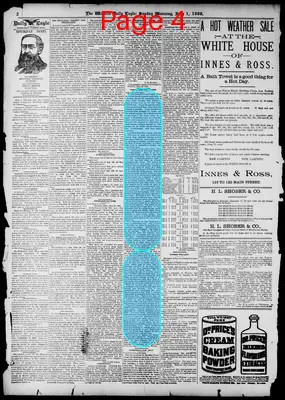
Literary
July 1, 1888
Wichita Eagle
Wichita, Sedgwick County, Kansas
What is this article about?
Traveler Geo. A. White describes a journey from Springer to Santa Fe via Ocate, Moro, Fort Union, Watrous, and Las Vegas, noting adobe towns, green valleys, military life, cultural tensions between Americans and Mexicans, and natural features like a mysterious mountain gap.
Clipping

OCR Quality
98%
Excellent
Full Text
PERIPATETIC PENCILINGS.
To the Editor of the Eagle.
We left Springer for Las Vegas. There are certain points a person must make in traveling among the mountains, and in going south through New Mexico to Santa Fe they must go by Las Vegas and Glorieta. To get through the mountains one prefers to keep away from the railroad if possible. I took a southwest direction from Springer for Ocate: not the railroad station, but a Mexican town at the head of the Ocate creek. It is quite a flourishing town in a very fine valley, and is improved as none but a Mexican will improve a valley with a small stream running through it. The houses are all adobe, and the Catholics and Presbyterians each have adobe churches.
I got there Saturday evening and was a little short of grub, and much to my sorrow they observed Sunday so well that they would not open a store to sell us anything on Sunday-the first case of the kind on record, as Sunday in a Mexican town is generally a holiday and everything open.
From Ocate I went south to the Moro river. The towns of Moro and Watkins are on this stream, Moro is up in a canon: the houses all built to face the east and some of them were very neat and tasty. I think the prettiest sight I ever saw was right there at sunrise, looking up the canon. The houses of Moro were to be seen rising one above another, the red adobe houses surrounded by small fields of grain of a dark green, while the houses of Watkins were on the south side of the stream, and all facing the north, and the valley on each side of the river was beautiful with fields of green grain for a number of miles.
But I went on to Fort Union, a fort, or in fact a town, built in military order. In selecting this spot they knew what they wanted and it would be hard to find another spot that would equal that. There are seven companies of troops there at present. They have their guard mounting and dress parade with some drilling and target practice to pass away their time. There are a few fine residences near there but it is on a military reservation and not much settlement.
From Fort Union I passed down the Moro river and crossed it at Watrous, a town on the railroad. The valley of the Moro was the finest I had seen. It was diversified with fine adobe houses, green fields of grain and alfalfa, shade trees, making the Mexican part of the town of Watrous a sight worth seeing. The American part is a railroad town, and like the most of them is not very neat or attractive.
From Watrous to Las Vegas was a short, uninteresting trip. The country is very dry; no grass or anything, unless they can irrigate. Then the face of the earth will be changed. Las Vegas is on the railroad. Part of the town is very old, but after the railroad went through the Americans built up a new Las Vegas. They have some fine buildings and do quite a business, but there is a feeling between the Americans and Mexicans in all large towns, but more plainly to be seen in Las Vegas than any other, that is not brotherly love. The Mexicans have the finest part of the city as far as the situation is concerned.
They have the finest plaza as well as the best shade trees; they have also a very fine court house built of stone: the grounds around it are kept in fine order. I noticed that over the south entrance it said in Spanish, Casa De Cortes, but over the west door it simply said court house, which goes to show that the Mexicans intended to be heard from.
We did not stop long but crossed the river and turned south again. We followed along the side of a rocky mountain for three miles and then came to a gap in the mountain; it is about 300 feet wide, cut square through as well as a set of railroad men could have done it, leaving the ends perpendicular and went through on a level for a mile and a half. There is another gap only in the mountains to the south or west that the railroad goes through. Now, I can understand how mountains are produced, but gaps of this kind I cannot understand, as evidently it was once one continuous chain. There is no sign of any upheaval or downheaval, but simply a square cut and no rubbish around but a piece taken out and carried away and nothing to show what became of it.
We passed through the gap, then on to Zecolote mountain, town and river of the same name. Zecolote mountain is a grand one: it is isolated, standing out by itself. It is about seven miles long and three wide end runs away up among the clouds, no breaks but tapers up grandly until it reaches the mesa, there it stops perfectly flat, but covered with trees: Zecolote town is on the river. It contains about seventy-five houses and is a sheep and goat town. When we find a town that depends on raising sheep and goats it is generally a poor, dilapidated town, but where they depend on farming the towns are neat and trim.
We next went to Bernal, San Miguel, Glorieta and to Santa Fe. Stepping into that old town over the old Santa Fe trail which we have followed for a long ways, a number of hundred miles, before reaching this place of which I will tell in my next.
GEO. A. WHITE.
To the Editor of the Eagle.
We left Springer for Las Vegas. There are certain points a person must make in traveling among the mountains, and in going south through New Mexico to Santa Fe they must go by Las Vegas and Glorieta. To get through the mountains one prefers to keep away from the railroad if possible. I took a southwest direction from Springer for Ocate: not the railroad station, but a Mexican town at the head of the Ocate creek. It is quite a flourishing town in a very fine valley, and is improved as none but a Mexican will improve a valley with a small stream running through it. The houses are all adobe, and the Catholics and Presbyterians each have adobe churches.
I got there Saturday evening and was a little short of grub, and much to my sorrow they observed Sunday so well that they would not open a store to sell us anything on Sunday-the first case of the kind on record, as Sunday in a Mexican town is generally a holiday and everything open.
From Ocate I went south to the Moro river. The towns of Moro and Watkins are on this stream, Moro is up in a canon: the houses all built to face the east and some of them were very neat and tasty. I think the prettiest sight I ever saw was right there at sunrise, looking up the canon. The houses of Moro were to be seen rising one above another, the red adobe houses surrounded by small fields of grain of a dark green, while the houses of Watkins were on the south side of the stream, and all facing the north, and the valley on each side of the river was beautiful with fields of green grain for a number of miles.
But I went on to Fort Union, a fort, or in fact a town, built in military order. In selecting this spot they knew what they wanted and it would be hard to find another spot that would equal that. There are seven companies of troops there at present. They have their guard mounting and dress parade with some drilling and target practice to pass away their time. There are a few fine residences near there but it is on a military reservation and not much settlement.
From Fort Union I passed down the Moro river and crossed it at Watrous, a town on the railroad. The valley of the Moro was the finest I had seen. It was diversified with fine adobe houses, green fields of grain and alfalfa, shade trees, making the Mexican part of the town of Watrous a sight worth seeing. The American part is a railroad town, and like the most of them is not very neat or attractive.
From Watrous to Las Vegas was a short, uninteresting trip. The country is very dry; no grass or anything, unless they can irrigate. Then the face of the earth will be changed. Las Vegas is on the railroad. Part of the town is very old, but after the railroad went through the Americans built up a new Las Vegas. They have some fine buildings and do quite a business, but there is a feeling between the Americans and Mexicans in all large towns, but more plainly to be seen in Las Vegas than any other, that is not brotherly love. The Mexicans have the finest part of the city as far as the situation is concerned.
They have the finest plaza as well as the best shade trees; they have also a very fine court house built of stone: the grounds around it are kept in fine order. I noticed that over the south entrance it said in Spanish, Casa De Cortes, but over the west door it simply said court house, which goes to show that the Mexicans intended to be heard from.
We did not stop long but crossed the river and turned south again. We followed along the side of a rocky mountain for three miles and then came to a gap in the mountain; it is about 300 feet wide, cut square through as well as a set of railroad men could have done it, leaving the ends perpendicular and went through on a level for a mile and a half. There is another gap only in the mountains to the south or west that the railroad goes through. Now, I can understand how mountains are produced, but gaps of this kind I cannot understand, as evidently it was once one continuous chain. There is no sign of any upheaval or downheaval, but simply a square cut and no rubbish around but a piece taken out and carried away and nothing to show what became of it.
We passed through the gap, then on to Zecolote mountain, town and river of the same name. Zecolote mountain is a grand one: it is isolated, standing out by itself. It is about seven miles long and three wide end runs away up among the clouds, no breaks but tapers up grandly until it reaches the mesa, there it stops perfectly flat, but covered with trees: Zecolote town is on the river. It contains about seventy-five houses and is a sheep and goat town. When we find a town that depends on raising sheep and goats it is generally a poor, dilapidated town, but where they depend on farming the towns are neat and trim.
We next went to Bernal, San Miguel, Glorieta and to Santa Fe. Stepping into that old town over the old Santa Fe trail which we have followed for a long ways, a number of hundred miles, before reaching this place of which I will tell in my next.
GEO. A. WHITE.
What sub-type of article is it?
Essay
Journey Narrative
What themes does it cover?
Agriculture Rural
Nature
Social Manners
What keywords are associated?
New Mexico Travel
Mexican Towns
Adobe Houses
Mountain Gaps
Fort Union
Las Vegas
Agricultural Valleys
What entities or persons were involved?
Geo. A. White.
Literary Details
Title
Peripatetic Pencilings.
Author
Geo. A. White.
Subject
Journey From Springer To Santa Fe Through New Mexico Towns And Landscapes
Key Lines
I Think The Prettiest Sight I Ever Saw Was Right There At Sunrise, Looking Up The Canon. The Houses Of Moro Were To Be Seen Rising One Above Another, The Red Adobe Houses Surrounded By Small Fields Of Grain Of A Dark Green, While The Houses Of Watkins Were On The South Side Of The Stream, And All Facing The North, And The Valley On Each Side Of The River Was Beautiful With Fields Of Green Grain For A Number Of Miles.
There Is Another Gap Only In The Mountains To The South Or West That The Railroad Goes Through. Now, I Can Understand How Mountains Are Produced, But Gaps Of This Kind I Cannot Understand, As Evidently It Was Once One Continuous Chain.
When We Find A Town That Depends On Raising Sheep And Goats It Is Generally A Poor, Dilapidated Town, But Where They Depend On Farming The Towns Are Neat And Trim.