Thank you for visiting SNEWPapers!
Sign up free
Literary
July 25, 1821
The Massachusetts Spy
Worcester, Worcester County, Massachusetts
What is this article about?
A sea captain survives a shipwreck, loses everything, and recounts his miraculous escape with oaths to stagecoach passengers. Mr. B., a Christian passenger, confronts him privately about a vow made to God during the ordeal, offers him money out of benevolence, and inspires the captain's tearful repentance and resolve to live differently.
Clipping
OCR Quality
98%
Excellent
Full Text
The Sea Captain.
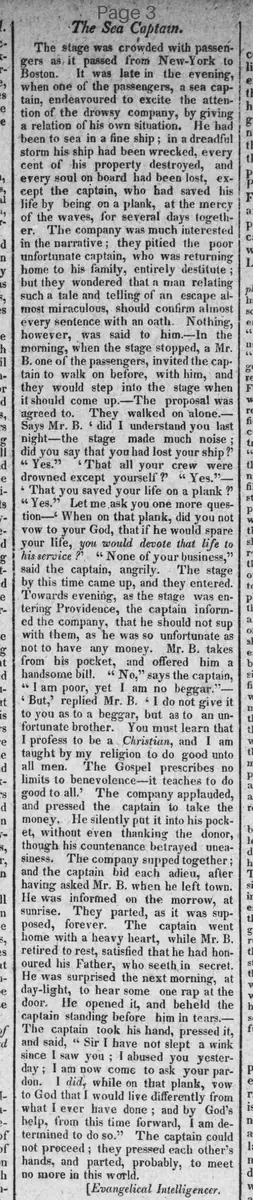
The stage was crowded with passengers as it passed from New-York to Boston. It was late in the evening when one of the passengers, a sea captain, endeavoured to excite the attention of the drowsy company, by giving a relation of his own situation. He had been to sea in a fine ship: in a dreadful storm his ship had been wrecked, every cent of his property destroyed, and every soul on board had been lost, except the captain, who had saved his life by being on a plank, at the mercy of the waves, for several days together. The company was much interested in the narrative; they pitied the poor unfortunate captain, who was returning home to his family, entirely destitute; but they wondered that a man relating such a tale and telling of an escape almost miraculous, should confirm almost every sentence with an oath. Nothing, however, was said to him. In the morning, when the stage stopped, a Mr. B. one of the passengers, invited the captain to walk on before, with him, and they would step into the stage when it should come up. The proposal was agreed to. They walked on alone. Says Mr. B. 'did I understand you last night—the stage made much noise; did you say that you had lost your ship?' "Yes." 'That all your crew were drowned except yourself?' "Yes." 'That you saved your life on a plank?' "Yes." 'Let me ask you one more question—When on that plank, did you not vow to your God, that if he would spare your life, you would devote that life to his service?' "None of your business," said the captain, angrily. The stage by this time came up, and they entered. Towards evening, as the stage was entering Providence, the captain informed the company, that he should not sup with them, as he was so unfortunate as not to have any money. Mr. B. takes from his pocket, and offered him a handsome bill. "No," says the captain, "I am poor, yet I am no beggar." 'But,' replied Mr. B. 'I do not give it to you as to a beggar, but as to an unfortunate brother. You must learn that I profess to be a Christian, and I am taught by my religion to do good unto all men. The Gospel prescribes no limits to benevolence—it teaches to do good to all.' The company applauded, and pressed the captain to take the money. He silently put it into his pocket, without even thanking the donor, though his countenance betrayed uneasiness. The company supped together; and the captain bid each adieu, after having asked Mr. B. when he left town. He was informed on the morrow, at sunrise. They parted, as it was supposed, forever. The captain went home with a heavy heart, while Mr. B. retired to rest, satisfied that he had honoured his Father, who seeth in secret. He was surprised the next morning, at day-light, to hear some one rap at the door. He opened it, and beheld the captain standing before him in tears. The captain took his hand, pressed it, and said, "Sir I have not slept a wink since I saw you; I abused you yesterday: I am now come to ask your pardon. I did, while on that plank, vow to God that I would live differently from what I ever have done; and by God's help, from this time forward, I am determined to do so." The captain could not proceed; they pressed each other's hands, and parted, probably, to meet no more in this world.
The stage was crowded with passengers as it passed from New-York to Boston. It was late in the evening when one of the passengers, a sea captain, endeavoured to excite the attention of the drowsy company, by giving a relation of his own situation. He had been to sea in a fine ship: in a dreadful storm his ship had been wrecked, every cent of his property destroyed, and every soul on board had been lost, except the captain, who had saved his life by being on a plank, at the mercy of the waves, for several days together. The company was much interested in the narrative; they pitied the poor unfortunate captain, who was returning home to his family, entirely destitute; but they wondered that a man relating such a tale and telling of an escape almost miraculous, should confirm almost every sentence with an oath. Nothing, however, was said to him. In the morning, when the stage stopped, a Mr. B. one of the passengers, invited the captain to walk on before, with him, and they would step into the stage when it should come up. The proposal was agreed to. They walked on alone. Says Mr. B. 'did I understand you last night—the stage made much noise; did you say that you had lost your ship?' "Yes." 'That all your crew were drowned except yourself?' "Yes." 'That you saved your life on a plank?' "Yes." 'Let me ask you one more question—When on that plank, did you not vow to your God, that if he would spare your life, you would devote that life to his service?' "None of your business," said the captain, angrily. The stage by this time came up, and they entered. Towards evening, as the stage was entering Providence, the captain informed the company, that he should not sup with them, as he was so unfortunate as not to have any money. Mr. B. takes from his pocket, and offered him a handsome bill. "No," says the captain, "I am poor, yet I am no beggar." 'But,' replied Mr. B. 'I do not give it to you as to a beggar, but as to an unfortunate brother. You must learn that I profess to be a Christian, and I am taught by my religion to do good unto all men. The Gospel prescribes no limits to benevolence—it teaches to do good to all.' The company applauded, and pressed the captain to take the money. He silently put it into his pocket, without even thanking the donor, though his countenance betrayed uneasiness. The company supped together; and the captain bid each adieu, after having asked Mr. B. when he left town. He was informed on the morrow, at sunrise. They parted, as it was supposed, forever. The captain went home with a heavy heart, while Mr. B. retired to rest, satisfied that he had honoured his Father, who seeth in secret. He was surprised the next morning, at day-light, to hear some one rap at the door. He opened it, and beheld the captain standing before him in tears. The captain took his hand, pressed it, and said, "Sir I have not slept a wink since I saw you; I abused you yesterday: I am now come to ask your pardon. I did, while on that plank, vow to God that I would live differently from what I ever have done; and by God's help, from this time forward, I am determined to do so." The captain could not proceed; they pressed each other's hands, and parted, probably, to meet no more in this world.
What sub-type of article is it?
Prose Fiction
What themes does it cover?
Moral Virtue
Religious
What keywords are associated?
Shipwreck
Survival
Vow
Repentance
Charity
Christian Benevolence
Literary Details
Title
The Sea Captain.
Key Lines
'Let Me Ask You One More Question—When On That Plank, Did You Not Vow To Your God, That If He Would Spare Your Life, You Would Devote That Life To His Service?' "None Of Your Business," Said The Captain, Angrily.
'But,' Replied Mr. B. 'I Do Not Give It To You As To A Beggar, But As To An Unfortunate Brother. You Must Learn That I Profess To Be A Christian, And I Am Taught By My Religion To Do Good Unto All Men. The Gospel Prescribes No Limits To Benevolence—It Teaches To Do Good To All.'
"Sir I Have Not Slept A Wink Since I Saw You; I Abused You Yesterday: I Am Now Come To Ask Your Pardon. I Did, While On That Plank, Vow To God That I Would Live Differently From What I Ever Have Done; And By God's Help, From This Time Forward, I Am Determined To Do So."