Thank you for visiting SNEWPapers!
Sign up free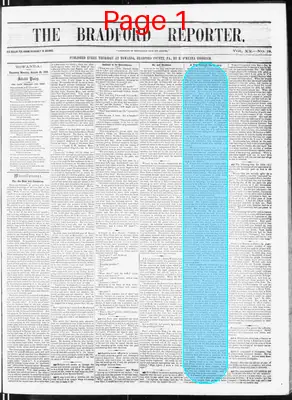
Literary
August 25, 1859
Bradford Reporter
Towanda, Bradford County, Pennsylvania
What is this article about?
An essay advising on healthy vacation travel, quoting Dr. Hufeland's 'The Art of Prolonging Life' with 10 numbered tips on modes of transport, posture, transitions, fatigue, diet, exertion, temperature changes, cleanliness, seasonal exercise, and medical consultation.
Clipping

OCR Quality
98%
Excellent
Full Text
A Trip Through the Country.
At this time of year every one feels more or less inclined for change of scene, change of air, or simply the excitement of fresh faces, new society and different habits. All want a break in the year—something to convince them that they are not mere business or household animals, but that they are individuals with a large capacity for enjoyment, and capable of being amused and instructed by woodland notes and the sight of farms, the sea, green fields, or wild forests. In consequence, the great question now is: "How shall I spend my vacation?" Friend, let us give you the advice which Dr. Hufeland, of Jena, gives on the subject of traveling, in his great work, "The Art of Prolonging Life," adding to his advice the determination to be amused and keep in good temper the whole holiday through. What if hotel keepers over-charge thee, friend? be not vexed, but make a joke of it, and the laugh will do you more good than the extra charge could do if spent in physic. Look on all things pleasantly, determined to be pleased, and the moral effect will be of more value than the physical; and above all, locomotive swain, take with thee at least one third more money than you expect to spend. You can economize on the way, but it is well to have something to meet contingencies. The learned doctor tells us:—
1. Traveling on foot, or rather on horseback, is the most healthful; but when one is weakly, or undertakes long excursions, it is more advisable to travel in a carriage or by railroad.
2. When one travels in a car, it is very beneficial always to change the posture; that is, to sit sometimes and sometimes to recline. By these means one can best prevent the evils attending continued riding in this manner, which are occasioned principally by the jolting being in one direction.
3. Nature will not suffer any sudden transitions. It is therefore improper for people accustomed to a sedentary life to undertake suddenly a journey during which they will be exposed to violent jolting. The case here is the same as if one accustomed to drink water should all at once begin to drink wine.
4. Excursions, the object of which is health, must not be fatiguing; but this can be determined only by difference of temperament and constitution. One ought, above all things, to avoid traveling in the night time; which, by interrupting the necessary refreshment, checking perspiration, and exposing the body to un-healthy air, is always prejudicial.
5. People must not imagine that they may indulge a little more in intemperance when on a journey. One, however, needs not to be too nice in the choice of food and drink: and it is always best to use the common fare of each locality. But at any rate the stomach ought not to be overloaded. By the motion of traveling, the power of the body is too much divided for the stomach to admit of a large quantity of food; and the motion itself, by these means, will become more fatiguing. People, in particular, should not indulge too much in heating food and liquors, as is often the case on journeys; for traveling alone acts as a stimulus, and less stimulating nourishment is then required than in a state of rest. A want of attention to this rule may occasion too violent irritation, inflammation, accumulations of the blood, &c. It is most proper, on journeys, to eat rather little at a time, but often: to drink more than one eats; and to choose food easy of digestion, yet strongly nutritive, not of a heating nature, and such as cannot be readily adulterated. It is safest, therefore, in the country and in small hotels, to use milk, eggs, well-baked bread, boiled or roasted meat, and fruit. Drink water, with the addition of a little lemon juice. If the water be impure, it may be rendered sweet by charcoal powder.
6. Avoid immoderate exertion and wasting of the powers. It is, however, as difficult in general to lay down a proper standard of motion, as of eating and drinking. But nature, in this, has given us a very excellent guide, a sense of lassitude, which is here of as much importance as the sense of satiety in eating or drinking. Weariness is nothing else than the voice of nature, which tells us that our stock of powers is exhausted, and that he who is tired should enjoy repose. But nature may, indeed, become lost in habit; and we may be as sensible of lassitude as the continual glutton is of fullness, especially when the nerves is overstrained by stimulating and heating food and drink. There are then, however, other signs to tell us that we have exceeded the proper measure; and I request that to these the strictest attention may be paid. When one begins to be low-spirited or dejected: to yawn often, and be drowsy, yet at the same time to be incapable of sleeping though one enjoys rest; when the appetite is lost; when the smallest movement occasions a fluttering of the pulse, heat, and even trembling; when the mouth becomes dry, and is sensible of a bitter taste, it is high time to seek refreshment and repose, if one wishes to prevent illness already beginning to take place.
7. While one is traveling, insensible perspiration may easily be checked; and cold is the principal source of those diseases which thence arise. It is advisable, therefore, to guard against all sudden transitions from heat to cold, or the contrary; and those who have great sensibility in the skin, will do well, when they go on a journey, to carry a thin flannel shirt along with them.
8. Cleanliness, when on travels, is doubly necessary: and, therefore, to wash the body frequently with cold water is much to be recommended. This will contribute also, in a great degree, to remove lassitude.
9. During winter, or in cold climate, one may always submit to greater exercise than during summer, or in warm climates, where perspiration exhausts one-half of the strength. One, also, can undergo more fatigue early in the morning than in the afternoon.
10. Full-blooded persons, or those who are subject to a spitting of blood, or other serious disease, must consult their physician before they undertake a journey.
At this time of year every one feels more or less inclined for change of scene, change of air, or simply the excitement of fresh faces, new society and different habits. All want a break in the year—something to convince them that they are not mere business or household animals, but that they are individuals with a large capacity for enjoyment, and capable of being amused and instructed by woodland notes and the sight of farms, the sea, green fields, or wild forests. In consequence, the great question now is: "How shall I spend my vacation?" Friend, let us give you the advice which Dr. Hufeland, of Jena, gives on the subject of traveling, in his great work, "The Art of Prolonging Life," adding to his advice the determination to be amused and keep in good temper the whole holiday through. What if hotel keepers over-charge thee, friend? be not vexed, but make a joke of it, and the laugh will do you more good than the extra charge could do if spent in physic. Look on all things pleasantly, determined to be pleased, and the moral effect will be of more value than the physical; and above all, locomotive swain, take with thee at least one third more money than you expect to spend. You can economize on the way, but it is well to have something to meet contingencies. The learned doctor tells us:—
1. Traveling on foot, or rather on horseback, is the most healthful; but when one is weakly, or undertakes long excursions, it is more advisable to travel in a carriage or by railroad.
2. When one travels in a car, it is very beneficial always to change the posture; that is, to sit sometimes and sometimes to recline. By these means one can best prevent the evils attending continued riding in this manner, which are occasioned principally by the jolting being in one direction.
3. Nature will not suffer any sudden transitions. It is therefore improper for people accustomed to a sedentary life to undertake suddenly a journey during which they will be exposed to violent jolting. The case here is the same as if one accustomed to drink water should all at once begin to drink wine.
4. Excursions, the object of which is health, must not be fatiguing; but this can be determined only by difference of temperament and constitution. One ought, above all things, to avoid traveling in the night time; which, by interrupting the necessary refreshment, checking perspiration, and exposing the body to un-healthy air, is always prejudicial.
5. People must not imagine that they may indulge a little more in intemperance when on a journey. One, however, needs not to be too nice in the choice of food and drink: and it is always best to use the common fare of each locality. But at any rate the stomach ought not to be overloaded. By the motion of traveling, the power of the body is too much divided for the stomach to admit of a large quantity of food; and the motion itself, by these means, will become more fatiguing. People, in particular, should not indulge too much in heating food and liquors, as is often the case on journeys; for traveling alone acts as a stimulus, and less stimulating nourishment is then required than in a state of rest. A want of attention to this rule may occasion too violent irritation, inflammation, accumulations of the blood, &c. It is most proper, on journeys, to eat rather little at a time, but often: to drink more than one eats; and to choose food easy of digestion, yet strongly nutritive, not of a heating nature, and such as cannot be readily adulterated. It is safest, therefore, in the country and in small hotels, to use milk, eggs, well-baked bread, boiled or roasted meat, and fruit. Drink water, with the addition of a little lemon juice. If the water be impure, it may be rendered sweet by charcoal powder.
6. Avoid immoderate exertion and wasting of the powers. It is, however, as difficult in general to lay down a proper standard of motion, as of eating and drinking. But nature, in this, has given us a very excellent guide, a sense of lassitude, which is here of as much importance as the sense of satiety in eating or drinking. Weariness is nothing else than the voice of nature, which tells us that our stock of powers is exhausted, and that he who is tired should enjoy repose. But nature may, indeed, become lost in habit; and we may be as sensible of lassitude as the continual glutton is of fullness, especially when the nerves is overstrained by stimulating and heating food and drink. There are then, however, other signs to tell us that we have exceeded the proper measure; and I request that to these the strictest attention may be paid. When one begins to be low-spirited or dejected: to yawn often, and be drowsy, yet at the same time to be incapable of sleeping though one enjoys rest; when the appetite is lost; when the smallest movement occasions a fluttering of the pulse, heat, and even trembling; when the mouth becomes dry, and is sensible of a bitter taste, it is high time to seek refreshment and repose, if one wishes to prevent illness already beginning to take place.
7. While one is traveling, insensible perspiration may easily be checked; and cold is the principal source of those diseases which thence arise. It is advisable, therefore, to guard against all sudden transitions from heat to cold, or the contrary; and those who have great sensibility in the skin, will do well, when they go on a journey, to carry a thin flannel shirt along with them.
8. Cleanliness, when on travels, is doubly necessary: and, therefore, to wash the body frequently with cold water is much to be recommended. This will contribute also, in a great degree, to remove lassitude.
9. During winter, or in cold climate, one may always submit to greater exercise than during summer, or in warm climates, where perspiration exhausts one-half of the strength. One, also, can undergo more fatigue early in the morning than in the afternoon.
10. Full-blooded persons, or those who are subject to a spitting of blood, or other serious disease, must consult their physician before they undertake a journey.
What sub-type of article is it?
Essay
What themes does it cover?
Temperance
Moral Virtue
Nature
What keywords are associated?
Travel Advice
Health Vacation
Dr Hufeland
Prolonging Life
Temperance Journey
Rural Excursion
What entities or persons were involved?
From Dr. Hufeland, Of Jena
Literary Details
Title
A Trip Through The Country.
Author
From Dr. Hufeland, Of Jena
Subject
Advice On Healthful Vacation Travel
Form / Style
Prose Essay With Numbered Health Tips
Key Lines
Traveling On Foot, Or Rather On Horseback, Is The Most Healthful; But When One Is Weakly, Or Undertakes Long Excursions, It Is More Advisable To Travel In A Carriage Or By Railroad.
People Must Not Imagine That They May Indulge A Little More In Intemperance When On A Journey.
Avoid Immoderate Exertion And Wasting Of The Powers.