Thank you for visiting SNEWPapers!
Sign up free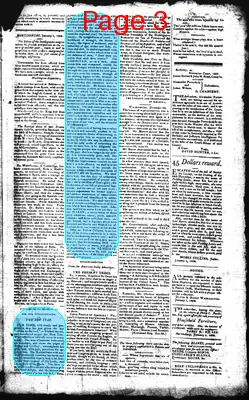
Literary
January 1, 1808
Berkeley And Jefferson Intelligencer
Martinsburg, Berkeley County, Virginia
What is this article about?
Reflective essay on the New Year, where the author contemplates business, farming, pleasure, regrets, and mortality across life's stages. Emphasizes Christian steadfastness, redeeming lost time through moral improvement, repentance, and duties to God, others, and self for eternal bliss.
Clipping
OCR Quality
98%
Excellent
Full Text
For the Intelligencer,
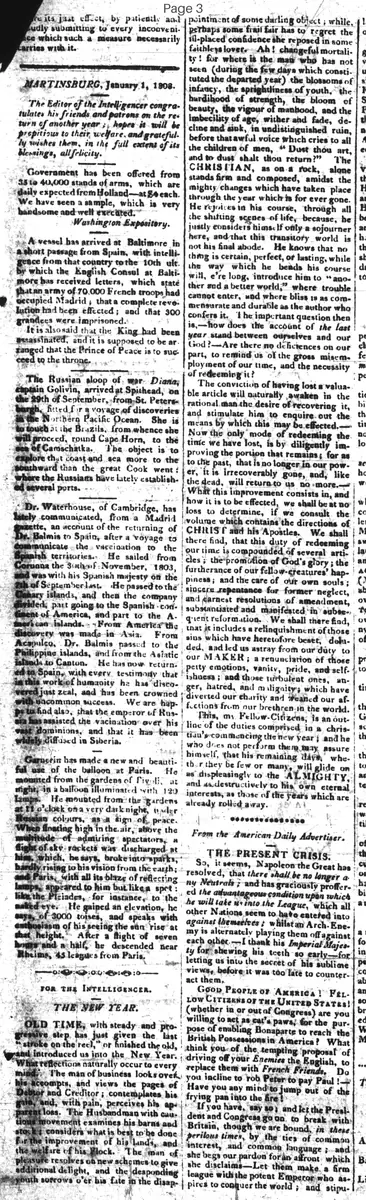
THE NEW YEAR.
OLD TIME, with steady and progressive step, has just given the last stroke on the clock, or finished the old, and introduced us into the New Year.
What reflections naturally occur to every mind! The man of business looks over his accounts, and views the pages of Debtor and Creditor; contemplates his gains, and with pain, perceives his losses. The Husbandman with cautious movement examines his barns and stock, considers what is best to be done for the improvement of his lands, and the welfare of his stock. The man of pleasure resolves on new schemes to give additional delight, and the desponding youth sorrows o'er his fate in the disappointment of some darling object; while perhaps some frail fair has to regret the ill-placed confidence she reposed in some faithless lover. Ah! changeful mortality! for where is the man who has not seen (during the few days which constituted the departed year) the blossoms of infancy, the sprightliness of youth, the hardihood of strength, the bloom of beauty, the vigour of manhood, and the imbecility of age, wither and fade, decline and sink, in undistinguished ruin, before that awful voice which cries to all the children of men, "Dust thou art, and to dust shalt thou return?" The CHRISTIAN, as on a rock, alone stands firm and composed, amidst the mighty changes which have taken place through the year which is for ever gone. He rejoices in his course, through all the shifting scenes of life, because, he justly considers himself only a sojourner here, and that this transitory world is not his final abode. He knows that no thing is certain, perfect, or lasting, while the way which he bends his course will, e're long, introduce him to "another and a better world?" where trouble cannot enter, and where bliss is as commensurate and durable as the author who confers it. The important question then is,—how does the account of the last year stand between ourselves and our God? Are there no deficiencies on our part, to remind us of the gross misemployment of our time, and the necessity of redeeming it?
The conviction of having lost a valuable article will naturally awaken in the rational man the desire of recovering it, and stimulate him to enquire out the means by which this may be effected.
Now the only mode of redeeming the time we have lost, is by diligently improving the portion that remains; for as to the past, that is no longer in our power, it is irrecoverably gone, and, "like the dead, will return to us no more."
What this improvement consists in, and how it is to be effected, we shall be at no loss to determine, if we consult the volume which contains the directions of CHRIST and his Apostles. We shall there find, that this duty of redeeming our time is compounded of several articles; the promotion of God's glory; the furtherance of our fellow-creatures' happiness; and the care of our own souls; sincere repentance for former neglect, and earnest resolutions of amendment, substantiated and manifested in subsequent reformation. We shall there find, that it includes a relinquishment of those sins which have heretofore beset, deluded, and led us astray from our duty to our MAKER; a renunciation of those petty emotions, vanity, pride, and selfishness; and those turbulent ones, anger, hatred, and malignity which have diverted our charity and weaned our affections from our brethren in the world.
This, my Fellow-Citizens, is an outline of the duties comprised in a christian's commencing the new year; and he who does not perform them may assure himself, that his remaining days, whether they be few or many, will glide on as displeasingly to the ALMIGHTY, and as destructively to his own eternal interests, as those of the years which are already rolled away.
THE NEW YEAR.
OLD TIME, with steady and progressive step, has just given the last stroke on the clock, or finished the old, and introduced us into the New Year.
What reflections naturally occur to every mind! The man of business looks over his accounts, and views the pages of Debtor and Creditor; contemplates his gains, and with pain, perceives his losses. The Husbandman with cautious movement examines his barns and stock, considers what is best to be done for the improvement of his lands, and the welfare of his stock. The man of pleasure resolves on new schemes to give additional delight, and the desponding youth sorrows o'er his fate in the disappointment of some darling object; while perhaps some frail fair has to regret the ill-placed confidence she reposed in some faithless lover. Ah! changeful mortality! for where is the man who has not seen (during the few days which constituted the departed year) the blossoms of infancy, the sprightliness of youth, the hardihood of strength, the bloom of beauty, the vigour of manhood, and the imbecility of age, wither and fade, decline and sink, in undistinguished ruin, before that awful voice which cries to all the children of men, "Dust thou art, and to dust shalt thou return?" The CHRISTIAN, as on a rock, alone stands firm and composed, amidst the mighty changes which have taken place through the year which is for ever gone. He rejoices in his course, through all the shifting scenes of life, because, he justly considers himself only a sojourner here, and that this transitory world is not his final abode. He knows that no thing is certain, perfect, or lasting, while the way which he bends his course will, e're long, introduce him to "another and a better world?" where trouble cannot enter, and where bliss is as commensurate and durable as the author who confers it. The important question then is,—how does the account of the last year stand between ourselves and our God? Are there no deficiencies on our part, to remind us of the gross misemployment of our time, and the necessity of redeeming it?
The conviction of having lost a valuable article will naturally awaken in the rational man the desire of recovering it, and stimulate him to enquire out the means by which this may be effected.
Now the only mode of redeeming the time we have lost, is by diligently improving the portion that remains; for as to the past, that is no longer in our power, it is irrecoverably gone, and, "like the dead, will return to us no more."
What this improvement consists in, and how it is to be effected, we shall be at no loss to determine, if we consult the volume which contains the directions of CHRIST and his Apostles. We shall there find, that this duty of redeeming our time is compounded of several articles; the promotion of God's glory; the furtherance of our fellow-creatures' happiness; and the care of our own souls; sincere repentance for former neglect, and earnest resolutions of amendment, substantiated and manifested in subsequent reformation. We shall there find, that it includes a relinquishment of those sins which have heretofore beset, deluded, and led us astray from our duty to our MAKER; a renunciation of those petty emotions, vanity, pride, and selfishness; and those turbulent ones, anger, hatred, and malignity which have diverted our charity and weaned our affections from our brethren in the world.
This, my Fellow-Citizens, is an outline of the duties comprised in a christian's commencing the new year; and he who does not perform them may assure himself, that his remaining days, whether they be few or many, will glide on as displeasingly to the ALMIGHTY, and as destructively to his own eternal interests, as those of the years which are already rolled away.
What sub-type of article is it?
Essay
What themes does it cover?
Religious
Moral Virtue
Death Mortality
What keywords are associated?
New Year
Time Redemption
Christian Duty
Mortality
Moral Improvement
Repentance
Eternal Bliss
Literary Details
Title
The New Year.
Subject
Christian Reflections On Commencing The New Year
Key Lines
Dust Thou Art, And To Dust Shalt Thou Return?
The Only Mode Of Redeeming The Time We Have Lost, Is By Diligently Improving The Portion That Remains;
This Duty Of Redeeming Our Time Is Compounded Of Several Articles; The Promotion Of God's Glory; The Furtherance Of Our Fellow Creatures' Happiness; And The Care Of Our Own Souls;