Thank you for visiting SNEWPapers!
Sign up free
Editorial
July 31, 1827
Richmond Enquirer
Richmond, Richmond County, Virginia
What is this article about?
This editorial lambasts U.S. newspaper editors for facilitating anonymous political slander and obscenity, which corrupt public morals. It expresses disappointment in the persistence of these practices and calls on respectable society to boycott offending papers to reform the press.
Clipping
OCR Quality
95%
Excellent
Full Text
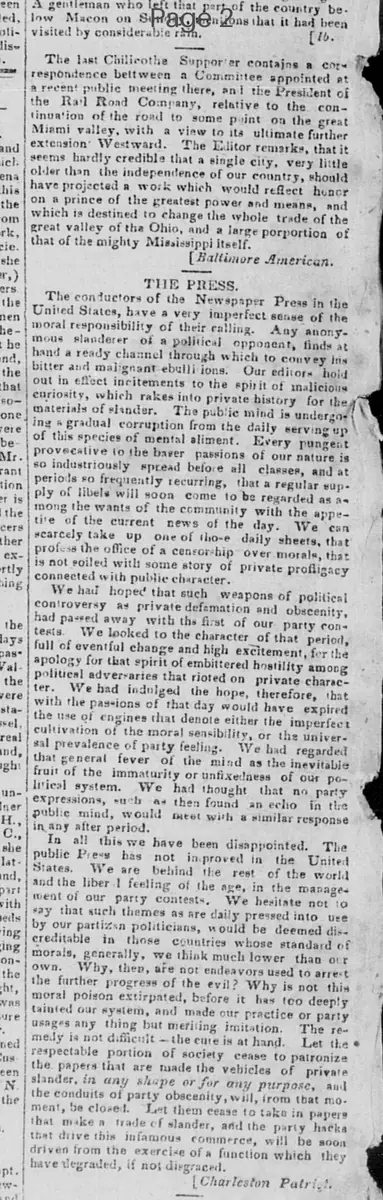
THE PRESS.
The conductors of the Newspaper Press in the United States, have a very imperfect sense of the moral responsibility of their calling. Any anonymous slanderer of a political opponent, finds at hand a ready channel through which to convey his bitter and malignant ebullitions. Our editors hold out in effect incitements to the spirit of malicious curiosity, which rakes into private history for the materials of slander. The public mind is undergoing a gradual corruption from the daily serving up of this species of mental aliment. Every pungent provocative to the baser passions of our nature is so industriously spread before all classes, and at periods so frequently recurring, that a regular supply of libels will soon come to be regarded as among the wants of the community with the appetite of the current news of the day. We can scarcely take up one of those daily sheets, that profess the office of a censorship over morals, that is not soiled with some story of private profligacy connected with public character.
We had hoped that such weapons of political controversy as private defamation and obscenity, had passed away with the first of our party contests. We looked to the character of that period, full of eventful change and high excitement, for the apology for that spirit of embittered hostility among political adversaries that rioted on private character. We had indulged the hope, therefore, that with the passions of that day would have expired the use of engines that denote either the imperfect cultivation of the moral sensibility, or the universal prevalence of party feeling. We had regarded that general fever of the mind as the inevitable fruit of the immaturity or unfixedness of our political system. We had thought that no party expressions, such as then found an echo in the public mind, would meet with a similar response in any after period.
In all this we have been disappointed. The public Press has not improved in the United States. We are behind the rest of the world and the liberal feeling of the age, in the management of our party contests. We hesitate not to say that such themes as are daily pressed into use by our partisan politicians, would be deemed discreditable in those countries whose standard of morals, generally, we think much lower than our own. Why, then, are not endeavors used to arrest the further progress of the evil? Why is not this moral poison extirpated, before it has too deeply tainted our system, and made our practice or party usages any thing but meriting imitation. The remedy is not difficult—the cure is at hand. Let the respectable portion of society cease to patronize the papers that are made the vehicles of private slander, in any shape or for any purpose, and the conduits of party obscenity, will, from that moment, be closed. Let them cease to take in papers that make a trade of slander, and the party hacks that drive this infamous commerce, will be soon driven from the exercise of a function which they have degraded, if not disgraced.
The conductors of the Newspaper Press in the United States, have a very imperfect sense of the moral responsibility of their calling. Any anonymous slanderer of a political opponent, finds at hand a ready channel through which to convey his bitter and malignant ebullitions. Our editors hold out in effect incitements to the spirit of malicious curiosity, which rakes into private history for the materials of slander. The public mind is undergoing a gradual corruption from the daily serving up of this species of mental aliment. Every pungent provocative to the baser passions of our nature is so industriously spread before all classes, and at periods so frequently recurring, that a regular supply of libels will soon come to be regarded as among the wants of the community with the appetite of the current news of the day. We can scarcely take up one of those daily sheets, that profess the office of a censorship over morals, that is not soiled with some story of private profligacy connected with public character.
We had hoped that such weapons of political controversy as private defamation and obscenity, had passed away with the first of our party contests. We looked to the character of that period, full of eventful change and high excitement, for the apology for that spirit of embittered hostility among political adversaries that rioted on private character. We had indulged the hope, therefore, that with the passions of that day would have expired the use of engines that denote either the imperfect cultivation of the moral sensibility, or the universal prevalence of party feeling. We had regarded that general fever of the mind as the inevitable fruit of the immaturity or unfixedness of our political system. We had thought that no party expressions, such as then found an echo in the public mind, would meet with a similar response in any after period.
In all this we have been disappointed. The public Press has not improved in the United States. We are behind the rest of the world and the liberal feeling of the age, in the management of our party contests. We hesitate not to say that such themes as are daily pressed into use by our partisan politicians, would be deemed discreditable in those countries whose standard of morals, generally, we think much lower than our own. Why, then, are not endeavors used to arrest the further progress of the evil? Why is not this moral poison extirpated, before it has too deeply tainted our system, and made our practice or party usages any thing but meriting imitation. The remedy is not difficult—the cure is at hand. Let the respectable portion of society cease to patronize the papers that are made the vehicles of private slander, in any shape or for any purpose, and the conduits of party obscenity, will, from that moment, be closed. Let them cease to take in papers that make a trade of slander, and the party hacks that drive this infamous commerce, will be soon driven from the exercise of a function which they have degraded, if not disgraced.
What sub-type of article is it?
Press Freedom
Moral Or Religious
Partisan Politics
What keywords are associated?
Newspaper Slander
Political Defamation
Moral Corruption
Press Responsibility
Party Obscenity
Public Boycott
What entities or persons were involved?
Newspaper Press Conductors
Political Opponents
Partisan Politicians
Editorial Details
Primary Topic
Critique Of Slander And Defamation In The U.S. Newspaper Press
Stance / Tone
Critical Of Press Practices And Partisan Usage, Advocating For Moral Reform Through Public Boycott
Key Figures
Newspaper Press Conductors
Political Opponents
Partisan Politicians
Key Arguments
Newspaper Editors Enable Anonymous Slander Against Political Opponents
Press Incites Malicious Curiosity Into Private Lives For Slanderous Material
Public Mind Is Corrupted By Daily Exposure To Libels And Stories Of Private Profligacy
Such Practices Persist Despite Hopes They Ended After Early Party Contests
U.S. Press Lags Behind Global Standards In Managing Party Contests Without Defamation
Society Should Cease Patronizing Papers That Trade In Slander To Close These Conduits