Thank you for visiting SNEWPapers!
Sign up free
Mcallen Daily Monitor
Mcallen, Brownsville, Harlingen, Hidalgo County, Cameron County, Texas
What is this article about?
Will J. Tucker explains duck migration patterns from southern U.S. winter grounds to Canadian breeding areas, noting their travel habits and the severe decline in duck populations due to post-WWI marsh drainage and drought, which destroyed millions of acres of habitat.
Clipping
OCR Quality
Full Text
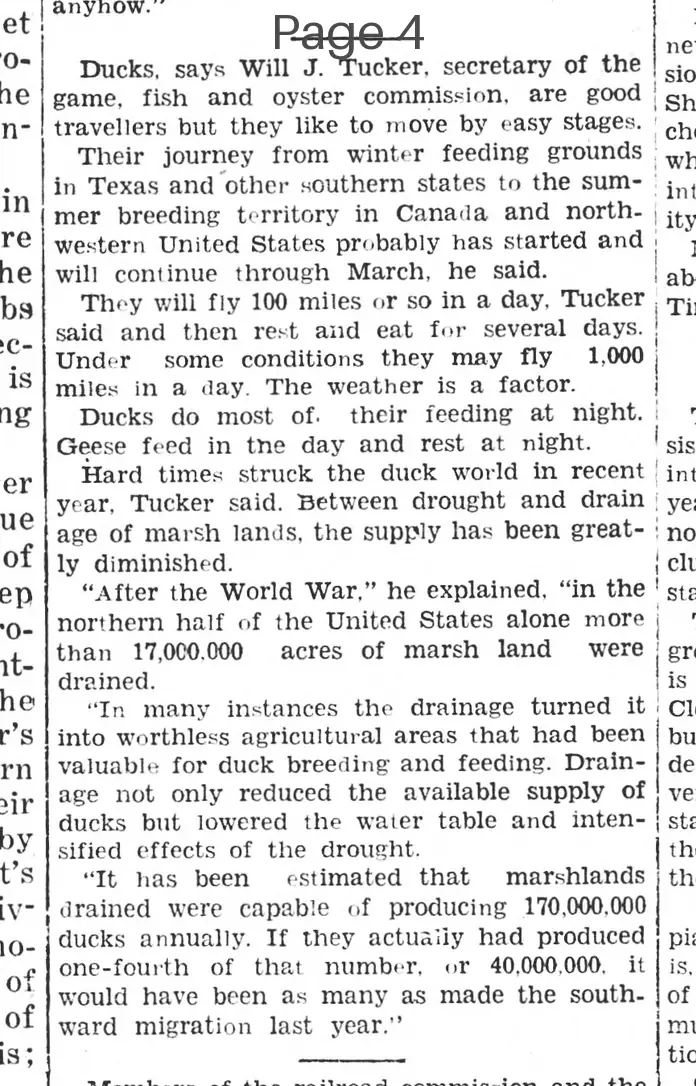
Their journey from winter feeding grounds in Texas and other southern states to the summer breeding territory in Canada and northwestern United States probably has started and will continue through March, he said.
They will fly 100 miles or so in a day, Tucker said, and then rest and eat for several days. Under some conditions they may fly 1,000 miles in a day. The weather is a factor.
Ducks do most of their feeding at night. Geese feed in the day and rest at night.
Hard times struck the duck world in recent years, Tucker said. Between drought and drainage of marsh lands, the supply has been greatly diminished.
"After the World War," he explained, "in the northern half of the United States alone more than 17,000,000 acres of marsh land were drained.
"In many instances the drainage turned it into worthless agricultural areas that had been valuable for duck breeding and feeding. Drainage not only reduced the available supply of ducks but lowered the water table and intensified effects of the drought.
"It has been estimated that marshlands drained were capable of producing 170,000,000 ducks annually. If they actually had produced one-fourth of that number, or 40,000,000, it would have been as many as made the southward migration last year."
What sub-type of article is it?
What themes does it cover?
What keywords are associated?
What entities or persons were involved?
Where did it happen?
Story Details
Key Persons
Location
Texas And Other Southern States To Canada And Northwestern United States
Event Date
Recent Years, After The World War, Through March
Story Details
Will J. Tucker describes ducks' migratory habits, flying in stages from southern U.S. to northern breeding grounds, with feeding and resting patterns differing from geese. He attributes recent duck population decline to drought and post-WWI drainage of over 17 million acres of marshland in northern U.S., which could have produced millions of ducks annually.