Thank you for visiting SNEWPapers!
Sign up free
Literary
September 29, 1824
Massachusetts Spy And Worcester Advertiser
Worcester, Worcester County, Massachusetts
What is this article about?
In Bagdad under Caliph Haroun Al Raschid, barber Ali Sakal cheats a wood-cutter by demanding his pack-saddle as part of a wood sale, citing literal words. Courts side with the barber until the Caliph rules for equity, forcing the barber to shave the wood-cutter's ass in retribution, teaching a lesson on justice beyond strict law.
Clipping
OCR Quality
98%
Excellent
Full Text
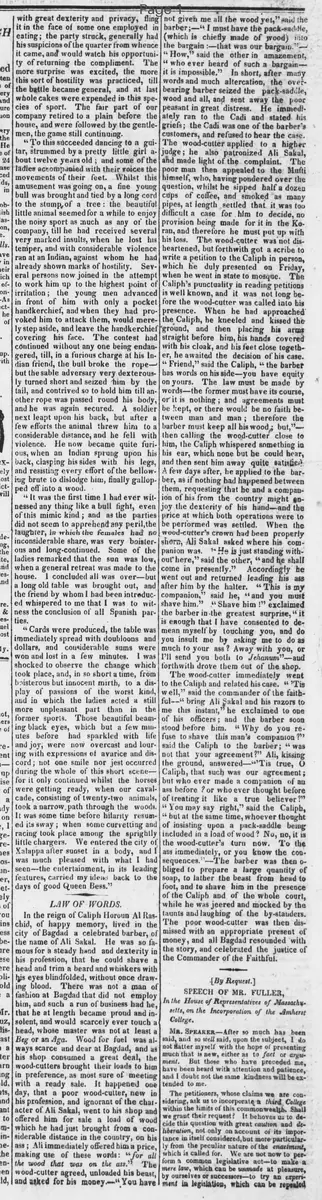
LAW OF WORDS.
In the reign of Caliph Haroun Al Raschid, of happy memory, lived in the city of Bagdad a celebrated barber, of the name of Ali Sakal. He was so famous for a steady hand and dexterity in his profession, that he could shave a head and trim a beard and whiskers with his eyes blindfolded, without once drawing blood. There was not a man of fashion at Bagdad that did not employ him, and such a run of business had he, that he at length became proud and insolent, and would scarcely ever touch a head, whose master was not at least a Beg or an Aga. Wood for fuel was always scarce and dear at Bagdad, and as his shop consumed a great deal, the wood-cutters brought their loads to him in preference, as most sure of meeting with a ready sale. It happened one day, that a poor wood-cutter, new in his profession, and ignorant of the character of Ali Sakal, went to his shop and offered him for sale a load of wood which he had just brought from a considerable distance in the country, on his ass; Ali immediately offered him a price, making use of these words: "for all the wood that was on the ass." The wood-cutter agreed, unloaded his beast, and asked for his money.-"You have not given me all the wood yet," said the barber;-"I must have the pack-saddle, (which is chiefly made of wood) into the bargain :that was our bargain."- "How," said the other in amazement, "who ever heard of such a bargain- it is impossible." In short, after many words and much altercation, the overbearing barber seized the pack-saddle, wood and all, and sent away the poor peasant in great distress. He immediately ran to the Cadi and stated his griefs; the Cadi was one of the barber's customers, and refused to hear the case. The wood-cutter applied to a higher judge; he also patronized Ali Sakal, and made light of the complaint. The poor man then appealed to the Mufti himself, who, having pondered over the question, whilst he sipped half a dozen cups of coffee, and smoked as many pipes, at length settled that it was too difficult a case for him to decide, no provision being made for it in the Koran, and therefore he must put up with his loss. The wood-cutter was not disheartened, but forthwith got a scribe to write a petition to the Caliph in person, which he duly presented on Friday, when he went in state to mosque. The Caliph's punctuality in reading petitions is well known, and it was not long before the wood-cutter was called into his presence. When he had approached the Caliph, he kneeled and kissed the ground, and then placing his arms straight before him, his hands covered with his cloak, and his feet close together, he awaited the decision of his case. "Friend," said the Caliph, "the barber has words on his side-you have equity on yours. The law must be made by words-the former must have its course, or it is nothing; and agreements must be kept, or there would be no faith between man and man; therefore the barber must keep all his wood: but," then calling the wood-cutter close to him, the Caliph whispered something in his ear, which none but he could hear, and then sent him away quite satisfied A few days after, he applied to the barber, as if nothing had happened between them, requesting that he and a companion of his from the country might enjoy the dexterity of his hand-and the price at which both operations were to be performed was settled. When the wood-cutter's crown had been properly shorn, Ali Sakal asked where his companion was. "He is just standing without here," said the other, "and he shall come in presently." Accordingly he went out and returned leading his ass after him by the halter. "This is my companion," said he, "and you must shave him." "Shave him!" exclaimed the barber in the greatest surprise, "it is enough that I have consented to demean myself by touching you, and do you insult me by asking me to do as much to your ass? Away with you, or I'll send you both to Jehanum"-and forthwith drove them out of the shop. The wood-cutter immediately went to the Caliph and related his case. "'Tis well," said the commander of the faithful--"bring Ali Sakal and his razors to me this instant," he exclaimed to one of his officers; and the barber soon stood before him. "Why do you refuse to shave this man's companion?" said the Caliph to the barber; "was not that your agreement?" Ali, kissing the ground, answered-"'Tis true, O Caliph, that such was our agreement; but who ever made a companion of an ass before? or who ever thought before of treating it like a true believer?" "You may say right," said the Caliph, "but at the same time, whoever thought of insisting upon a pack-saddle being included in a load of wood? No, no, it is the wood-cutter's turn now. To the ass immediately, or you know the consequences."--The barber was then obliged to prepare a large quantity of soap, to lather the beast from head to foot, and to shave him in the presence of the Caliph and of the whole court, while he was jeered and mocked by the taunts and laughing of the by-standers. The poor wood-cutter was then dismissed with an appropriate present of money, and all Bagdad resounded with the story, and celebrated the justice of the Commander of the Faithful.
In the reign of Caliph Haroun Al Raschid, of happy memory, lived in the city of Bagdad a celebrated barber, of the name of Ali Sakal. He was so famous for a steady hand and dexterity in his profession, that he could shave a head and trim a beard and whiskers with his eyes blindfolded, without once drawing blood. There was not a man of fashion at Bagdad that did not employ him, and such a run of business had he, that he at length became proud and insolent, and would scarcely ever touch a head, whose master was not at least a Beg or an Aga. Wood for fuel was always scarce and dear at Bagdad, and as his shop consumed a great deal, the wood-cutters brought their loads to him in preference, as most sure of meeting with a ready sale. It happened one day, that a poor wood-cutter, new in his profession, and ignorant of the character of Ali Sakal, went to his shop and offered him for sale a load of wood which he had just brought from a considerable distance in the country, on his ass; Ali immediately offered him a price, making use of these words: "for all the wood that was on the ass." The wood-cutter agreed, unloaded his beast, and asked for his money.-"You have not given me all the wood yet," said the barber;-"I must have the pack-saddle, (which is chiefly made of wood) into the bargain :that was our bargain."- "How," said the other in amazement, "who ever heard of such a bargain- it is impossible." In short, after many words and much altercation, the overbearing barber seized the pack-saddle, wood and all, and sent away the poor peasant in great distress. He immediately ran to the Cadi and stated his griefs; the Cadi was one of the barber's customers, and refused to hear the case. The wood-cutter applied to a higher judge; he also patronized Ali Sakal, and made light of the complaint. The poor man then appealed to the Mufti himself, who, having pondered over the question, whilst he sipped half a dozen cups of coffee, and smoked as many pipes, at length settled that it was too difficult a case for him to decide, no provision being made for it in the Koran, and therefore he must put up with his loss. The wood-cutter was not disheartened, but forthwith got a scribe to write a petition to the Caliph in person, which he duly presented on Friday, when he went in state to mosque. The Caliph's punctuality in reading petitions is well known, and it was not long before the wood-cutter was called into his presence. When he had approached the Caliph, he kneeled and kissed the ground, and then placing his arms straight before him, his hands covered with his cloak, and his feet close together, he awaited the decision of his case. "Friend," said the Caliph, "the barber has words on his side-you have equity on yours. The law must be made by words-the former must have its course, or it is nothing; and agreements must be kept, or there would be no faith between man and man; therefore the barber must keep all his wood: but," then calling the wood-cutter close to him, the Caliph whispered something in his ear, which none but he could hear, and then sent him away quite satisfied A few days after, he applied to the barber, as if nothing had happened between them, requesting that he and a companion of his from the country might enjoy the dexterity of his hand-and the price at which both operations were to be performed was settled. When the wood-cutter's crown had been properly shorn, Ali Sakal asked where his companion was. "He is just standing without here," said the other, "and he shall come in presently." Accordingly he went out and returned leading his ass after him by the halter. "This is my companion," said he, "and you must shave him." "Shave him!" exclaimed the barber in the greatest surprise, "it is enough that I have consented to demean myself by touching you, and do you insult me by asking me to do as much to your ass? Away with you, or I'll send you both to Jehanum"-and forthwith drove them out of the shop. The wood-cutter immediately went to the Caliph and related his case. "'Tis well," said the commander of the faithful--"bring Ali Sakal and his razors to me this instant," he exclaimed to one of his officers; and the barber soon stood before him. "Why do you refuse to shave this man's companion?" said the Caliph to the barber; "was not that your agreement?" Ali, kissing the ground, answered-"'Tis true, O Caliph, that such was our agreement; but who ever made a companion of an ass before? or who ever thought before of treating it like a true believer?" "You may say right," said the Caliph, "but at the same time, whoever thought of insisting upon a pack-saddle being included in a load of wood? No, no, it is the wood-cutter's turn now. To the ass immediately, or you know the consequences."--The barber was then obliged to prepare a large quantity of soap, to lather the beast from head to foot, and to shave him in the presence of the Caliph and of the whole court, while he was jeered and mocked by the taunts and laughing of the by-standers. The poor wood-cutter was then dismissed with an appropriate present of money, and all Bagdad resounded with the story, and celebrated the justice of the Commander of the Faithful.
What sub-type of article is it?
Prose Fiction
Fable
Satire
What themes does it cover?
Moral Virtue
Political
What keywords are associated?
Caliph Haroun Al Raschid
Bagdad
Barber Ali Sakal
Wood Cutter
Pack Saddle
Literal Agreement
Equity Justice
Moral Tale
Literary Details
Title
Law Of Words.
Key Lines
"Friend," Said The Caliph, "The Barber Has Words On His Side You Have Equity On Yours. The Law Must Be Made By Words The Former Must Have Its Course, Or It Is Nothing; And Agreements Must Be Kept, Or There Would Be No Faith Between Man And Man; Therefore The Barber Must Keep All His Wood: But,"
"You May Say Right," Said The Caliph, "But At The Same Time, Whoever Thought Of Insisting Upon A Pack Saddle Being Included In A Load Of Wood? No, No, It Is The Wood Cutter's Turn Now. To The Ass Immediately, Or You Know The Consequences."