Thank you for visiting SNEWPapers!
Sign up free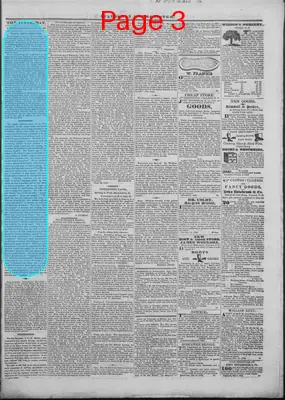
Editorial
October 11, 1828
New Hampshire Statesman And Concord Register
Concord, Merrimack County, New Hampshire
What is this article about?
The editorial reports on Young Men's pro-Adams conventions in Strafford and Grafton counties, New Hampshire, praising their commitment to liberty and institutions. It announces an upcoming meeting in Hillsborough and criticizes the New-Hampshire Patriot for hypocrisy in religious papers' selective condemnation of Adams' Sunday ride while ignoring Jackson's violent acts.
Clipping

OCR Quality
95%
Excellent
Full Text
STATESMAN.
CONCORD, SATURDAY, OCT. 11, 1828.
YOUNG MEN'S MEETINGS.
In our paper of to-day will be found the proceedings of the Young Men favorable to the present Administration, at their Convention in the County of Strafford. Those of the Young Men of Grafton at their Convention in Wentworth on the 6th inst. are received, but unavoidable engagements of the present week prevent their publication until the next.
These proceedings are auspicious to the true interests and welfare of our country. They are a powerful guaranty that our civil liberties will be perpetuated; that our invaluable institutions will be preserved in their purity, and that our happy land will remain unpolluted by the footsteps of the destroyer. The resolutions adopted at these meetings breathe throughout the unadulterated spirit of liberty and equal rights.--Nobly emulating their Fathers of the Revolution, the Young Men resolve that they WILL BE FREE, and that the boon which they have received from their sires, as the choicest of heaven's gifts, they will cherish and transmit to their children inviolate and untarnished; and having religiously resolved to do their duty, they will redeem the sacred pledge.
The Convention at Wentworth was numerously attended, and in point of respectability, could not have been exceeded by any collection of citizens in that highly respectable county. Timothy Kenrick, Esq. of Lebanon presided at the meeting: Jonathan Smith, Esq. of Bath, and Stevens Merrill, Esq. of Plymouth, acted as Secretaries.
A meeting of the Young Men in Hillsborough Council District will be holden at Francestown on the 16th inst. (Thursday next.) The call is signed by more than 1500 Young Men.
The rigidly righteous editor of the New-Hampshire Patriot, whose tender sensibilities and pious feelings are so deeply wounded by the President's ride of a dozen miles on a Sunday evening, has the following paragraph in his last paper, in reference to an editorial article in last week's Statesman & Register. We spoke of certain religious presses as "straining at a gnat and swallowing a camel" in their censures of the mild and upright Adams, and their passing over in silence the enormities of the ferocious and sanguinary Jackson. The Patriot says--"The offence of Mr. Adams is plain and palpable--it is such an offence as if these religious papers had omitted to reprehend, their very silence would convict them of hypocrisy." We are perfectly ready to agree with the Patriot editor in his deduction as to the duty of religious papers. We find no fault with their censures of President Adams, so far as he is justly censurable. But we say to the editors of such papers, deal even-handed justice to both of the Presidential candidates. "Nothing extenuate, nor set down aught in malice," regarding either. By their works let them be justified, and by their works let them be condemned. But do not single out one as a mark for reprehension, and suffer the other to escape with impunity. But "Mr. Adams' offence," says the Patriot editor, "is plain and palpable!" Plain and palpable! "We thank thee, Jew, for teaching us that word."
Was not, we would ask, Gen. Jackson's offence "plain and palpable" in shooting the disarmed and defenceless Dickinson? Was it not "plain and palpable" in decoying and dragging from their hiding places, the sixteen wretched Indians, and "exterminating" them, powerless and helpless as they were, in cold blood? Was it not "plain and palpable" in assaulting Sam'l Jackson, and (as Felix Grundy, one of the General's own partizans says,) "drawing a spear from his cane and wounding him in the side?" Was it not "plain and palpable," after attending a Unitarian church on Sunday, Feb. 28, 1819, to swear that "By G--, he (Gen. Jackson) would cut the scoundrel's (Senator Lacock's) ears off" for doing his duty as Chairman of a Congressional Committee? Was it not "plain and palpable" in swearing to envelope Silas Dinsmore "in the flames of his Agency House"? Was it not "plain and palpable" in ferociously assaulting Col. Benton with "pistols and daggers" in the streets of Nashville? Questions like these multiply upon us--but we must forbear. We only ask neighbor Hill, as the champion of "Congregational, Baptist, Methodist and Universalist" orthodoxy, in prescribing the line of duty of "religious papers," to intimate to the editors, that it is possible their silence on the above topics may, in the estimation of candid men, come as near "convicting them of hypocrisy," as would their silence in regard to President Adams' ten mile ride on a late Sabbath evening.
CONCORD, SATURDAY, OCT. 11, 1828.
YOUNG MEN'S MEETINGS.
In our paper of to-day will be found the proceedings of the Young Men favorable to the present Administration, at their Convention in the County of Strafford. Those of the Young Men of Grafton at their Convention in Wentworth on the 6th inst. are received, but unavoidable engagements of the present week prevent their publication until the next.
These proceedings are auspicious to the true interests and welfare of our country. They are a powerful guaranty that our civil liberties will be perpetuated; that our invaluable institutions will be preserved in their purity, and that our happy land will remain unpolluted by the footsteps of the destroyer. The resolutions adopted at these meetings breathe throughout the unadulterated spirit of liberty and equal rights.--Nobly emulating their Fathers of the Revolution, the Young Men resolve that they WILL BE FREE, and that the boon which they have received from their sires, as the choicest of heaven's gifts, they will cherish and transmit to their children inviolate and untarnished; and having religiously resolved to do their duty, they will redeem the sacred pledge.
The Convention at Wentworth was numerously attended, and in point of respectability, could not have been exceeded by any collection of citizens in that highly respectable county. Timothy Kenrick, Esq. of Lebanon presided at the meeting: Jonathan Smith, Esq. of Bath, and Stevens Merrill, Esq. of Plymouth, acted as Secretaries.
A meeting of the Young Men in Hillsborough Council District will be holden at Francestown on the 16th inst. (Thursday next.) The call is signed by more than 1500 Young Men.
The rigidly righteous editor of the New-Hampshire Patriot, whose tender sensibilities and pious feelings are so deeply wounded by the President's ride of a dozen miles on a Sunday evening, has the following paragraph in his last paper, in reference to an editorial article in last week's Statesman & Register. We spoke of certain religious presses as "straining at a gnat and swallowing a camel" in their censures of the mild and upright Adams, and their passing over in silence the enormities of the ferocious and sanguinary Jackson. The Patriot says--"The offence of Mr. Adams is plain and palpable--it is such an offence as if these religious papers had omitted to reprehend, their very silence would convict them of hypocrisy." We are perfectly ready to agree with the Patriot editor in his deduction as to the duty of religious papers. We find no fault with their censures of President Adams, so far as he is justly censurable. But we say to the editors of such papers, deal even-handed justice to both of the Presidential candidates. "Nothing extenuate, nor set down aught in malice," regarding either. By their works let them be justified, and by their works let them be condemned. But do not single out one as a mark for reprehension, and suffer the other to escape with impunity. But "Mr. Adams' offence," says the Patriot editor, "is plain and palpable!" Plain and palpable! "We thank thee, Jew, for teaching us that word."
Was not, we would ask, Gen. Jackson's offence "plain and palpable" in shooting the disarmed and defenceless Dickinson? Was it not "plain and palpable" in decoying and dragging from their hiding places, the sixteen wretched Indians, and "exterminating" them, powerless and helpless as they were, in cold blood? Was it not "plain and palpable" in assaulting Sam'l Jackson, and (as Felix Grundy, one of the General's own partizans says,) "drawing a spear from his cane and wounding him in the side?" Was it not "plain and palpable," after attending a Unitarian church on Sunday, Feb. 28, 1819, to swear that "By G--, he (Gen. Jackson) would cut the scoundrel's (Senator Lacock's) ears off" for doing his duty as Chairman of a Congressional Committee? Was it not "plain and palpable" in swearing to envelope Silas Dinsmore "in the flames of his Agency House"? Was it not "plain and palpable" in ferociously assaulting Col. Benton with "pistols and daggers" in the streets of Nashville? Questions like these multiply upon us--but we must forbear. We only ask neighbor Hill, as the champion of "Congregational, Baptist, Methodist and Universalist" orthodoxy, in prescribing the line of duty of "religious papers," to intimate to the editors, that it is possible their silence on the above topics may, in the estimation of candid men, come as near "convicting them of hypocrisy," as would their silence in regard to President Adams' ten mile ride on a late Sabbath evening.
What sub-type of article is it?
Partisan Politics
Moral Or Religious
What keywords are associated?
Young Men Conventions
Adams Jackson Election
Religious Hypocrisy
Partisan Politics
Sunday Ride
Jackson Violence
What entities or persons were involved?
John Quincy Adams
Andrew Jackson
New Hampshire Patriot
Young Men Favorable To The Present Administration
Timothy Kenrick
Jonathan Smith
Stevens Merrill
Felix Grundy
Senator Lacock
Col. Benton
Editorial Details
Primary Topic
Young Men's Support For Adams And Critique Of Jackson's Character Via Religious Hypocrisy
Stance / Tone
Pro Adams, Anti Jackson, Partisan And Moralistic
Key Figures
John Quincy Adams
Andrew Jackson
New Hampshire Patriot
Young Men Favorable To The Present Administration
Timothy Kenrick
Jonathan Smith
Stevens Merrill
Felix Grundy
Senator Lacock
Col. Benton
Key Arguments
Young Men's Conventions Demonstrate Commitment To Preserving Civil Liberties And Institutions
Resolutions Emulate Revolutionary Fathers In Defending Freedom And Equal Rights
Religious Papers Hypocritically Criticize Adams' Minor Sunday Ride But Ignore Jackson's Violent Acts
Jackson's Offenses Include Shooting Dickinson, Exterminating Indians, Assaulting Individuals With Weapons
Editors Of Religious Papers Should Apply Even Handed Justice To Both Presidential Candidates