Thank you for visiting SNEWPapers!
Sign up free
Editorial
July 8, 1956
Atlanta Daily World
Atlanta, Fulton County, Georgia
What is this article about?
Editorial analyzes the 1956 steel strike, noting both sides' preparedness due to market conditions and inventories. Predicts prolonged duration affecting economy and politics, with potential government intervention if stability threatened. No immediate severe impacts expected.
Clipping
OCR Quality
100%
Excellent
Full Text
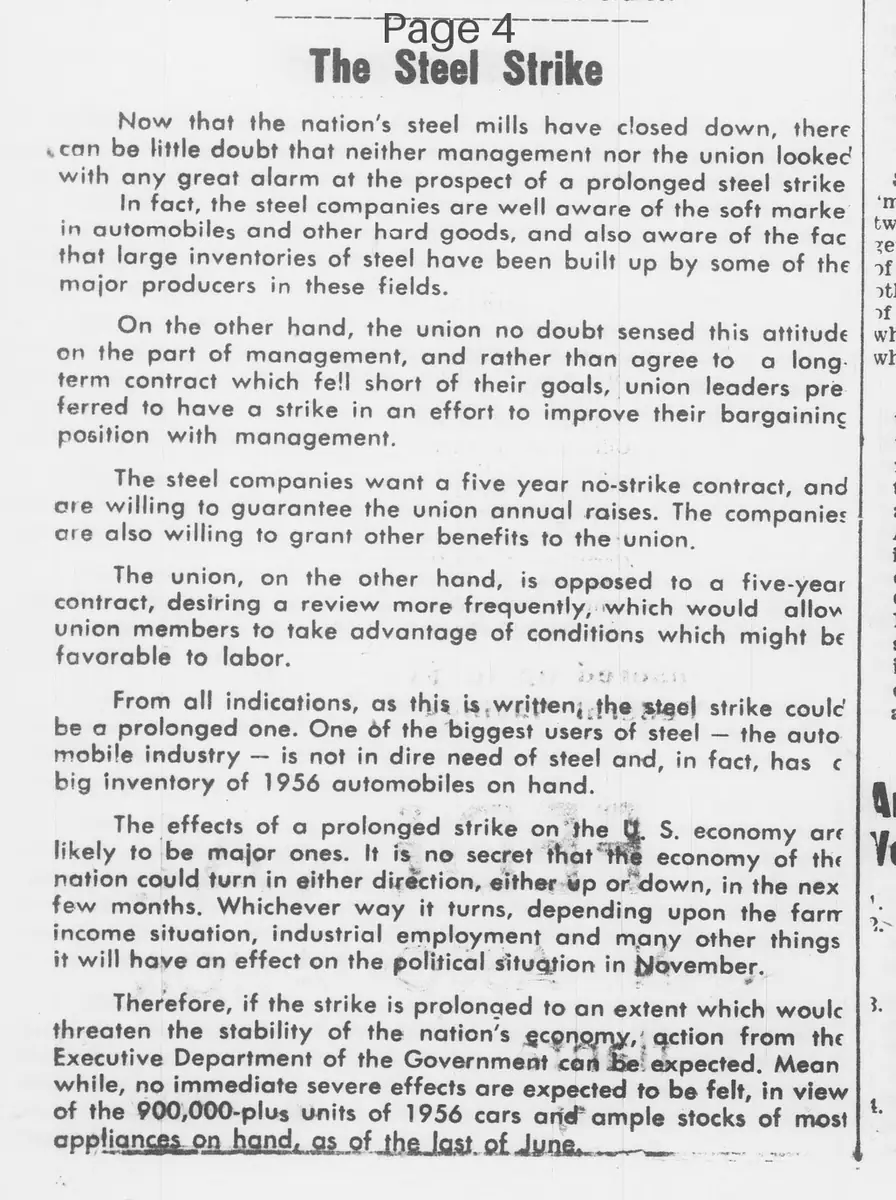
The Steel Strike
Now that the nation's steel mills have closed down, there can be little doubt that neither management nor the union looked with any great alarm at the prospect of a prolonged steel strike.
In fact, the steel companies are well aware of the soft market in automobiles and other hard goods, and also aware of the fact that large inventories of steel have been built up by some of the major producers in these fields.
On the other hand, the union no doubt sensed this attitude on the part of management, and rather than agree to a long term contract which fell short of their goals, union leaders preferred to have a strike in an effort to improve their bargaining position with management.
The steel companies want a five year no-strike contract, and are willing to guarantee the union annual raises. The companies are also willing to grant other benefits to the union.
The union, on the other hand, is opposed to a five-year contract, desiring a review more frequently, which would allow union members to take advantage of conditions which might be favorable to labor.
From all indications, as this is written; the steel strike could be a prolonged one. One of the biggest users of steel - the automobile industry - is not in dire need of steel and, in fact, has a big inventory of 1956 automobiles on hand.
The effects of a prolonged strike on the U. S. economy are likely to be major ones. It is no secret that the economy of the nation could turn in either direction, either up or down, in the next few months. Whichever way it turns, depending upon the farm income situation, industrial employment and many other things it will have an effect on the political situation in November.
Therefore, if the strike is prolonged to an extent which would threaten the stability of the nation's economy, action from the Executive Department of the Government can be expected. Meanwhile, no immediate severe effects are expected to be felt, in view of the 900,000-plus units of 1956 cars and ample stocks of most appliances on hand, as of the last of June.
Now that the nation's steel mills have closed down, there can be little doubt that neither management nor the union looked with any great alarm at the prospect of a prolonged steel strike.
In fact, the steel companies are well aware of the soft market in automobiles and other hard goods, and also aware of the fact that large inventories of steel have been built up by some of the major producers in these fields.
On the other hand, the union no doubt sensed this attitude on the part of management, and rather than agree to a long term contract which fell short of their goals, union leaders preferred to have a strike in an effort to improve their bargaining position with management.
The steel companies want a five year no-strike contract, and are willing to guarantee the union annual raises. The companies are also willing to grant other benefits to the union.
The union, on the other hand, is opposed to a five-year contract, desiring a review more frequently, which would allow union members to take advantage of conditions which might be favorable to labor.
From all indications, as this is written; the steel strike could be a prolonged one. One of the biggest users of steel - the automobile industry - is not in dire need of steel and, in fact, has a big inventory of 1956 automobiles on hand.
The effects of a prolonged strike on the U. S. economy are likely to be major ones. It is no secret that the economy of the nation could turn in either direction, either up or down, in the next few months. Whichever way it turns, depending upon the farm income situation, industrial employment and many other things it will have an effect on the political situation in November.
Therefore, if the strike is prolonged to an extent which would threaten the stability of the nation's economy, action from the Executive Department of the Government can be expected. Meanwhile, no immediate severe effects are expected to be felt, in view of the 900,000-plus units of 1956 cars and ample stocks of most appliances on hand, as of the last of June.
What sub-type of article is it?
Labor
Economic Policy
Partisan Politics
What keywords are associated?
Steel Strike
Labor Union
Management Bargaining
Economic Impact
Automobile Inventory
Government Intervention
Political Effects
What entities or persons were involved?
Steel Companies
Union
Automobile Industry
Executive Department Of The Government
Editorial Details
Primary Topic
Analysis Of The 1956 Steel Strike And Its Potential Economic And Political Impacts
Stance / Tone
Neutral Analysis Predicting Prolonged Strike And Possible Government Intervention
Key Figures
Steel Companies
Union
Automobile Industry
Executive Department Of The Government
Key Arguments
Neither Management Nor Union Alarmed By Prolonged Strike Prospect
Steel Companies Aware Of Soft Market And Large Inventories
Union Prefers Strike To Improve Bargaining Position Over Short Term Contract
Companies Seek Five Year No Strike Contract With Annual Raises And Benefits
Union Opposes Five Year Contract, Wants Frequent Reviews
Automobile Industry Has Ample Steel And 1956 Car Inventories
Prolonged Strike Could Majorly Affect U.S. Economy And November Politics
Government Action Expected If Strike Threatens Economic Stability
No Immediate Severe Effects Due To Existing Inventories