Thank you for visiting SNEWPapers!
Sign up free
Literary
December 5, 1798
The New Hampshire Gazette
Portsmouth, Rockingham County, New Hampshire
What is this article about?
An essay providing humorous and practical advice to storytellers on engaging company effectively, outlining six precautions: consulting the occasion, knowing the story well, avoiding indelicacy, considering context, not overhyping, and refraining from sharing family anecdotes.
Clipping
OCR Quality
98%
Excellent
Full Text
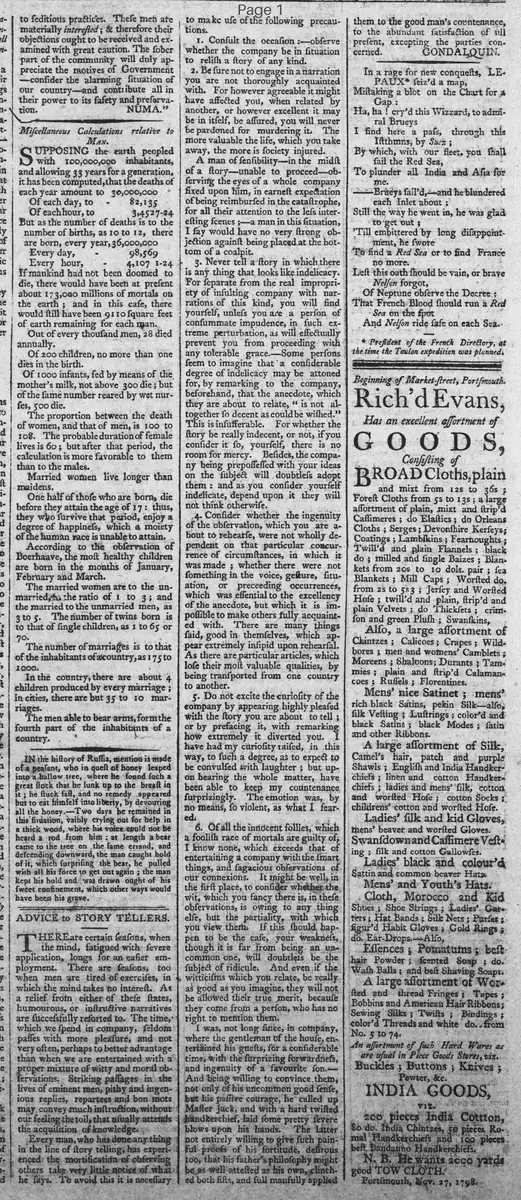
ADVICE to STORY TELLERS.
THERE are certain seasons, when the mind, fatigued with severe application, longs for an easier employment. There are seasons, too when men are tired of exercises, in which the mind takes no interest. As a relief from either of these states, humourous, or instructive narratives are successfully resorted to. The time, which we spend in company, seldom passes with more pleasure, and not very often, perhaps to better advantage than when we are entertained with a proper mixture of witty and moral observations. Striking passages in the lives of eminent men, pithy and ingenious replies, repartees and bon mots may convey much instruction, without our feeling the toil that usually attends the acquisition of knowledge.
Every man, who has done any thing in the line of story telling, has experienced the mortification of observing others take very little notice of what he says. To avoid this it is necessary to make use of the following precautions.
1. Consult the occasion:—observe whether the company be in situation to relish a story of any kind.
2. Be sure not to engage in a narration you are not thoroughly acquainted with. For however agreeable it might have affected you, when related by another, or however excellent it may be in itself, be assured, you will never be pardoned for murdering it. The more valuable the life, which you take away, the more is society injured.
A man of sensibility—in the midst of a story—unable to proceed—observing the eyes of a whole company fixed upon him, in earnest expectation of being reimbursed in the catastrophe, for all their attention to the less interesting scenes; a man in this situation, I say would have no very strong objection against being placed at the bottom of a coalpit.
3. Never tell a story in which there is any thing that looks like indelicacy: For separate from the real impropriety of insulting company with narrations of this kind, you will find yourself, unless you are a person of consummate impudence, in such extreme perturbation, as will effectually prevent you from proceeding with any tolerable grace.—Some persons seem to imagine that a considerable degree of indelicacy may be atoned for, by remarking to the company, beforehand, that the anecdote, which they are about to relate, "is not altogether so decent as could be wished." This is insufferable. For whether the story be really indecent, or not, if you consider it so, yourself, there is no room for mercy. Besides, the company being prepossessed with your ideas on the subject will doubtless adopt them: and as you consider yourself indelicate, depend upon it they will not think otherwise.
4. Consider whether the ingenuity of the observation, which you are about to rehearse, were not wholly dependent on that particular concurrence of circumstances, in which it was made; whether there were not something in the voice, gesture, situation, or preceding occurrences, which was essential to the excellency of the anecdote, but which it is impossible to make others fully acquainted with. There are many things said, good in themselves, which appear extremely insipid upon rehearsal. As there are particular articles, which lose their most valuable qualities, by being transported from one country to another.
5. Do not excite the curiosity of the company by appearing highly pleased with the story you are about to tell; or by prefacing it, with remarking how extremely it diverted you. I have had my curiosity raised, in this way, to such a degree, as to expect to be convulsed with laughter; but upon hearing the whole matter, have been able to keep my countenance surprisingly. The emotion was, by no means, so violent, as what I feared:
6. Of all the innocent follies, which a foolish race of mortals are guilty of, I know none, which exceeds that of entertaining a company with the smart things, and sagacious observations of our connexions. It might be well, in the first place, to consider whether the wit, which you fancy there is, in these observations, is owing to any thing else, but the partiality, with which you view them: If this should happen to be the case, your weakness, though it is far from being an uncommon one, will doubtless be the subject of ridicule. And even if the witticisms which you relate, be really as good as you imagine, they will not be allowed their true merit, because they come from a person, who has no right to mention them.
I was, not long since, in company, where the gentleman of the house, entertained his guests, for a considerable time, with the surprising forwardness, and ingenuity of a favourite son.—And being willing to convince them, not only of his uncommon good sense, but his passive courage, he called up Master Jack, and with a hard twisted handkerchief, laid some pretty severe blows upon his hands. The latter not entirely willing to give such painful proofs of his fortitude, desirous too, that his father's philosophy might be as well attested as his own, clinched both fists, and full manfully applied them to the good man's countenance. to the abundant satisfaction of all present, excepting the parties concerned.
THERE are certain seasons, when the mind, fatigued with severe application, longs for an easier employment. There are seasons, too when men are tired of exercises, in which the mind takes no interest. As a relief from either of these states, humourous, or instructive narratives are successfully resorted to. The time, which we spend in company, seldom passes with more pleasure, and not very often, perhaps to better advantage than when we are entertained with a proper mixture of witty and moral observations. Striking passages in the lives of eminent men, pithy and ingenious replies, repartees and bon mots may convey much instruction, without our feeling the toil that usually attends the acquisition of knowledge.
Every man, who has done any thing in the line of story telling, has experienced the mortification of observing others take very little notice of what he says. To avoid this it is necessary to make use of the following precautions.
1. Consult the occasion:—observe whether the company be in situation to relish a story of any kind.
2. Be sure not to engage in a narration you are not thoroughly acquainted with. For however agreeable it might have affected you, when related by another, or however excellent it may be in itself, be assured, you will never be pardoned for murdering it. The more valuable the life, which you take away, the more is society injured.
A man of sensibility—in the midst of a story—unable to proceed—observing the eyes of a whole company fixed upon him, in earnest expectation of being reimbursed in the catastrophe, for all their attention to the less interesting scenes; a man in this situation, I say would have no very strong objection against being placed at the bottom of a coalpit.
3. Never tell a story in which there is any thing that looks like indelicacy: For separate from the real impropriety of insulting company with narrations of this kind, you will find yourself, unless you are a person of consummate impudence, in such extreme perturbation, as will effectually prevent you from proceeding with any tolerable grace.—Some persons seem to imagine that a considerable degree of indelicacy may be atoned for, by remarking to the company, beforehand, that the anecdote, which they are about to relate, "is not altogether so decent as could be wished." This is insufferable. For whether the story be really indecent, or not, if you consider it so, yourself, there is no room for mercy. Besides, the company being prepossessed with your ideas on the subject will doubtless adopt them: and as you consider yourself indelicate, depend upon it they will not think otherwise.
4. Consider whether the ingenuity of the observation, which you are about to rehearse, were not wholly dependent on that particular concurrence of circumstances, in which it was made; whether there were not something in the voice, gesture, situation, or preceding occurrences, which was essential to the excellency of the anecdote, but which it is impossible to make others fully acquainted with. There are many things said, good in themselves, which appear extremely insipid upon rehearsal. As there are particular articles, which lose their most valuable qualities, by being transported from one country to another.
5. Do not excite the curiosity of the company by appearing highly pleased with the story you are about to tell; or by prefacing it, with remarking how extremely it diverted you. I have had my curiosity raised, in this way, to such a degree, as to expect to be convulsed with laughter; but upon hearing the whole matter, have been able to keep my countenance surprisingly. The emotion was, by no means, so violent, as what I feared:
6. Of all the innocent follies, which a foolish race of mortals are guilty of, I know none, which exceeds that of entertaining a company with the smart things, and sagacious observations of our connexions. It might be well, in the first place, to consider whether the wit, which you fancy there is, in these observations, is owing to any thing else, but the partiality, with which you view them: If this should happen to be the case, your weakness, though it is far from being an uncommon one, will doubtless be the subject of ridicule. And even if the witticisms which you relate, be really as good as you imagine, they will not be allowed their true merit, because they come from a person, who has no right to mention them.
I was, not long since, in company, where the gentleman of the house, entertained his guests, for a considerable time, with the surprising forwardness, and ingenuity of a favourite son.—And being willing to convince them, not only of his uncommon good sense, but his passive courage, he called up Master Jack, and with a hard twisted handkerchief, laid some pretty severe blows upon his hands. The latter not entirely willing to give such painful proofs of his fortitude, desirous too, that his father's philosophy might be as well attested as his own, clinched both fists, and full manfully applied them to the good man's countenance. to the abundant satisfaction of all present, excepting the parties concerned.
What sub-type of article is it?
Essay
Satire
What themes does it cover?
Social Manners
Moral Virtue
What keywords are associated?
Storytelling
Social Etiquette
Humor
Advice
Anecdotes
Indelicacy
Repartees
Literary Details
Title
Advice To Story Tellers.
Subject
Advice On Effective Storytelling In Social Company
Form / Style
Prose Essay With Numbered Precautions And Anecdotes
Key Lines
A Man Of Sensibility—In The Midst Of A Story—Unable To Proceed—Observing The Eyes Of A Whole Company Fixed Upon Him, In Earnest Expectation Of Being Reimbursed In The Catastrophe, For All Their Attention To The Less Interesting Scenes; A Man In This Situation, I Say Would Have No Very Strong Objection Against Being Placed At The Bottom Of A Coalpit.
Never Tell A Story In Which There Is Any Thing That Looks Like Indelicacy: For Separate From The Real Impropriety Of Insulting Company With Narrations Of This Kind, You Will Find Yourself, Unless You Are A Person Of Consummate Impudence, In Such Extreme Perturbation, As Will Effectually Prevent You From Proceeding With Any Tolerable Grace.
Of All The Innocent Follies, Which A Foolish Race Of Mortals Are Guilty Of, I Know None, Which Exceeds That Of Entertaining A Company With The Smart Things, And Sagacious Observations Of Our Connexions.