Thank you for visiting SNEWPapers!
Sign up free
Literary
November 2, 1825
The Massachusetts Spy, And Worcester County Advertiser
Worcester, Worcester County, Massachusetts
What is this article about?
Mary Conway marries Henry happily, but a minor dispute over dinner leads to Henry's resentment, drawing him into tavern life, drinking, and gambling. Their marriage deteriorates into bitterness, ruining their family and leaving Mary in poverty. A moral tale on the consequences of a single error.
Clipping
OCR Quality
98%
Excellent
Full Text
THE FIRST ERROR.
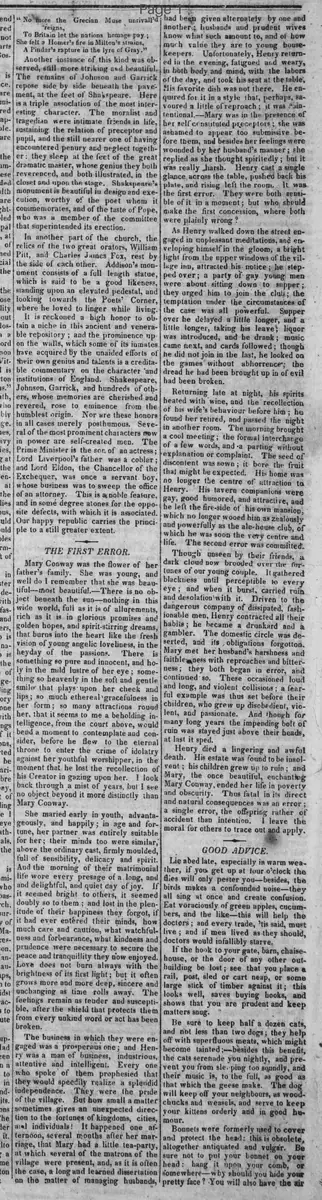
Mary Conway was the flower of her father's family. She was young, and well do I remember that she was beautiful—most beautiful!—There is no object beneath the sun—nothing in this wide world, full as it is of allurements, rich as it is in glorious promises and golden hopes, and spirit-stirring dreams, that burns into the heart like the fresh vision of young angelic loveliness, in the heyday of the passions. There is something so pure and innocent, and holy in the mild lustre of her eye; something so heavenly in the soft and gentle smile that plays upon her cheek and lips; so much ethereal gracefulness in her form; so many attractions round her, that it seems to me a beholding intelligence, from the court above, would bend a moment to contemplate and consider, before he flew to the eternal throne to enter the crime of idolatry against her youthful worshipper, in the moment that he lost the recollection of his Creator in gazing upon her. I look back through a mist of years, but I see no object beyond it more distinctly than Mary Conway.
She married early in youth, advantageously, and happily; in age and fortune, her partner was entirely suitable for her; their minds too were similar, above the ordinary cast, firmly moulded, full of sensibility, delicacy and spirit. And the morning of their matrimonial life wore every presage of a long, and delightful, and quiet day of joy. If it seemed bright to others, it seemed doubly so to them; and lost in the plenitude of their happiness they forgot, if it had ever entered their minds, how much care and caution, what watchfulness and forbearance, what kindness and prudence were necessary to secure the peace and tranquillity they now enjoyed.
Love does not burn always with the brightness of its first light; but it often grows more and more deep, sincere and unchanging as time rolls away. The feelings remain as tender and susceptible, after the shield that protects them from every unkind word or act has been broken.
The business in which they were engaged was a prosperous one; and Henry was a man of business, industrious, attentive and intelligent. Every one who spoke of them prophesied that they would speedily realize a splendid independence. They were the pride of the village. But how small a matter sometimes gives an unexpected direction to the fortunes of kingdoms, cities, and individuals! It happened one afternoon, several months after her marriage, that Mary had a little tea-party, at which several of the matrons of the village were present, and, as it is often the case, a long and learned dissertation on the matter of managing husbands,
had been given alternately by one and another; husbands and prudent wives know what such amount to, and of how much value they are to young house-keepers. Unfortunately, Henry returned in the evening, fatigued and weary, in both body and mind, with the labors of the day, and took his seat at the table. His favorite dish was not there. He enquired for it in a style that, perhaps, savoured a little of reproach; it was unintentional.—Mary was in the presence of her self-constituted preceptors; she was ashamed to appear too submissive before them, and besides her feelings were wounded by her husband's manner; she replied as she thought spiritedly; but it was really harsh. Henry cast a single glance across the table, pushed back his plate, and rising left the room. It was the first error. They were both sensible of it in a moment: but who should make the first concession, where both were plainly wrong
As Henry walked down the street engaged in unpleasant meditations, and enveloping himself in the gloom, a bright light from the upper windows of the village inn, attracted his notice; he stepped over; a party of gay young men were about sitting down to supper; they urged him to join the club; the temptation under the circumstances of the case was all powerful. Supper over he delayed a little longer, and a little longer, taking his leave; liquor was introduced, and he drank; music came next, and cards followed; though he did not join in the last, he looked on the games without abhorrence; the dread he had been brought up in of evil had been broken.
Returning late at night, his spirits heated with wine, and the recollection of his wife's behaviour before him; he found her retired, and passed the night in another room. The morning brought a cool meeting; the formal interchange of a few words, and a parting without explanation or complaint. The seed of discontent was sown; it bore the fruit that might be expected. His home was no longer the centre of attraction to Henry. His tavern companions were gay, good humored, and attractive, and he left the fire-side of his own mansion, which no longer wooed him as zealously and powerfully as the ale-house club, of which he was soon the very centre and life. The second error was committed.
Though unseen by their friends, a dark cloud now brooded over the fortunes of our young couple. It gathered blackness until perceptible to every eye; and when it burst, carried ruin and desolation with it. Driven to the dangerous company of dissipated, fashionable men, Henry contracted all their habits; he became a drunkard and a gambler. The domestic circle was deserted, and its obligations forgotten. Mary met her husband's harshness and faithlessness with reproaches and bitterness; they both began in error, and continued so. These occasioned loud and long, and violent collisions; a fearful example was thus set before their children, who grew up disobedient, violent, and passionate. And though for many long years the impending bolt of ruin was stayed just above their heads, at last it sped.
Henry died a lingering and awful death. His estate was found to be insolvent; his children grew up to ruin; and Mary, the once beautiful, enchanting Mary Conway, ended her life in poverty and obscurity. Thus fatal in its direct and natural consequences was an error; a single error, the offspring rather of accident than intention. I leave the moral for others to trace out and apply.
Mary Conway was the flower of her father's family. She was young, and well do I remember that she was beautiful—most beautiful!—There is no object beneath the sun—nothing in this wide world, full as it is of allurements, rich as it is in glorious promises and golden hopes, and spirit-stirring dreams, that burns into the heart like the fresh vision of young angelic loveliness, in the heyday of the passions. There is something so pure and innocent, and holy in the mild lustre of her eye; something so heavenly in the soft and gentle smile that plays upon her cheek and lips; so much ethereal gracefulness in her form; so many attractions round her, that it seems to me a beholding intelligence, from the court above, would bend a moment to contemplate and consider, before he flew to the eternal throne to enter the crime of idolatry against her youthful worshipper, in the moment that he lost the recollection of his Creator in gazing upon her. I look back through a mist of years, but I see no object beyond it more distinctly than Mary Conway.
She married early in youth, advantageously, and happily; in age and fortune, her partner was entirely suitable for her; their minds too were similar, above the ordinary cast, firmly moulded, full of sensibility, delicacy and spirit. And the morning of their matrimonial life wore every presage of a long, and delightful, and quiet day of joy. If it seemed bright to others, it seemed doubly so to them; and lost in the plenitude of their happiness they forgot, if it had ever entered their minds, how much care and caution, what watchfulness and forbearance, what kindness and prudence were necessary to secure the peace and tranquillity they now enjoyed.
Love does not burn always with the brightness of its first light; but it often grows more and more deep, sincere and unchanging as time rolls away. The feelings remain as tender and susceptible, after the shield that protects them from every unkind word or act has been broken.
The business in which they were engaged was a prosperous one; and Henry was a man of business, industrious, attentive and intelligent. Every one who spoke of them prophesied that they would speedily realize a splendid independence. They were the pride of the village. But how small a matter sometimes gives an unexpected direction to the fortunes of kingdoms, cities, and individuals! It happened one afternoon, several months after her marriage, that Mary had a little tea-party, at which several of the matrons of the village were present, and, as it is often the case, a long and learned dissertation on the matter of managing husbands,
had been given alternately by one and another; husbands and prudent wives know what such amount to, and of how much value they are to young house-keepers. Unfortunately, Henry returned in the evening, fatigued and weary, in both body and mind, with the labors of the day, and took his seat at the table. His favorite dish was not there. He enquired for it in a style that, perhaps, savoured a little of reproach; it was unintentional.—Mary was in the presence of her self-constituted preceptors; she was ashamed to appear too submissive before them, and besides her feelings were wounded by her husband's manner; she replied as she thought spiritedly; but it was really harsh. Henry cast a single glance across the table, pushed back his plate, and rising left the room. It was the first error. They were both sensible of it in a moment: but who should make the first concession, where both were plainly wrong
As Henry walked down the street engaged in unpleasant meditations, and enveloping himself in the gloom, a bright light from the upper windows of the village inn, attracted his notice; he stepped over; a party of gay young men were about sitting down to supper; they urged him to join the club; the temptation under the circumstances of the case was all powerful. Supper over he delayed a little longer, and a little longer, taking his leave; liquor was introduced, and he drank; music came next, and cards followed; though he did not join in the last, he looked on the games without abhorrence; the dread he had been brought up in of evil had been broken.
Returning late at night, his spirits heated with wine, and the recollection of his wife's behaviour before him; he found her retired, and passed the night in another room. The morning brought a cool meeting; the formal interchange of a few words, and a parting without explanation or complaint. The seed of discontent was sown; it bore the fruit that might be expected. His home was no longer the centre of attraction to Henry. His tavern companions were gay, good humored, and attractive, and he left the fire-side of his own mansion, which no longer wooed him as zealously and powerfully as the ale-house club, of which he was soon the very centre and life. The second error was committed.
Though unseen by their friends, a dark cloud now brooded over the fortunes of our young couple. It gathered blackness until perceptible to every eye; and when it burst, carried ruin and desolation with it. Driven to the dangerous company of dissipated, fashionable men, Henry contracted all their habits; he became a drunkard and a gambler. The domestic circle was deserted, and its obligations forgotten. Mary met her husband's harshness and faithlessness with reproaches and bitterness; they both began in error, and continued so. These occasioned loud and long, and violent collisions; a fearful example was thus set before their children, who grew up disobedient, violent, and passionate. And though for many long years the impending bolt of ruin was stayed just above their heads, at last it sped.
Henry died a lingering and awful death. His estate was found to be insolvent; his children grew up to ruin; and Mary, the once beautiful, enchanting Mary Conway, ended her life in poverty and obscurity. Thus fatal in its direct and natural consequences was an error; a single error, the offspring rather of accident than intention. I leave the moral for others to trace out and apply.
What sub-type of article is it?
Prose Fiction
What themes does it cover?
Moral Virtue
Temperance
Social Manners
What keywords are associated?
Marital Error
Moral Tale
Family Ruin
Domestic Discord
Temperance Loss
Village Life
Literary Details
Title
The First Error.
Subject
The Fatal Consequences Of A Single Marital Error
Key Lines
It Was The First Error. They Were Both Sensible Of It In A Moment: But Who Should Make The First Concession, Where Both Were Plainly Wrong
The Seed Of Discontent Was Sown; It Bore The Fruit That Might Be Expected.
Thus Fatal In Its Direct And Natural Consequences Was An Error; A Single Error, The Offspring Rather Of Accident Than Intention. I Leave The Moral For Others To Trace Out And Apply.