Thank you for visiting SNEWPapers!
Sign up free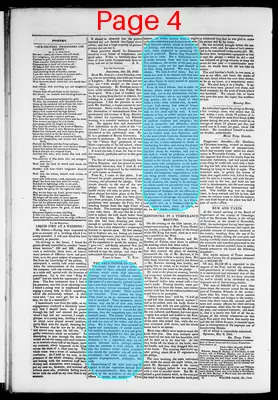
Literary
February 16, 1842
The Samaritan, And Total Abstinence Advocate
Providence, Providence County, Rhode Island
What is this article about?
An essay arguing that true human honor derives from moral integrity, rectitude, and virtuous character rather than fame from military, political, or literary achievements. It contrasts superficial admiration with genuine esteem, emphasizing a mind governed by duty, faith, and compassion. Attributed to Blair.
Clipping
OCR Quality
98%
Excellent
Full Text
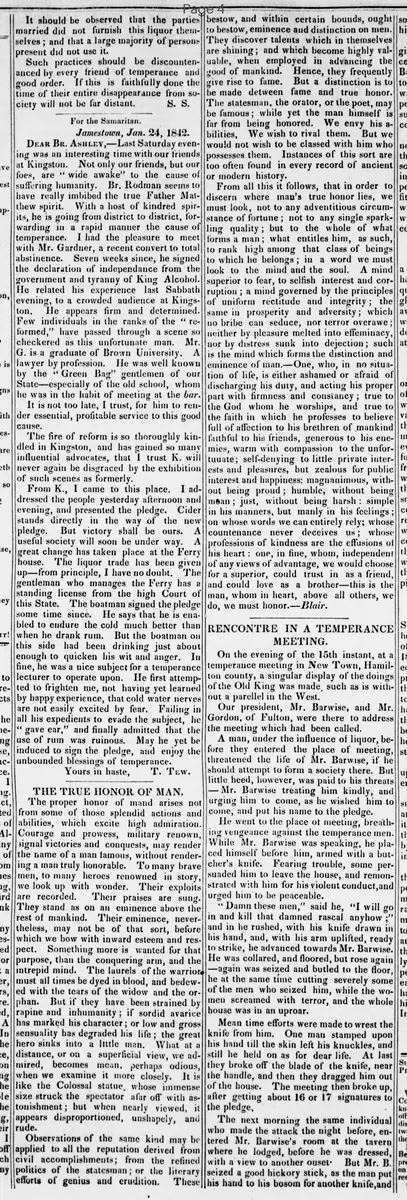
THE TRUE HONOR OF MAN.
The proper honor of man arises not from some of those splendid actions and abilities, which excite high admiration. Courage and prowess, military renown, signal victories and conquests, may render the name of a man famous, without rendering a man truly honorable. To many brave men, to many heroes renowned in story, we look up with wonder. Their exploits are recorded. Their praises are sung. They stand as on an eminence above the rest of mankind. Their eminence, nevertheless, may not be of that sort, before which we bow with inward esteem and respect. Something more is wanted for that purpose, than the conquering arm, and the intrepid mind. The laurels of the warrior must all times be dyed in blood. and bedewed with the tears of the widow and the orphan. But if they have been strained by rapine and inhumanity; if sordid avarice has marked his character; or low and gross sensuality has degraded his life; the great hero sinks into a little man. What at a distance, or on a superficial view, we admired, becomes mean, perhaps odious, when we examine it more closely. It is like the Colossal statue, whose immense size struck the spectator afar off with astonishment; but when nearly viewed, it appears disproportioned, unshapely, and rude.
Observations of the same kind may be applied to all the reputation derived from civil accomplishments; from the refined politics of the statesman; or the literary efforts of genius and erudition. These bestow, and within certain bounds, ought to bestow, eminence and distinction on men. They discover talents which in themselves are shining; and which become highly valuable, when employed in advancing the good of mankind. Hence, they frequently give rise to fame. But a distinction is to be made between fame and true honor. The statesman, the orator, or the poet, may be famous; while yet the man himself is far from being honored. We envy his abilities. We wish to rival them. But we would not wish to be classed with him who possesses them. Instances of this sort are too often found in every record of ancient or modern history.
From all this it follows, that in order to discern where man's true honor lies, we must look, not to any adventitious circumstance of fortune; not to any single sparkling quality; but to the whole of what forms a man; what entitles him, as such, to rank high among that class of beings to which he belongs; in a word we must look to the mind and the soul. A mind superior to fear, to selfish interest and corruption; a mind governed by the principles of uniform rectitude and integrity; the same in prosperity and adversity; which no bribe can seduce, nor terror overawe; neither by pleasure melted into effeminacy, nor by distress sunk into dejection; such is the mind which forms the distinction and eminence of man.—One, who, in no situation of life, is either ashamed or afraid of discharging his duty, and acting his proper part with firmness and constancy; true to the God whom he worships, and true to the faith in which he professes to believe full of affection to his brethren of mankind faithful to his friends, generous to his enemies, warm with compassion to the unfortunate; self-denying to little private interests and pleasures, but zealous for public interest and happiness: magnanimous, without being proud; humble, without being mean; just, without being harsh: simple in his manners, but manly in his feelings; on whose words we can entirely rely; whose countenance never deceives us; whose professions of kindness are the effusions of his heart: one, in fine, whom, independent of any views of advantage, we would choose for a superior, could trust in as a friend, and could love as a brother—this is the man, whom in heart, above all others, we do, we must honor.—Blair.
The proper honor of man arises not from some of those splendid actions and abilities, which excite high admiration. Courage and prowess, military renown, signal victories and conquests, may render the name of a man famous, without rendering a man truly honorable. To many brave men, to many heroes renowned in story, we look up with wonder. Their exploits are recorded. Their praises are sung. They stand as on an eminence above the rest of mankind. Their eminence, nevertheless, may not be of that sort, before which we bow with inward esteem and respect. Something more is wanted for that purpose, than the conquering arm, and the intrepid mind. The laurels of the warrior must all times be dyed in blood. and bedewed with the tears of the widow and the orphan. But if they have been strained by rapine and inhumanity; if sordid avarice has marked his character; or low and gross sensuality has degraded his life; the great hero sinks into a little man. What at a distance, or on a superficial view, we admired, becomes mean, perhaps odious, when we examine it more closely. It is like the Colossal statue, whose immense size struck the spectator afar off with astonishment; but when nearly viewed, it appears disproportioned, unshapely, and rude.
Observations of the same kind may be applied to all the reputation derived from civil accomplishments; from the refined politics of the statesman; or the literary efforts of genius and erudition. These bestow, and within certain bounds, ought to bestow, eminence and distinction on men. They discover talents which in themselves are shining; and which become highly valuable, when employed in advancing the good of mankind. Hence, they frequently give rise to fame. But a distinction is to be made between fame and true honor. The statesman, the orator, or the poet, may be famous; while yet the man himself is far from being honored. We envy his abilities. We wish to rival them. But we would not wish to be classed with him who possesses them. Instances of this sort are too often found in every record of ancient or modern history.
From all this it follows, that in order to discern where man's true honor lies, we must look, not to any adventitious circumstance of fortune; not to any single sparkling quality; but to the whole of what forms a man; what entitles him, as such, to rank high among that class of beings to which he belongs; in a word we must look to the mind and the soul. A mind superior to fear, to selfish interest and corruption; a mind governed by the principles of uniform rectitude and integrity; the same in prosperity and adversity; which no bribe can seduce, nor terror overawe; neither by pleasure melted into effeminacy, nor by distress sunk into dejection; such is the mind which forms the distinction and eminence of man.—One, who, in no situation of life, is either ashamed or afraid of discharging his duty, and acting his proper part with firmness and constancy; true to the God whom he worships, and true to the faith in which he professes to believe full of affection to his brethren of mankind faithful to his friends, generous to his enemies, warm with compassion to the unfortunate; self-denying to little private interests and pleasures, but zealous for public interest and happiness: magnanimous, without being proud; humble, without being mean; just, without being harsh: simple in his manners, but manly in his feelings; on whose words we can entirely rely; whose countenance never deceives us; whose professions of kindness are the effusions of his heart: one, in fine, whom, independent of any views of advantage, we would choose for a superior, could trust in as a friend, and could love as a brother—this is the man, whom in heart, above all others, we do, we must honor.—Blair.
What sub-type of article is it?
Essay
What themes does it cover?
Moral Virtue
Religious
What keywords are associated?
True Honor
Moral Integrity
Virtue
Fame Vs Honor
Rectitude
Compassion
What entities or persons were involved?
Blair
Literary Details
Title
The True Honor Of Man.
Author
Blair
Key Lines
The Proper Honor Of Man Arises Not From Some Of Those Splendid Actions And Abilities, Which Excite High Admiration.
But A Distinction Is To Be Made Between Fame And True Honor.
A Mind Superior To Fear, To Selfish Interest And Corruption; A Mind Governed By The Principles Of Uniform Rectitude And Integrity; The Same In Prosperity And Adversity; Which No Bribe Can Seduce, Nor Terror Overawe;
One, In Fine, Whom, Independent Of Any Views Of Advantage, We Would Choose For A Superior, Could Trust In As A Friend, And Could Love As A Brother—This Is The Man, Whom In Heart, Above All Others, We Do, We Must Honor.