Thank you for visiting SNEWPapers!
Sign up free
Literary
December 9, 1841
Herald Of The Times
Newport, Newport County, Rhode Island
What is this article about?
Extract from Burnap's lectures advising young men on the necessity of industry and perseverance for success. Labor is depicted as the universal law that distributes wealth, countering notions of luck, and providing equal opportunity through personal exertion.
Clipping
OCR Quality
98%
Excellent
Full Text
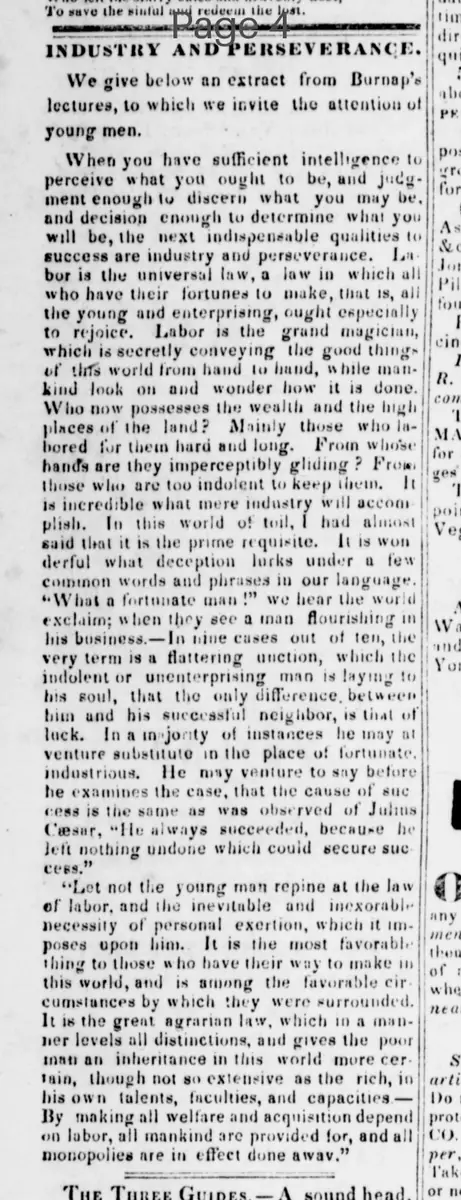
INDUSTRY AND PERSEVERANCE.
We give below an extract from Burnap's lectures, to which we invite the attention of young men.
When you have sufficient intelligence to perceive what you ought to be, and judgment enough to discern what you may be, and decision enough to determine what you will be, the next indispensable qualities to success are industry and perseverance. In labor is the universal law, a law in which all who have their fortunes to make, that is, all the young and enterprising, ought especially to rejoice. Labor is the grand magician, which is secretly conveying the good things of this world from hand to hand, while mankind look on and wonder how it is done.
Who now possesses the wealth and the high places of the land? Mainly those who labored for them hard and long. From whose hands are they imperceptibly gliding? From those who are too indolent to keep them. It is incredible what mere industry will accomplish. In this world of toil, I had almost said that it is the prime requisite. It is wonderful what deception lurks under a few common words and phrases in our language.
"What a fortunate man!" we hear the world exclaim; when they see a man flourishing in his business.-In nine cases out of ten, the very term is a flattering unction, which the indolent or unenterprising man is laying to his soul, that the only difference between him and his successful neighbor, is that of luck. In a majority of instances he may at venture substitute in the place of fortunate, industrious. He may venture to say before he examines the case, that the cause of success is the same as was observed of Julius Caesar, "He always succeeded, because he left nothing undone which could secure success."
"Let not the young man repine at the law of labor, and the inevitable and inexorable necessity of personal exertion, which it imposes upon him. It is the most favorable thing to those who have their way to make in this world, and is among the favorable circumstances by which they were surrounded. It is the great agrarian law, which in a manner levels all distinctions, and gives the poor man an inheritance in this world more certain, though not so extensive as the rich, in his own talents, faculties, and capacities-
By making all welfare and acquisition depend on labor, all mankind are provided for, and all monopolies are in effect done away."
We give below an extract from Burnap's lectures, to which we invite the attention of young men.
When you have sufficient intelligence to perceive what you ought to be, and judgment enough to discern what you may be, and decision enough to determine what you will be, the next indispensable qualities to success are industry and perseverance. In labor is the universal law, a law in which all who have their fortunes to make, that is, all the young and enterprising, ought especially to rejoice. Labor is the grand magician, which is secretly conveying the good things of this world from hand to hand, while mankind look on and wonder how it is done.
Who now possesses the wealth and the high places of the land? Mainly those who labored for them hard and long. From whose hands are they imperceptibly gliding? From those who are too indolent to keep them. It is incredible what mere industry will accomplish. In this world of toil, I had almost said that it is the prime requisite. It is wonderful what deception lurks under a few common words and phrases in our language.
"What a fortunate man!" we hear the world exclaim; when they see a man flourishing in his business.-In nine cases out of ten, the very term is a flattering unction, which the indolent or unenterprising man is laying to his soul, that the only difference between him and his successful neighbor, is that of luck. In a majority of instances he may at venture substitute in the place of fortunate, industrious. He may venture to say before he examines the case, that the cause of success is the same as was observed of Julius Caesar, "He always succeeded, because he left nothing undone which could secure success."
"Let not the young man repine at the law of labor, and the inevitable and inexorable necessity of personal exertion, which it imposes upon him. It is the most favorable thing to those who have their way to make in this world, and is among the favorable circumstances by which they were surrounded. It is the great agrarian law, which in a manner levels all distinctions, and gives the poor man an inheritance in this world more certain, though not so extensive as the rich, in his own talents, faculties, and capacities-
By making all welfare and acquisition depend on labor, all mankind are provided for, and all monopolies are in effect done away."
What sub-type of article is it?
Essay
What themes does it cover?
Moral Virtue
What keywords are associated?
Industry
Perseverance
Labor
Success
Young Men
Fortune
Indolence
What entities or persons were involved?
Burnap
Literary Details
Title
Industry And Perseverance.
Author
Burnap
Subject
Advice To Young Men On Success Through Labor
Key Lines
Labor Is The Grand Magician, Which Is Secretly Conveying The Good Things Of This World From Hand To Hand, While Mankind Look On And Wonder How It Is Done.
In Nine Cases Out Of Ten, The Very Term Is A Flattering Unction, Which The Indolent Or Unenterprising Man Is Laying To His Soul, That The Only Difference Between Him And His Successful Neighbor, Is That Of Luck.
By Making All Welfare And Acquisition Depend On Labor, All Mankind Are Provided For, And All Monopolies Are In Effect Done Away.