Thank you for visiting SNEWPapers!
Sign up free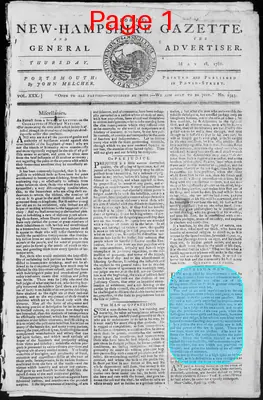
Literary
May 18, 1786
Fowle's New Hampshire Gazette And General Advertiser
Portsmouth, Rockingham County, New Hampshire
What is this article about?
A philosophical essay critiquing imprisonment as ineffective for reform, particularly for debt where creditors judge their own cases. It argues prisons foster vice without public oversight, shielding disgrace but not mending criminals.
Clipping
OCR Quality
98%
Excellent
Full Text
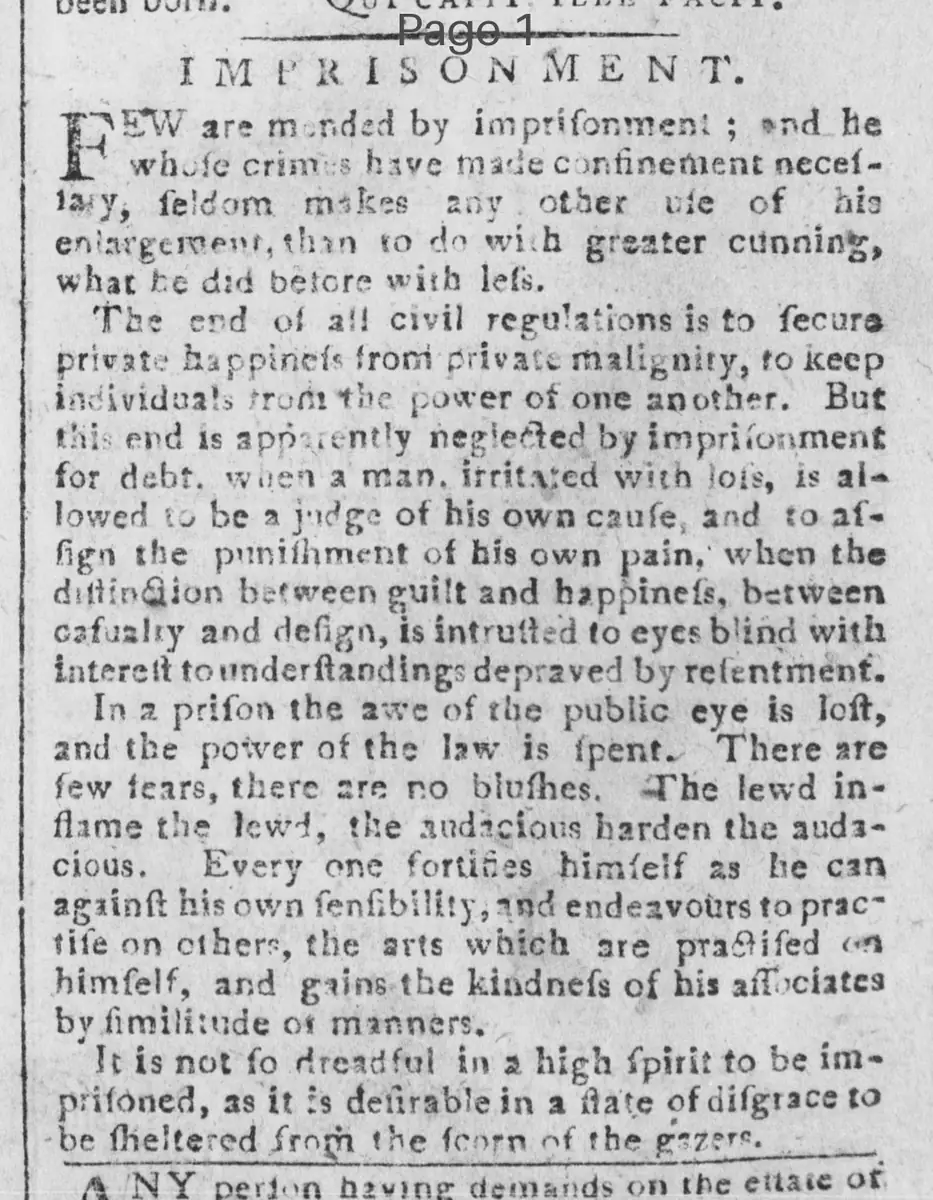
IMPRISONMENT.
FEW are mended by imprisonment; and he whose crimes have made confinement necessary, seldom makes any other use of his enlargement, than to do with greater cunning, what he did before with less.
The end of all civil regulations is to secure private happiness from private malignity, to keep individuals from the power of one another. But this end is apparently neglected by imprisonment for debt, when a man, irritated with loss, is allowed to be a judge of his own cause, and to assign the punishment of his own pain; when the distinction between guilt and unhappiness, between casualty and design, is intrusted to eyes blind with interest to understandings depraved by resentment.
In a prison the awe of the public eye is lost, and the power of the law is spent. There are few fears, there are no blushes. The lewd inflame the lewd, the audacious harden the audacious. Every one fortifies himself as he can against his own sensibility, and endeavours to practise on others, the arts which are practised on himself, and gains the kindness of his associates by similitude of manners.
It is not so dreadful in a high spirit to be imprisoned, as it is desirable in a state of disgrace to be sheltered from the scorn of the gazers.
FEW are mended by imprisonment; and he whose crimes have made confinement necessary, seldom makes any other use of his enlargement, than to do with greater cunning, what he did before with less.
The end of all civil regulations is to secure private happiness from private malignity, to keep individuals from the power of one another. But this end is apparently neglected by imprisonment for debt, when a man, irritated with loss, is allowed to be a judge of his own cause, and to assign the punishment of his own pain; when the distinction between guilt and unhappiness, between casualty and design, is intrusted to eyes blind with interest to understandings depraved by resentment.
In a prison the awe of the public eye is lost, and the power of the law is spent. There are few fears, there are no blushes. The lewd inflame the lewd, the audacious harden the audacious. Every one fortifies himself as he can against his own sensibility, and endeavours to practise on others, the arts which are practised on himself, and gains the kindness of his associates by similitude of manners.
It is not so dreadful in a high spirit to be imprisoned, as it is desirable in a state of disgrace to be sheltered from the scorn of the gazers.
What sub-type of article is it?
Essay
What themes does it cover?
Political
Moral Virtue
Liberty Freedom
What keywords are associated?
Imprisonment
Debt Prison
Civil Regulations
Moral Reform
Public Eye
Vice Hardening
Literary Details
Title
Imprisonment.
Subject
Critique Of Imprisonment For Debt
Form / Style
Prose Essay
Key Lines
Few Are Mended By Imprisonment; And He Whose Crimes Have Made Confinement Necessary, Seldom Makes Any Other Use Of His Enlargement, Than To Do With Greater Cunning, What He Did Before With Less.
The End Of All Civil Regulations Is To Secure Private Happiness From Private Malignity, To Keep Individuals From The Power Of One Another.
In A Prison The Awe Of The Public Eye Is Lost, And The Power Of The Law Is Spent.