Thank you for visiting SNEWPapers!
Sign up free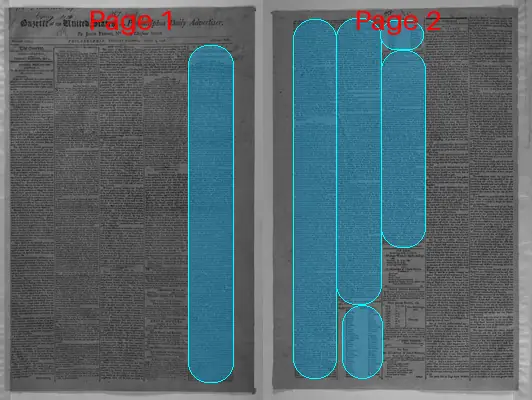
Gazette Of The United States, & Philadelphia Daily Advertiser
Philadelphia, Philadelphia County, Pennsylvania
What is this article about?
U.S. House of Representatives debates on March 30 and April 2, 1798, cover propositions on peace/war with France, calls for presidential papers on envoys, postponements, petitions against war, defense reports, and militia bills amid tensions with France.
Merged-components note: Continuation of congressional proceedings from page 1 to page 2, including the yeas and nays vote tables; original label of second component was 'story', changed to 'domestic_news' to match the political debate content.
Clippings

1 of 2
OCR Quality
Full Text
HOUSE OF REPRESENTATIVES.
CALL UPON THE PRESIDENT.
FRIDAY: March 30.
(Continued from yesterday's Gazette.)
Mr. Livingston then said, there appeared to be two objections to going into a committee of the whole on the state of the union; some think the proposition before it is of too trifling a nature to consume time; others, that it is of so great magnitude, that they wish to gain farther information, and to have time to consider it. The first class of gentlemen, he thought, treated a subject, confessedly of great importance, with too much levity— Gentlemen say you do us wrong, when you place the question before the committee in the light of a Peace or War question; we have no idea of going to war. This was the language of the gentleman from New-Hampshire (Mr. Gordon) particularly. Had that gentleman forgotten what had been said by his eloquent friend from Massachusetts (Mr. Sewall) who sits beside him? That gentleman had declared, not that war might be expected, but that war exists! Was it unreasonable, after such a declaration, to come to a resolution which says that it is not expedient to resort to war at this time? He thought the welfare of the country required it. But the gentleman from Massachusetts did not stop here. Though, he said, a defensive war was all he wished for, under our present circumstances, yet he invoked the Supreme Being, and wished we were in a situation to carry on an offensive war. Yes, exclaimed Mr. L. the God of Peace was invoked in favour of War; the God of Mercy was called upon to favour a war of vengeance! And yet gentlemen wish to throw an odium upon those who come forward with a proposition for peace.
Mr. L. said, he wished as much as any member for further information before the house proceeded in active measures; but he was far from being certain that complete information could be obtained; he believed great opposition would be made to the call; in the next place, if called for, he believed the information would not be sent, he supposed this from a former refusal made on the ground of Executive authority. He deprecated the decision; but he believed, as precedent would authorize it, it would be made.
Mr. Rutledge thought gentlemen went much too far on this occasion, in anticipating, not only what would be the proceedings of this house, but also of the President. He rose immediately after the gentleman from Georgia (Mr. Baldwin). That gentleman's arguments went against a postponement generally, but not against a postponement till Monday. That gentleman was surprised that gentlemen should wish for a postponement; he was one of those who excited his surprise. He was in favour of the postponement of this question, because the last had been postponed. He thought the motion for a call of papers ought to have been passed; but not having passed, he wished it to pass before the house went into committee on the proposition which had undergone some discussion, especially as he did not believe the delay would postpone the final decision upon it. If gentlemen would agree to pass over the first proposition, and go on to the next, which relates to measures for the defence of the country, he should be as ready as them to go into a committee of the whole on the state of the Union. He doubted not the gentleman from Virginia was anxious to deliver the speech which he had promised to the committee [Mr. Nicholas informed the gentleman he would hear no speech from him to-day]. Mr. R. hoped, then, he would not object to the postponement. The gentleman from Pennsylvania, said he wanted no information. Nor did he himself want it. He had received a letter from France, which convinced him of the perilous situation in which we stood with that country; he had seen the French decree; and he had seen a gazette which had informed him that the message of the Directory was passed unanimously by the Council of Five Hundred; but he supposed some other gentlemen had not sufficient information, or else it would not have been called for; and surely gentlemen would not call such to vote upon what they deemed to be a question of war or peace, without it.
Gentlemen had said, that the message of the President had produced a belief that we shall be involved in war, and that produce had fallen accordingly. He did not believe the fall was owing to the message, but that it was the effect of the decree; and asked whether the President would not have been criminal, if he had suffered the dispatches to have slept a night upon his table? He certainly would, the communication was indispensable.
Mr. Sewall was sorry to differ in opinion from his friend from S. Carolina. He was himself against the postponement. This difference, he supposed, arose from that gentleman's yielding to the assertion of gentlemen, that the question before the committee of the whole is a question of war or peace, which he himself did not. He never considered the question in that light. It comes in as a bar to any measures being taken for the defence of our country, or from getting into business, which really concerns the state of the union; what were the motives of gentlemen for bringing it thus in, he could not tell. The readiness of gentlemen to come to a decision upon the question without farther information, proves that they do not consider it as a question of war or peace. It cannot be doubted, that if the legislature was called upon to declare war against any nation, they would have a right to expect that every fact relative to that nation should be laid before them.
The gentleman from New York, Mr. S. said, had thought fit to allude to him as appealing to the God of Mercy to support us in a vindictive war. Punishment, Mr. S. said, was sometimes the truest mercy; and if the United States could inflict punishment on France, it might be mercy to that country. And could any American citizen consider the Sufferings which the French Republic had brought upon our merchants, our seamen, and upon our country generally, without calling upon the God of Mercy to enable us to inflict punishment upon that country? When gentlemen say (and none seem to deny it) that France has given this country just cause of war, will they not say France has given us just cause of vengeance? And is there, said he a patriot in this House, who acknowledges France has given us just cause of war, and who does not wish to inflict that war upon that country in the severest and fullest manner? He could not himself forbear making use of the expression with which the gentleman found fault; he could not refrain from calling upon God to enable us to avenge our wrongs. Gentlemen are perfectly ready, without knowing how our envoys have been treated, to declare in favour of peace. Mr. S. noticed what had been said about the message of the President having caused the fall in the price of produce, and called upon gentlemen to point out that part of it which was calculated to produce that effect. This fall of produce, he said, was only one of the consequences arising from the wrongs which France has inflicted on this country. If they had received our envoys, no such thing would have happened; and could the President be blamed, because he communicated the enormities of the French Republic to Congress? Certainly he ought not; the whole mischief ought to be ascribed to the offenders.
Mr. J. Williams was against the postponement. He had always been of opinion that, discussion of the proposition which had engaged the House for some days, would have mischievous effects on the country. He wished, instead of discussing this question, they had proceeded to measures which went to placing the country in a state of defence. The reduction of the price of produce, he ascribed more to the apprehension of an embargo than any thing else, and the Senate having decided against that measure, he supposed the alarm would cease. He thought it had been the object of gentlemen to alarm the country, and to induce the people to believe that the Executive and a part of this House are in favour of war, and that they only are for peace.
Mr. T. Claiborne said, if the debate continued much longer, the postponement would take place, not from the force of gentlemen's arguments, but from the length of them, as it would soon be time to adjourn.
Mr. R. Williams moved to adjourn, which was carried.
Adjourned.
Monday, April 2.
Mr. Varnum presented a petition from the inhabitants of Milton, in Massachusetts, stating their alarm at the idea of the peace of the United States being placed in the hands of men who may not be very friendly disposed towards the interest of this country, viz. the masters of merchant vessels, many of whom were formerly British subjects, and who, though they have been naturalized in this country, still retain all their English prejudices against the French, and may exercise them in a manner which may lead us to war—the declaration of which they wish to remain in the power of Congress; they also regret the misunderstanding which at present subsists betwixt this country and France, and trust that every mean will be taken to adjust it, without having recourse to war, which must wholly destroy our commerce, and throw the weight of supporting such a state upon the farmers and landed interest.—Referred to the committee of the whole on the state of the union.
Mr. Allen called up for decision the resolution for certain papers from the President of the United States; (the consideration of which was postponed on Friday till this day) which having been read, Mr. A. said, he would agree to the amendments proposed, provided the mover would allow the same exception to be used, that had been proposed on a former occasion, viz. excepting such part of the said papers as any existing negotiation may render improper to be disclosed.
Mr. Nicholas did not think it would be right in the present situation of things, when we are told by the President that the negotiation with the French Republic is at an end, and that there is no chance of an accommodation taking place betwixt the two countries, to agree to any exception of this kind. Called upon to act in this desperate state of things, he thought it would not be right for any part of the papers which had led to it, to be withheld from Congress. The President having thought fit to declare that all negotiation is at an end, and that he is without hope of an accommodation, it could not be thought proper that the legislature should be called upon to act upon less information than that upon which the President himself had acted. He thought the constitution must have intended this, when it placed the power of declaring war in their hands; to suppose contrary, would be to suppose an absurdity. With respect to the probability of any part of the papers interfering with any existing negotiation, he could not conceive that possible; at any rate, he thought it of greater consequence to act rightly in this case, than to have reference to any improbable circumstance of that kind. He hoped the gentleman would agree to withdraw the exception which he had proposed, as to retain it would defeat the call, by making it liable to all the objections which were to the former exception. Indeed, notwithstanding he wished very much for the information called for, he should vote against the resolution, if the exception was retained. He therefore moved to strike it out.
Mr. Allen did not know why the gentleman from Virginia should wish a different form of resolution from that proposed on a former occasion. He could see no reason but this. He did not believe gentlemen wished to see these papers before the house. When the resolution alluded to was adopted two years ago, it was not known that any negotiation was on foot; and though the President had told the house two weeks ago that all negotiation was at an end, it might not be so now. But suppose there was nothing upon which this part of the resolution could act, it could do no harm. He would not, however, give gentlemen an opportunity of voting against the resolution. He would withdraw his amendment; because he believed the President would be authorized to retain such parts of the papers, as he may think it improper to communicate; he believed his constitutional power gave him the right to do this, and that therefore, it was immaterial whether the resolution contained any exception, or not.
Mr. S. Smith called for the Yeas and Nays, to convince the gentleman of his error, with respect to there being no desire for the papers.
Mr. Hartley wished the qualifications of the resolution had not been withdrawn. He thought it proper. He had also his doubts whether the house could constitutionally call for the instructions given to our ministers. Mr. H. moved, therefore, to amend the resolution by re-adding the exception just withdrawn.
Mr. Nicholas observed, in reply to the gentleman from Connecticut, that if our situation with France is changed since the President's last communication, it would be ground for a new message. But the house could not act upon any thing so uncertain; they could act only upon the idea of things being now in the same situation as when the President sent his last message.
Mr. Harper said, when this question was brought forward on Friday, he moved the further consideration of it until to-day. Upon reflecting, however, upon what he thought a constitutional question, it appeared to him that no such constitutional question was involved in the present resolution. The present call for papers, he said, stood upon a very different ground from that made when the British treaty was under consideration; the objections, of course, against that call, would not apply in the present case, as the papers now called for were wanted to throw light upon a subject confessedly within the constitutional powers of the house. He therefore held the call not only to be constitutional, but expedient. Nor could he see any ground for the amendment; if the house had a constitutional right to ask for information, they had a right to ask for the whole information, and the President would judge how far he could, with propriety, comply with the call. But since the house did not know that the communication of any of these papers would be improper, the whole ought to be called for; and, if the President should think it proper to retain a part, he would doubtless give sufficient reasons to the house for doing so. On a former occasion, when it was moved to modify the resolution calling for papers in the way now proposed, the motion was rejected, because it went to alter the principle contended for grand. He believed the same reason would lead to a rejection of the present motion. If he believed there was any constitutional question in this motion for papers, he should vote against it; but, believing the contrary, he should vote in favour of it, not because he wanted the information, as it was sufficient for him that the President told the house that the Negotiation was at an end, and that our ministers were refused an audience, to induce him to go into every measure of defence proposed; but as other gentlemen wished it, he hoped the resolution would be agreed to, without amendment.
The question on the amendment was negatived, without a division.
The question then returned upon the resolution, in the following words;
"Resolved, That the President of the United States be requested to communicate to this house, the instructions to and dispatches from the Envoys Extraordinary of the United States to the French Republic, mentioned in his message of the 19th inst."
Mr. Otis said, before the question was taken, he would state his intention of voting against the resolution, not from any doubt of the constitutional right of the house to call for the information, nor from an indisposition to gratify those gentlemen who want the information; but being satisfied in his own mind that the facts stated in the message, are true, and that the Commissioners who were sent to France were empowered, not only to settle our differences with that country, but to make reasonable concessions, even where the injury was on their side; and the President having declared it to be his opinion that there is no hope of success from that mission, he wished for nothing farther to convince him of the propriety of going into the different defensive measures proposed. If he had indeed conceived that the question of War or Peace was before the house, he might have wished its decision to be delayed until every fact relative to the negotiation had been before them; but as he did not conceive that any such measure had been started, but only that such defensive measures should be taken as a much less degree of danger than at present existed, would authorize, he was not willing to take any share of the responsibility as to the inconveniencies and evils which may result from publishing the correspondence in question. If the disclosure should endanger the safety of our Commissioners, or operate as a discouragement to the future free communications of our agents abroad, he should wish to steer clear of any blame on the occasion.
Mr. Gallatin observed, that, the same reasons, or nearly so, which have been mentioned by the gentleman from Massachusetts, as inducing him to vote against the resolution, would induce him (Mr. G.) to vote for it. He had already stated that, viewing the question in the light he did, he did not want further information to enable him to decide upon it. He concluded the statement made by the President is correct; that it is true that there is no hope of accommodation with the French Republic, and that all negotiation is at an end; and taking this as a ground upon which to act, he was willing to act upon it to the best of his judgment. Mr. G. said he considered part of the measures proposed, to be measures of war; though gentlemen called them measures of defence; but, when the subject should be gone into, he would prove them to be those of war; and that the measure adopted by the President, in relation to arming of merchant vessels, is a war measure. On this ground, he was ready to vote against any such acts, and in favour of any thing which tended to counteract their effect.
But, said Mr. G if there are gentlemen on this floor who conceive that, in addition to the information which has been given to the House, the dispatches will give to them more irritating matter than they have yet had, which may have a tendency to change the opinions of those who, like him, are in favour of peace measures, he had no objection to their being communicated. He did not expect, however, that any thing of this kind would change his opinion. The House had had enough of this matter last session, and in the late communications; but on his mind these would produce no effect as to the question of peace or war. It is true, as hinted by the gentleman last up, that some inconveniencies may arise from the dispatches being communicated, as it may prevent diplomatic characters from expressing themselves freely in future; but the President of the United States was not afraid of this, as during the last session he had communicated information of this kind, without being applied to for it. But if, after having examined the dispatches, he is convinced it will be highly injurious to the public welfare, or endanger the safety of our Commissioners, or prevent the happy issue of our negotiation, to communicate the information, he will either give it, or state his reasons for withholding it to the House.
The question was then taken by yeas and nays, as follow:
Messrs. Bullock, Coit, Dana, A. Foster, D. Foster, Glen, Goodrich, Griswold, Hartley, Hindman, Imlay, Kittera, Lyman,
Messrs. Morris, Otis, I. Parker, Reed, Schureman, Sewall, Shepard, Sinnickson, N. Smith, Thatcher, Thomson, Tillinghast, Van Allen,
Messrs. Allen, Hanna, Holmes, Hosmer, Baer, Jones, Baldwin, Bartlett, Bayard, Brent, Brookes, Bryan, Burgess, Cabell, Chapman, T. Claiborne, W. Claiborne, Clopton, Craik, Dawson, Dennis, Dent, Elmendorf, Findley, N. Freeman, Gallatin, Giles, Gillespie, Gregg, Grove, Harper, Harrison, Havens, Heister,
[Note: The table appears to list Yeas and Nays, but formatting is disrupted in original; preserved as provided below.]
| MeIrs. Bullock, Coit, Dana, A. Fofter, D. Fofter, Glen, Goodrich, Grifwold, Hartley, Hindman, Imlay, Kittera, Lynan, | MeIrs. Morris, Otis, I. Parker, Reed, Schureman, Sewall, Shepard, Sinnickfon, N. Smith, Thatcher, Thomfon, Tillinghaft, Van Allen, |
| Trs. Allen, | Meifrs. Holmes, | Hofmer, |
| Baer, | Jones, | Baldwin, |
| Bard, | Livingston, | Bartlett, |
| Bard, | Locke, | Bayard, |
| Blount, | Lyon, | Brent, |
| Brookes, | Macon, | Brookes, |
| Bryan, | Matthews, | Bryan, |
| Burgefs, | M'Clenachan, | Burgefs, |
| Cabell, | M'Dowell, | Cabell, |
| Chapman, | Milledge, | Chapman, |
| T. Claiborne, | New, | T. Claiborne, |
| W. Claiborne, | Nicholas, | W. Claiborne, |
| Clopton, | J. Parker, | Clopton, |
| Craik, | Pinckney, | Craik, |
| Dawfon, | Rutledge, | Dawfon, |
| Dennis, | Skinner, | Dennis, |
| Dent, | S. Smith, | Dent, |
| Elmendorf, | W. Smith, | Elmendorf, |
| Fiudley, | Sprague, | Fiudley, |
| N. Freeman, | Sprigg, | N. Freeman, |
| Gallatin, | Stanford, | Gallatin, |
| Giles, | Sumpter, | Giles, |
| Gillefpie, | A. Trigg, | Gillefpie, |
| Gregg, | J. Trigg, | Gregg, |
| Grove, | Van Cortlandt | Grove, |
| Hanna, | Varnum, | Hanna, |
| Harper, | Venable, | Harper, |
| Harrifon, | Wadsworth, | Harrifon, |
| Havens, | J. Williams, | Havens, |
| Heifler, | R. Williams, | Heifler, |
Messrs. Allen and Hanna were appointed a committee to wait upon the President with the said resolution.
Mr. Kittera reported a bill for authorizing certain officers to administer oaths, which was committed for to-morrow.
Mr. Sewall, from the committee for the protection of commerce and the defence of the country, made a report on the memorial of the Chamber of Commerce of New-York, on the subject of the insecure state of the harbour of that port. The report states, that Congress had this subject under consideration at the last session, and provided that any state should be authorized to expend any such sum upon their fortifications as they should deem proper, not exceeding the sum of which such states was found indebted to the United States in the settlement of the accounts between the States and the United States. This proposition having been wholly neglected by the state of New-York, and no cession having been made of the soil, the committee recommended, after stating that it will be proper to include a sum for purchasing cannon and ammunition for the said fortifications, propose the following resolution:
"Resolved, That a bill be reported to repeal the provision of cession in the act providing for the further defence of the ports and harbours of the United States, and to provide in lieu thereof, that the fortifications which shall be erected and allowed for by the United States pursuant to that act, shall become the property of the United States; also to provide that any state which shall accept of the proposal made by the said act, and proceed to finish any fortification heretofore commenced, and which by the President of the United States shall be judged of use in the defence of any port or harbour, or in making any additional fortifications, under his direction, shall be allowed, in the manner proposed by the said act, as well for all previous expenditures, made since March 20, 1794, as for the expenses which shall be made pursuant to the said proposal, not exceeding the balance in which such state respectively has been found indebted to the United States."
The report was committed to the committee of the whole on the state of the union.
On motion of Mr. Otis, the house went into a committee of the whole on the bill appropriating a sum of money for defraying expenses incurred by our consuls and vice-consuls, and after filling the sum appropriated with 20,000 dollars, the committee rose, and the bill was ordered to be engrossed.
The house then resolved itself into a committee of the whole on the state of the union, when after a suggestion from Mr. Pinckney that it would be better to pass over the 1st resolution and go on to the others; and some observations from Mr. N. Smith against passing over the first resolution, and in favour of coming to an immediate vote upon it, as being of no consequence, and deciding nothing, a motion was made by Mr. Harper for the committee to rise, in order that the business might be postponed until the information or an answer from the President on the subject should be received, which was carried, and the committee rose accordingly.
Mr. Allen informed the house, that the Committee appointed to wait upon the President with the resolution which had been agreed to, had performed that service, and he had informed them, that he would take the matter under consideration, and do what the Public Safety should seem to require.
The order of the day was next called for on the bill for organizing and disciplining the Militia of the United States, and the house went into a committee of the whole on this subject; when the first section, which provides for the establishment of a Select Corps, having been read, a motion was made by Mr. Varnum to strike it out, in order to try the principle of the bill. This motion was advocated by Messrs. Varnum, Nicholas and W. C. Claiborne; and opposed by Messrs. J. Williams, Macon, Shepard, S. Smith, Harper, Brooks, and Dayton. No question was taken.
The Committee had leave to sit again.
Adjourned.
What sub-type of article is it?
What keywords are associated?
What entities or persons were involved?
Domestic News Details
Event Date
March 30 And April 2
Key Persons
Outcome
resolution passed requesting president to communicate instructions and dispatches from envoys to france; amendment for exception negatived; committee postponed; bill for consuls engrossed with $20,000; report on new york harbor fortifications committed; militia bill debated without decision.
Event Details
Debates in the House of Representatives on propositions regarding peace or war with France, need for further information from President on envoys to France, postponement of committee on state of union, petition from Milton, MA inhabitants against war powers to vessel masters, vote on call for papers (passed by yeas and nays), reports on commerce protection and militia organization.