Thank you for visiting SNEWPapers!
Sign up free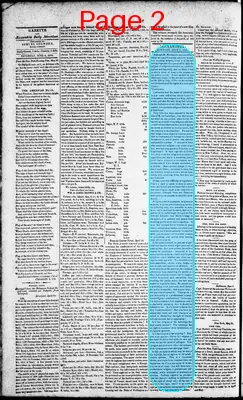
Literary
June 5, 1819
Alexandria Gazette & Daily Advertiser
Alexandria, Virginia
What is this article about?
Newspaper article from Alexandria, June 5, 1819, reprints a fragment of Honoré Gabriel Riqueti, comte de Mirabeau's eloquent speech on religious toleration delivered in the French National Assembly on July 23, 1789, during the Declaration of the Rights of Man and of the Citizen. Mirabeau argues that religion is a personal duty, not subject to state police regulation, emphasizing freedom of opinion and conscience over any predominant religion.
Clipping

OCR Quality
95%
Excellent
Full Text
ALEXANDRIA:
SATURDAY, JUNE 5, 1819.
Although M. Mirabeau is not one of those whom we regard as good authority in matters touching religion, there is in the following fragment of a speech of his upon the subject of religious toleration, so much eloquence and ingenuity, that we think it well worth its share of room in the columns of our public prints. It was spoken by that illustrious orator in the national assembly, on the 23d of July, 1789--on the celebrated declaration of the rights of man and a citizen.
"Gentlemen,
I yesterday had the honor of submitting to you some reflections, which tended to demonstrate that religion is a duty, and not a law, and that the only thing that belongs to the declaration about which we are occupied, is to proclaim religious liberty with a loud voice.
Very little has been opposed to the motion of M. de Castellane, (viz. that no person shall on any pretext whatever be disturbed on account of his religious opinions) --and indeed what can be objected against an axiom so evident in its own nature. that the contrary is an absurdity! We are told that religion is an object of exterior police; that in consequence it belongs to a society to regulate it, and to permit one species, and prohibit another. I demand of those who assert that religion is an object of police, whether they speak as Catholics or as Legislators? If they urge this as Catholics, they allow that religion is an object of regulation, and that it is something purely civil : but if it is civil, it is a human institution-and if it is a human institution, it is fallible. Man can then change it : from this it must follow, according to them, that the Catholic religion is not a divine institution, and, according to me, that they are not Catholics.
If they start this difficulty as legislators, I have a right to speak to them as statesmen; and I shall first tell them that it is not true that religion ought to be subjected to the police, although Nero and Domitian have said so, on purpose to interdict christianity.
Religion consists in prayers, in hymns, in sermons, in divers acts of adoration rendered to God by men, who assemble in common: and it is absurd to assert, that an inspector of the police ought to regulate Collects and Litanies: that which belongs to the police, is to prevent any person from troubling public order and tranquillity. It is on that account that it watches in your streets, around your houses, and about your temples; but it never presumed to regulate what you do there: all its power consists in preventing your actions from hurting your fellow citizens.
I also think it absurd, on purpose to prevent the disorder which might grow out of your actions, that your actions themselves should be prohibited. Assuredly it is a very expeditious mode, but I may be permitted to doubt whether any state has a right to make use of it. We are allowed to form assemblies, circles, clubs, lodges of free masons, and societies of all kinds. It is the business of the police to prevent these assemblies from disturbing the public order : but certainly it never can be imagined that to prevent such assemblies from troubling the public order, the best way would be to prohibit them. Be careful lest any worship, even your own, shall disturb the public tranquility : that is your duty- but you cannot exceed it. They speak to you incessantly of a predominant or established religion--predominant! Gentlemen, I do not understand that expression, and it is absolutely necessary that it should be defined to me. Is it a tyrant religion that they would inculcate? But you have banished this word, and men who have asserted to themselves the right of liberty, will not reclaim that of oppression!
Is it the religion of the sovereign that they would enforce? The sovereign has no right to domineer over consciences, or to regulate opinions.
Is it the religion of the majority ? Religion is an opinion : this or that religion is the result of this or that opinion: new opinions are not the result of suffrages. Your thoughts are your own--they are independent--you cannot even mortgage them!
In fine, an opinion which may be that of the majority, has no right to be the predominant opinion. This is a tyrannical phrase, and ought to be banished from our legislation, or if you can apply it in one, you can in all cases: you will then have a predominant religion, a predominant philosophy, and a multitude of predominant systems. Nothing ought to be predominant but justice-nothing is predominant but the right of every one; all the rest is subject to that right, and it is an evident right and one already consecrated by you to do every thing that does not hurt another."
SATURDAY, JUNE 5, 1819.
Although M. Mirabeau is not one of those whom we regard as good authority in matters touching religion, there is in the following fragment of a speech of his upon the subject of religious toleration, so much eloquence and ingenuity, that we think it well worth its share of room in the columns of our public prints. It was spoken by that illustrious orator in the national assembly, on the 23d of July, 1789--on the celebrated declaration of the rights of man and a citizen.
"Gentlemen,
I yesterday had the honor of submitting to you some reflections, which tended to demonstrate that religion is a duty, and not a law, and that the only thing that belongs to the declaration about which we are occupied, is to proclaim religious liberty with a loud voice.
Very little has been opposed to the motion of M. de Castellane, (viz. that no person shall on any pretext whatever be disturbed on account of his religious opinions) --and indeed what can be objected against an axiom so evident in its own nature. that the contrary is an absurdity! We are told that religion is an object of exterior police; that in consequence it belongs to a society to regulate it, and to permit one species, and prohibit another. I demand of those who assert that religion is an object of police, whether they speak as Catholics or as Legislators? If they urge this as Catholics, they allow that religion is an object of regulation, and that it is something purely civil : but if it is civil, it is a human institution-and if it is a human institution, it is fallible. Man can then change it : from this it must follow, according to them, that the Catholic religion is not a divine institution, and, according to me, that they are not Catholics.
If they start this difficulty as legislators, I have a right to speak to them as statesmen; and I shall first tell them that it is not true that religion ought to be subjected to the police, although Nero and Domitian have said so, on purpose to interdict christianity.
Religion consists in prayers, in hymns, in sermons, in divers acts of adoration rendered to God by men, who assemble in common: and it is absurd to assert, that an inspector of the police ought to regulate Collects and Litanies: that which belongs to the police, is to prevent any person from troubling public order and tranquillity. It is on that account that it watches in your streets, around your houses, and about your temples; but it never presumed to regulate what you do there: all its power consists in preventing your actions from hurting your fellow citizens.
I also think it absurd, on purpose to prevent the disorder which might grow out of your actions, that your actions themselves should be prohibited. Assuredly it is a very expeditious mode, but I may be permitted to doubt whether any state has a right to make use of it. We are allowed to form assemblies, circles, clubs, lodges of free masons, and societies of all kinds. It is the business of the police to prevent these assemblies from disturbing the public order : but certainly it never can be imagined that to prevent such assemblies from troubling the public order, the best way would be to prohibit them. Be careful lest any worship, even your own, shall disturb the public tranquility : that is your duty- but you cannot exceed it. They speak to you incessantly of a predominant or established religion--predominant! Gentlemen, I do not understand that expression, and it is absolutely necessary that it should be defined to me. Is it a tyrant religion that they would inculcate? But you have banished this word, and men who have asserted to themselves the right of liberty, will not reclaim that of oppression!
Is it the religion of the sovereign that they would enforce? The sovereign has no right to domineer over consciences, or to regulate opinions.
Is it the religion of the majority ? Religion is an opinion : this or that religion is the result of this or that opinion: new opinions are not the result of suffrages. Your thoughts are your own--they are independent--you cannot even mortgage them!
In fine, an opinion which may be that of the majority, has no right to be the predominant opinion. This is a tyrannical phrase, and ought to be banished from our legislation, or if you can apply it in one, you can in all cases: you will then have a predominant religion, a predominant philosophy, and a multitude of predominant systems. Nothing ought to be predominant but justice-nothing is predominant but the right of every one; all the rest is subject to that right, and it is an evident right and one already consecrated by you to do every thing that does not hurt another."
What sub-type of article is it?
Essay
What themes does it cover?
Liberty Freedom
Religious
Political
What keywords are associated?
Religious Toleration
Liberty
Mirabeau
National Assembly
French Revolution
Rights Of Man
Conscience
Police Regulation
What entities or persons were involved?
M. Mirabeau
Literary Details
Author
M. Mirabeau
Subject
On The Subject Of Religious Toleration, Spoken In The National Assembly On The 23d Of July, 1789 On The Celebrated Declaration Of The Rights Of Man And A Citizen
Form / Style
Oratorical Speech In Prose
Key Lines
"Religion Is A Duty, And Not A Law, And That The Only Thing That Belongs To The Declaration About Which We Are Occupied, Is To Proclaim Religious Liberty With A Loud Voice."
"It Is Not True That Religion Ought To Be Subjected To The Police, Although Nero And Domitian Have Said So, On Purpose To Interdict Christianity."
"Nothing Ought To Be Predominant But Justice Nothing Is Predominant But The Right Of Every One; All The Rest Is Subject To That Right, And It Is An Evident Right And One Already Consecrated By You To Do Every Thing That Does Not Hurt Another."