Thank you for visiting SNEWPapers!
Sign up free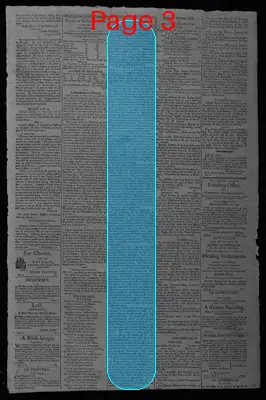
Letter to Editor
July 19, 1800
Gazette Of The United States, & Daily Advertiser
Philadelphia, Philadelphia County, Pennsylvania
What is this article about?
An essay-like letter argues for selecting public officials based on natural aristocracy of merit, virtue, and talent rather than party affiliation or popularity, critiquing the role of partisan leaders in early American politics and calling for wise governance in the infant republic.
Clipping

OCR Quality
95%
Excellent
Full Text
ARISTOCRACY
"I see neither policy nor utility, in laying down a principle, that the opinion of a majority of men, held by the head, is to be considered as the law of the land; this surely is acting in defiance of every political principle. To enable men to act with weight and consistency, and to answer the purposes of society, the weak, the ignorant, and the unprovided, must be conducted by the wise, the expert, and the opulent. Numbers, it must be confessed, are always of consideration; but, they are not the whole consideration. Aristocracy is not a separate interest in a state--it is formed by legitimate presumptions, which taken as generalities, may be admitted for actual truths.
"To be bred in a place of estimation; to see nothing low, and sordid from one's infancy; to be taught to respect one's self; to be habituated to the censorial inspection of the public eye, to stand on elevated ground, and to be enabled to take a large view of the wide-spread and infinitely diversified combinations of men and things; to have leisure to read, reflect, and converse, to associate with the wise and learned; to be habituated in armies to command and obey; to be taught to despise danger in pursuit of honor and duty: to be led to a guarded and regulated conduct, from a sense that you are considered as an instructor of your fellow citizens in their highest concerns, and that you act as a reconciler between God and man; to be employed as administrator of law and justice; to be a professor of high science, of liberal and ingenious art.--These are circumstances which form, what I should call, a natural aristocracy. To give no more importance in the social order to such descriptions of men, than to so many units, is a gross absurdity, a vile and horrible usurpation.
I am not acquainted with the country, where this description of aristocracy exists in any considerable degree. It is certain, the infant States of North-America cannot justly boast of it. Time, occasion, and noble example have been wanting among us, to form this superior Corinthian order of society: but there are, nevertheless, grades of merit, which entitle some men before others, to the public esteem and confidence, sufficient perhaps for all the existing exigencies of the commonwealth.
It is this superior qualification that should determine the choice of the people, and their rulers, in all their appointments to public offices. But such characters are not forward, and obtrusive: they must be sought after in every vicinage. If ever the nation and its government acquire dignity; if they ever establish a just and honorable fame, at home and abroad, such characters must be held in due estimation, and invited into public service. In an infant republic, above all other political institutions, this discrimination is wise and necessary. Where the government cannot reflect much lustre on its functionaries, it is the more essential that these should spread the splendour of virtue and talents on the offices they hold.
It is hardly necessary to remark, that I am not concluding for an aristocracy of wealth, or that I do not exclude it from due consideration. In this country, as well as most others, wealth is often attached to ignorance, to selfishness, to low and vulgar manners and principles--to souls of mud--to Jew.Brokers-and 2 per Cent men :-- But there are instances, where riches are possessed by men of virtuous and expansive minds; and when this is happily the case, it renders them the more capable of public usefulness; the more worthy of public confidence.
'It is the man who, in private life, has been distinguished for probity, intelligence, and public spirit; the man who has never attached himself violently to either party, because he has discovered errors in both; that is the most capable of serving his country, at home and abroad. But before we can expect that the various departments of government will be filled with such characters, the people, their leaders, and their governors, must banish all narrow views and prejudices out of sight; such-men will never consent to become the tools of a party; whenever they act, it will be as servants of the whole. Nor will they be willing to cast their lots with the artful and sagacious office-hunter, whose views are mercenary and whose conduct and character would embarrass and disgrace them. Such an association would be binding the living to the dead; by which it would be impossible to re-animate the one, or to preserve the other in virtuous health and vigour.
But I am sensible that this Utopian speculation "is as baseless as the fabric of a vision"-pleasing to contemplate, but will never be realized. The people will go on, as heretofore, to choose: as their leaders shall direct them; and those will be governed in forming their election tickets, not by the real merits of the several candidates, but by their supposed popularity with the multitude. The friends of government (as they are called) will recommend the well known federalist, who has taken pains, to push himself forward to public notice, either because he is ambitious of office, or because he cannot live without it; and their opponents will move earth and hell, to carry the outrageous Democratic patriot, who has long cajoled the people, and now thinks it is high time to mount and ride them.
"Yet it is under the banners of such leaders, idiots as we are, that we foolishly enrol. ourselves; Strut in the degrading livery of party, adopt their cant, their watch- words, and their fury; sacrifice our interest, our honor and happiness, to men who, with public interest wholly out of the question, consider us only as cats-paws, to scratch their political antagonists, to fight their battles, and to procure for them the loaves and the fishes of the Treasury."
ISSACHAR.
"I see neither policy nor utility, in laying down a principle, that the opinion of a majority of men, held by the head, is to be considered as the law of the land; this surely is acting in defiance of every political principle. To enable men to act with weight and consistency, and to answer the purposes of society, the weak, the ignorant, and the unprovided, must be conducted by the wise, the expert, and the opulent. Numbers, it must be confessed, are always of consideration; but, they are not the whole consideration. Aristocracy is not a separate interest in a state--it is formed by legitimate presumptions, which taken as generalities, may be admitted for actual truths.
"To be bred in a place of estimation; to see nothing low, and sordid from one's infancy; to be taught to respect one's self; to be habituated to the censorial inspection of the public eye, to stand on elevated ground, and to be enabled to take a large view of the wide-spread and infinitely diversified combinations of men and things; to have leisure to read, reflect, and converse, to associate with the wise and learned; to be habituated in armies to command and obey; to be taught to despise danger in pursuit of honor and duty: to be led to a guarded and regulated conduct, from a sense that you are considered as an instructor of your fellow citizens in their highest concerns, and that you act as a reconciler between God and man; to be employed as administrator of law and justice; to be a professor of high science, of liberal and ingenious art.--These are circumstances which form, what I should call, a natural aristocracy. To give no more importance in the social order to such descriptions of men, than to so many units, is a gross absurdity, a vile and horrible usurpation.
I am not acquainted with the country, where this description of aristocracy exists in any considerable degree. It is certain, the infant States of North-America cannot justly boast of it. Time, occasion, and noble example have been wanting among us, to form this superior Corinthian order of society: but there are, nevertheless, grades of merit, which entitle some men before others, to the public esteem and confidence, sufficient perhaps for all the existing exigencies of the commonwealth.
It is this superior qualification that should determine the choice of the people, and their rulers, in all their appointments to public offices. But such characters are not forward, and obtrusive: they must be sought after in every vicinage. If ever the nation and its government acquire dignity; if they ever establish a just and honorable fame, at home and abroad, such characters must be held in due estimation, and invited into public service. In an infant republic, above all other political institutions, this discrimination is wise and necessary. Where the government cannot reflect much lustre on its functionaries, it is the more essential that these should spread the splendour of virtue and talents on the offices they hold.
It is hardly necessary to remark, that I am not concluding for an aristocracy of wealth, or that I do not exclude it from due consideration. In this country, as well as most others, wealth is often attached to ignorance, to selfishness, to low and vulgar manners and principles--to souls of mud--to Jew.Brokers-and 2 per Cent men :-- But there are instances, where riches are possessed by men of virtuous and expansive minds; and when this is happily the case, it renders them the more capable of public usefulness; the more worthy of public confidence.
'It is the man who, in private life, has been distinguished for probity, intelligence, and public spirit; the man who has never attached himself violently to either party, because he has discovered errors in both; that is the most capable of serving his country, at home and abroad. But before we can expect that the various departments of government will be filled with such characters, the people, their leaders, and their governors, must banish all narrow views and prejudices out of sight; such-men will never consent to become the tools of a party; whenever they act, it will be as servants of the whole. Nor will they be willing to cast their lots with the artful and sagacious office-hunter, whose views are mercenary and whose conduct and character would embarrass and disgrace them. Such an association would be binding the living to the dead; by which it would be impossible to re-animate the one, or to preserve the other in virtuous health and vigour.
But I am sensible that this Utopian speculation "is as baseless as the fabric of a vision"-pleasing to contemplate, but will never be realized. The people will go on, as heretofore, to choose: as their leaders shall direct them; and those will be governed in forming their election tickets, not by the real merits of the several candidates, but by their supposed popularity with the multitude. The friends of government (as they are called) will recommend the well known federalist, who has taken pains, to push himself forward to public notice, either because he is ambitious of office, or because he cannot live without it; and their opponents will move earth and hell, to carry the outrageous Democratic patriot, who has long cajoled the people, and now thinks it is high time to mount and ride them.
"Yet it is under the banners of such leaders, idiots as we are, that we foolishly enrol. ourselves; Strut in the degrading livery of party, adopt their cant, their watch- words, and their fury; sacrifice our interest, our honor and happiness, to men who, with public interest wholly out of the question, consider us only as cats-paws, to scratch their political antagonists, to fight their battles, and to procure for them the loaves and the fishes of the Treasury."
ISSACHAR.
What sub-type of article is it?
Philosophical
Persuasive
Political
What themes does it cover?
Politics
Morality
Social Issues
What keywords are associated?
Natural Aristocracy
Political Appointments
Merit Based Selection
Party Politics
American Republic
Federalist
Democrat
Public Virtue
What entities or persons were involved?
Issachar.
Letter to Editor Details
Author
Issachar.
Main Argument
public offices should be filled by individuals of natural aristocracy—distinguished by virtue, talent, and public spirit—rather than by party loyalists or popular figures; party politics undermines wise governance in the young american republic.
Notable Details
Defines Natural Aristocracy Through Education, Experience, And Moral Qualities
Criticizes Aristocracy Of Wealth When Attached To Vice
Quotes Shakespeare: 'Is As Baseless As The Fabric Of A Vision'
Laments Party Divisions Between Federalists And Democrats