Thank you for visiting SNEWPapers!
Sign up free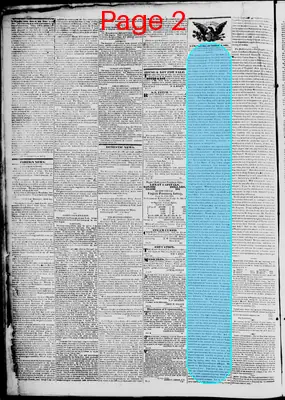
Editorial
October 8, 1832
Lynchburg Virginian
Lynchburg, Virginia
What is this article about?
Editorial from Lynchburg, VA, on October 8, 1832, urges opponents of Andrew Jackson's re-election to overcome apathy and vote, arguing that even a minority showing can check his potential abuses of power and influence his second term, despite expected defeat in the state.
Clipping

OCR Quality
98%
Excellent
Full Text
LYNCHBURG, OCTOBER 8, 1832.
To the Opponents of the re-election of Gen. Andrew Jackson.
The apathy which prevails in this State, on the eve of an important election, has justly excited surprise and astonishment. A few weeks only will elapse, before the people will be called upon to pass judgment, at the polls, on the policy pursued by their present rulers; and yet, we see but little of that salutary excitement, which the importance of the occasion is so well calculated to inspire. The reason of this apparent indifference, so far as those who are opposed to the election of Mr. Clay are concerned, is obvious enough. They have become lukewarm in their attachment to Gen. Jackson. Many of his acts, to put the best construction upon them, have been of such a dubious character, as to alienate entirely from him their affections, or at least to change their once ardent zeal to listless supineness: The halo of military glory, which encircled the name of the Hero, and blinded the judgments of his partisans, has been dimmed by the character of his associations, not less than by the indefensible nature of much of his official conduct. The eyes of many of his once active partisans have been opened to his incompetency; and they now see, and feel, and in some instances reluctantly acknowledge, that the successful Military Chieftain is not always the wisest Statesman, and that the camp is but an indifferent school in which to train Presidents for Republics. Coupled with this cooling of their ardor, is the consciousness they appear to feel, that, in this State, the Jackson ticket will triumph by an overwhelming majority--which their exertions might indeed increase, but cannot render more certain. Their apathy, therefore, we repeat, is not to be wondered at.
But, how is it with those, who, opposed to Gen. Jackson in 1828, have had that opposition strengthened by subsequent events? Are they alarmed at the idea of being in a minority? Or are their exertions paralyzed by the hopelessness of the struggle? Such is not the true policy of the weaker party in free States. If they cannot conquer, they should be ambitious to show that they are strong enough to be respected. If they cannot succeed in elevating to office the men whom they think best qualified to administer the affairs of government, they should not therefore be insensible to the importance of exercising the right of suffrage, and indifferent to the high duty of recording their voices against the men to whose principles and policy they are opposed. What though we be defeated? Is it nothing that we be able to show an increase of strength, by a comparison of the vote of 1828 with that of 1832? If we cannot wrest the sceptre from the feeble hands which now tremblingly grasp it, may we not, in a diminished majority, read a lesson to him who wields it, which, though it cannot correct the evils of the past, may exert an auspicious influence on his future course? We beg the opponents of the present administration to ponder this view of the subject. Should Gen. Jackson be re-elected, by a majority as great as that which originally seated him in the Presidential chair, he may, and will, and ought to consider it as a ratification, by the public voice, of all that he has done and all that he has left undone. And who shall venture to predict, under such circumstances, and when he will be likewise rendered in some measure irresponsible, by the fact, that he will not again be a candidate for the suffrages of the people--who can imagine, we ask, the extent to which he will go, in subverting those constitutional principles, & in trampling upon those personal rights & privileges, for which, in all his past conduct, he has manifested such a contemptuous disregard? If, with the fear of exciting popular indignation before his eyes, and thereby endangering his re-election, he has been guilty of conduct, which has startled his best friends, and driven from his support thousands of his partisans, what may he not do, when, having reached the highest point to which he can aspire, untrammelled by any barrier, and left to the promptings of his own impetuous will, he shall scorn alike the counsel of his honorable and honest friends and the anathemas of his opponents? If his first election was a fearful experiment--if that was justly deprecated, as "a curse upon the country," and anticipated with the most anxious forebodings--surely, his second triumph should be regarded with the most unaffectedly awful apprehensions. Then, indeed, may we look forward to the complete fulfilment of the threat, which heralded his first inauguration, "He will reward his friends, and punish his enemies." The proscriptive policy, which, in the first two years of his administration made the land pale, will be again brought into play, & thousands of victims will feel the edge of the axe, whom policy induced him to spare in his first devastating sweep. The South, heretofore exempt from the operations of this official crusade against popular opinion, will, in its turn, be brought within its influence: and the whole patronage of the government, in all sections of the country, will be brought to bear in favor of the New York intriguer, whom Gen. Jackson has already arrogantly designated as his successor in the Presidential office. But, on the other hand, should he succeed by a majority reduced in the Electoral Colleges, and still farther diminished in the numbers by which the Colleges themselves are appointed, he may perchance pause in his tyrannical career. He may be induced, by the condemnation which will have been thus passed upon his conduct, by a large portion of his original supporters, to modify his policy, in obedience to their will. In one word, we risk every thing by staying away from the polls--we gain every thing by recording our suffrages. We beseech the Anti-Jackson party, then, to bestir themselves at once. They have no time to lose. The day of battle draws nigh, and is even now at hand; and the precursors of success, which greet us in the Albany and Philadelphia elections, should animate us to great exertions. Let us show our party elsewhere, that, though in a minority, we are not to be despised: our weakness--and let them then imitate us by heartily co-operating with them in the good cause in which they have already made noble and successful exertions. We would especially appeal to the Corresponding Committees in the different counties--and, where none such have been appointed, to public spirited individuals, who generally take the lead in such matters--to use every exertion to bring the people to the polls, and to see that they are supplied with proper tickets on the day of election.
To the Opponents of the re-election of Gen. Andrew Jackson.
The apathy which prevails in this State, on the eve of an important election, has justly excited surprise and astonishment. A few weeks only will elapse, before the people will be called upon to pass judgment, at the polls, on the policy pursued by their present rulers; and yet, we see but little of that salutary excitement, which the importance of the occasion is so well calculated to inspire. The reason of this apparent indifference, so far as those who are opposed to the election of Mr. Clay are concerned, is obvious enough. They have become lukewarm in their attachment to Gen. Jackson. Many of his acts, to put the best construction upon them, have been of such a dubious character, as to alienate entirely from him their affections, or at least to change their once ardent zeal to listless supineness: The halo of military glory, which encircled the name of the Hero, and blinded the judgments of his partisans, has been dimmed by the character of his associations, not less than by the indefensible nature of much of his official conduct. The eyes of many of his once active partisans have been opened to his incompetency; and they now see, and feel, and in some instances reluctantly acknowledge, that the successful Military Chieftain is not always the wisest Statesman, and that the camp is but an indifferent school in which to train Presidents for Republics. Coupled with this cooling of their ardor, is the consciousness they appear to feel, that, in this State, the Jackson ticket will triumph by an overwhelming majority--which their exertions might indeed increase, but cannot render more certain. Their apathy, therefore, we repeat, is not to be wondered at.
But, how is it with those, who, opposed to Gen. Jackson in 1828, have had that opposition strengthened by subsequent events? Are they alarmed at the idea of being in a minority? Or are their exertions paralyzed by the hopelessness of the struggle? Such is not the true policy of the weaker party in free States. If they cannot conquer, they should be ambitious to show that they are strong enough to be respected. If they cannot succeed in elevating to office the men whom they think best qualified to administer the affairs of government, they should not therefore be insensible to the importance of exercising the right of suffrage, and indifferent to the high duty of recording their voices against the men to whose principles and policy they are opposed. What though we be defeated? Is it nothing that we be able to show an increase of strength, by a comparison of the vote of 1828 with that of 1832? If we cannot wrest the sceptre from the feeble hands which now tremblingly grasp it, may we not, in a diminished majority, read a lesson to him who wields it, which, though it cannot correct the evils of the past, may exert an auspicious influence on his future course? We beg the opponents of the present administration to ponder this view of the subject. Should Gen. Jackson be re-elected, by a majority as great as that which originally seated him in the Presidential chair, he may, and will, and ought to consider it as a ratification, by the public voice, of all that he has done and all that he has left undone. And who shall venture to predict, under such circumstances, and when he will be likewise rendered in some measure irresponsible, by the fact, that he will not again be a candidate for the suffrages of the people--who can imagine, we ask, the extent to which he will go, in subverting those constitutional principles, & in trampling upon those personal rights & privileges, for which, in all his past conduct, he has manifested such a contemptuous disregard? If, with the fear of exciting popular indignation before his eyes, and thereby endangering his re-election, he has been guilty of conduct, which has startled his best friends, and driven from his support thousands of his partisans, what may he not do, when, having reached the highest point to which he can aspire, untrammelled by any barrier, and left to the promptings of his own impetuous will, he shall scorn alike the counsel of his honorable and honest friends and the anathemas of his opponents? If his first election was a fearful experiment--if that was justly deprecated, as "a curse upon the country," and anticipated with the most anxious forebodings--surely, his second triumph should be regarded with the most unaffectedly awful apprehensions. Then, indeed, may we look forward to the complete fulfilment of the threat, which heralded his first inauguration, "He will reward his friends, and punish his enemies." The proscriptive policy, which, in the first two years of his administration made the land pale, will be again brought into play, & thousands of victims will feel the edge of the axe, whom policy induced him to spare in his first devastating sweep. The South, heretofore exempt from the operations of this official crusade against popular opinion, will, in its turn, be brought within its influence: and the whole patronage of the government, in all sections of the country, will be brought to bear in favor of the New York intriguer, whom Gen. Jackson has already arrogantly designated as his successor in the Presidential office. But, on the other hand, should he succeed by a majority reduced in the Electoral Colleges, and still farther diminished in the numbers by which the Colleges themselves are appointed, he may perchance pause in his tyrannical career. He may be induced, by the condemnation which will have been thus passed upon his conduct, by a large portion of his original supporters, to modify his policy, in obedience to their will. In one word, we risk every thing by staying away from the polls--we gain every thing by recording our suffrages. We beseech the Anti-Jackson party, then, to bestir themselves at once. They have no time to lose. The day of battle draws nigh, and is even now at hand; and the precursors of success, which greet us in the Albany and Philadelphia elections, should animate us to great exertions. Let us show our party elsewhere, that, though in a minority, we are not to be despised: our weakness--and let them then imitate us by heartily co-operating with them in the good cause in which they have already made noble and successful exertions. We would especially appeal to the Corresponding Committees in the different counties--and, where none such have been appointed, to public spirited individuals, who generally take the lead in such matters--to use every exertion to bring the people to the polls, and to see that they are supplied with proper tickets on the day of election.
What sub-type of article is it?
Partisan Politics
Constitutional
What keywords are associated?
Jackson Re Election
Anti Jackson Opposition
Voting Duty
Presidential Election 1832
Constitutional Principles
Political Apathy
Electoral Mobilization
What entities or persons were involved?
Andrew Jackson
Henry Clay
New York Intriguer
Editorial Details
Primary Topic
Opposition To Andrew Jackson's Re Election
Stance / Tone
Strongly Anti Jackson, Urging Opponents To Vote Despite Expected Defeat
Key Figures
Andrew Jackson
Henry Clay
New York Intriguer
Key Arguments
Apathy Among Jackson Opponents Due To His Dubious Acts And Expected Victory In The State
Opponents Should Vote To Show Strength And Influence Jackson's Future Conduct
Re Election By Large Majority Would Embolden Jackson To Subvert Constitutional Principles
Reduced Majority Might Moderate Jackson's Tyrannical Policies
Risk Everything By Not Voting, Gain By Recording Suffrages
Appeal To Committees And Individuals To Mobilize Voters