Thank you for visiting SNEWPapers!
Sign up free
Literary
January 19, 1801
Jenks's Portland Gazette
Portland, Cumberland County, Maine
What is this article about?
An account of ongoing disputes in France about the start of the 18th century, with astronomer Lalande clarifying that 1800 belongs to the 18th century by analogy to counting. Similar debates occurred in 1700, with pamphlets published.
Clipping
OCR Quality
98%
Excellent
Full Text
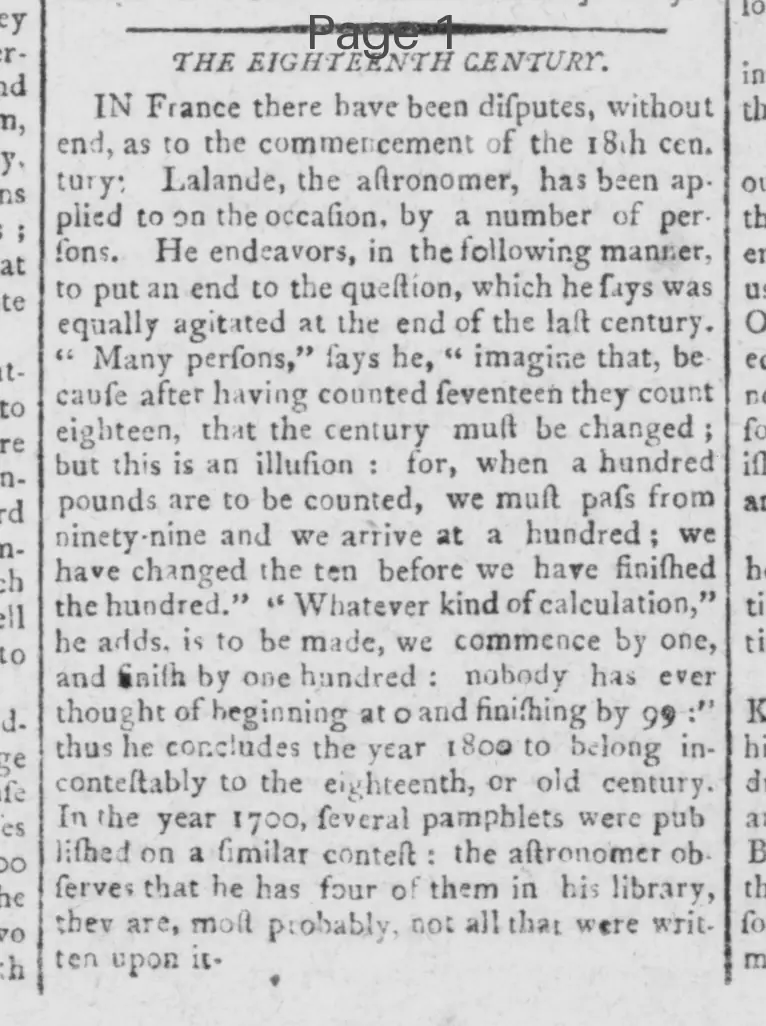
THE EIGHTEENTH CENTURY.
IN France there have been disputes, without end, as to the commencement of the 18th century: Lalande, the astronomer, has been applied to on the occasion, by a number of persons. He endeavors, in the following manner, to put an end to the question, which he says was equally agitated at the end of the last century.
"Many persons," says he, "imagine that, because after having counted seventeen they count eighteen, that the century must be changed: but this is an illusion: for, when a hundred pounds are to be counted, we must pass from ninety-nine and we arrive at a hundred; we have changed the ten before we have finished the hundred." "Whatever kind of calculation," he adds, is to be made, we commence by one, and finish by one hundred: nobody has ever thought of beginning at 0 and finishing by 99:" thus he concludes the year 1800 to belong incontestably to the eighteenth, or old century.
In the year 1700, several pamphlets were published on a similar contest; the astronomer observes that he has four of them in his library, they are, most probably, not all that were written upon it.
IN France there have been disputes, without end, as to the commencement of the 18th century: Lalande, the astronomer, has been applied to on the occasion, by a number of persons. He endeavors, in the following manner, to put an end to the question, which he says was equally agitated at the end of the last century.
"Many persons," says he, "imagine that, because after having counted seventeen they count eighteen, that the century must be changed: but this is an illusion: for, when a hundred pounds are to be counted, we must pass from ninety-nine and we arrive at a hundred; we have changed the ten before we have finished the hundred." "Whatever kind of calculation," he adds, is to be made, we commence by one, and finish by one hundred: nobody has ever thought of beginning at 0 and finishing by 99:" thus he concludes the year 1800 to belong incontestably to the eighteenth, or old century.
In the year 1700, several pamphlets were published on a similar contest; the astronomer observes that he has four of them in his library, they are, most probably, not all that were written upon it.
What sub-type of article is it?
Essay
What keywords are associated?
Eighteenth Century
Lalande
Astronomer
Century Debate
Chronology
Pamphlets
France
Literary Details
Title
The Eighteenth Century.
Subject
Disputes On The Commencement Of The 18th Century
Key Lines
"Many Persons," Says He, "Imagine That, Because After Having Counted Seventeen They Count Eighteen, That The Century Must Be Changed: But This Is An Illusion: For, When A Hundred Pounds Are To Be Counted, We Must Pass From Ninety Nine And We Arrive At A Hundred; We Have Changed The Ten Before We Have Finished The Hundred."
"Whatever Kind Of Calculation," He Adds, Is To Be Made, We Commence By One, And Finish By One Hundred: Nobody Has Ever Thought Of Beginning At 0 And Finishing By 99:"