Thank you for visiting SNEWPapers!
Sign up free
Literary
January 31, 1798
The Kentucky Gazette
Lexington, Fayette County, Kentucky
What is this article about?
Anecdote of French dramatist Boilly, who, impoverished despite fame, resolves with his wife to starve themselves and their young son to death. Discovered and revived by a friend after three days, their plight reaches the Marchioness de Pompadour, who grants them aid and secures Boilly a position as contrôleur du Mercure de France.
Clipping
OCR Quality
96%
Excellent
Full Text
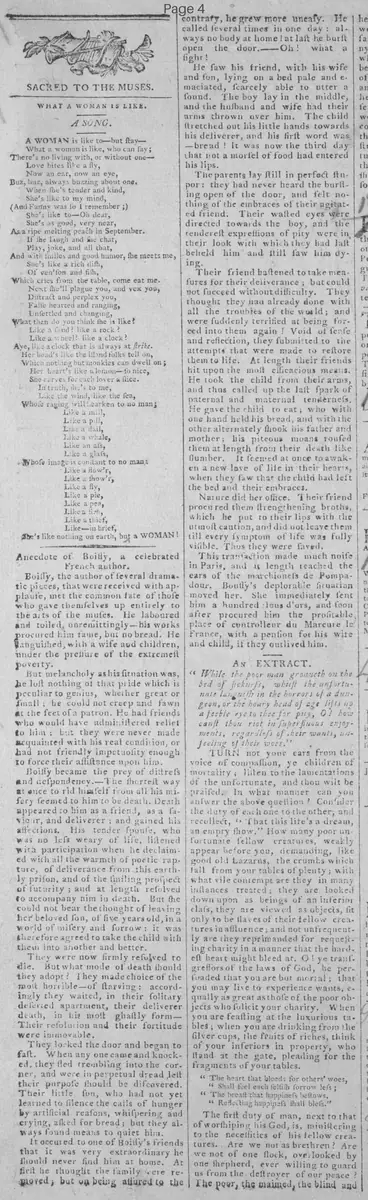
Anecdote of Boilly, a celebrated French author.
Boilly, the author of several dramatic pieces, that were received with applause, met the common fate of those who gave themselves up entirely to the arts of the muses. He laboured and toiled unremittingly—his works procured him fame, but no bread. He languished, with a wife and children, under the pressure of the extremest poverty.
But melancholy as his situation was, he lost nothing of that pride which is peculiar to genius, whether great or small; he could not creep and fawn to the feet of a patron. He had friends who would have administered relief to him; but they were never made acquainted with his real condition, or had not friendly impetuosity enough to force their assistance upon him.
Boilly became the prey of distress and despondency.—The shortest way at once to rid himself from all his misery seemed to him to be death. Death appeared to him as a friend, as a saviour, and deliverer; and gained his affections. His tender spouse, who was no less weary of life, listened with participation when he declaimed with all the warmth of poetic rapture, of deliverance from this earthly prison, and of the smiling prospect of futurity; and at length resolved to accompany him in death. But she could not bear the thought of leaving her beloved son, of five years old, in a world of misery and sorrow: it was therefore agreed to take the child with them into another and better.
They were now firmly resolved to die. But what mode of death should they adopt? They made choice of the most horrible—of starving: accordingly they waited, in their solitary deserted apartment, their deliverer death, in his most ghastly form—
Their resolution and their fortitude were immovable.
They locked the door and began to fast. When any one came and knocked, they fled trembling into the corner, and were in perpetual dread lest their purpose should be discovered.
Their little son, who had not yet learned to silence the calls of hunger by artificial reasons, whispering and crying, asked for bread; but they always found means to quiet him.
It occurred to one of Boilly's friends that it was very extraordinary he should never find him at home. At first he thought the family were removed; but on being assured to the contrary, he grew more uneasy. He called several times in one day: always no body at home! at last he burst open the door.—Oh! what a sight!
He saw his friend, with his wife and son, lying on a bed pale and emaciated, scarcely able to utter a sound. The boy lay in the middle, and the husband and wife had their arms thrown over him. The child stretched out his little hands towards his deliverer, and his first word was—bread! It was now the third day that not a morsel of food had entered his lips.
The parents lay still in perfect stupor: they had never heard the bursting open of the door, and felt nothing of the embraces of their agitated friend. Their wasted eyes were directed towards the boy, and the tenderest expressions of pity were in their look with which they had last beheld him and still saw him dying.
Their friend hastened to take measures for their deliverance; but could not succeed without difficulty. They thought they had already done with all the troubles of the world; and were suddenly terrified at being forced into them again! Void of sense and reflection, they submitted to the attempts that were made to restore them to life. At length their friends hit upon the most efficacious means. He took the child from their arms, and thus called up the last spark of paternal and maternal tenderness.
He gave the child to eat; who with one hand held his bread, and with the other alternately shook his father and mother; his piteous moans roused them at length from their death like slumber. It seemed at once to awaken a new love of life in their hearts, when they saw that the child had left the bed and their embraces.
Nature did her office. Their friend procured them strengthening broths, which he put to their lips with the utmost caution, and did not leave them till every symptom of life was fully visible. Thus they were saved.
This transaction made much noise in Paris, and at length reached the ears of the marchioness de Pompadour. Boilly's deplorable situation moved her. She immediately sent him a hundred louis d'ors, and soon after procured him the profitable place of contrôleur du Mercure de France, with a pension for his wife and child, if they outlived him.
Boilly, the author of several dramatic pieces, that were received with applause, met the common fate of those who gave themselves up entirely to the arts of the muses. He laboured and toiled unremittingly—his works procured him fame, but no bread. He languished, with a wife and children, under the pressure of the extremest poverty.
But melancholy as his situation was, he lost nothing of that pride which is peculiar to genius, whether great or small; he could not creep and fawn to the feet of a patron. He had friends who would have administered relief to him; but they were never made acquainted with his real condition, or had not friendly impetuosity enough to force their assistance upon him.
Boilly became the prey of distress and despondency.—The shortest way at once to rid himself from all his misery seemed to him to be death. Death appeared to him as a friend, as a saviour, and deliverer; and gained his affections. His tender spouse, who was no less weary of life, listened with participation when he declaimed with all the warmth of poetic rapture, of deliverance from this earthly prison, and of the smiling prospect of futurity; and at length resolved to accompany him in death. But she could not bear the thought of leaving her beloved son, of five years old, in a world of misery and sorrow: it was therefore agreed to take the child with them into another and better.
They were now firmly resolved to die. But what mode of death should they adopt? They made choice of the most horrible—of starving: accordingly they waited, in their solitary deserted apartment, their deliverer death, in his most ghastly form—
Their resolution and their fortitude were immovable.
They locked the door and began to fast. When any one came and knocked, they fled trembling into the corner, and were in perpetual dread lest their purpose should be discovered.
Their little son, who had not yet learned to silence the calls of hunger by artificial reasons, whispering and crying, asked for bread; but they always found means to quiet him.
It occurred to one of Boilly's friends that it was very extraordinary he should never find him at home. At first he thought the family were removed; but on being assured to the contrary, he grew more uneasy. He called several times in one day: always no body at home! at last he burst open the door.—Oh! what a sight!
He saw his friend, with his wife and son, lying on a bed pale and emaciated, scarcely able to utter a sound. The boy lay in the middle, and the husband and wife had their arms thrown over him. The child stretched out his little hands towards his deliverer, and his first word was—bread! It was now the third day that not a morsel of food had entered his lips.
The parents lay still in perfect stupor: they had never heard the bursting open of the door, and felt nothing of the embraces of their agitated friend. Their wasted eyes were directed towards the boy, and the tenderest expressions of pity were in their look with which they had last beheld him and still saw him dying.
Their friend hastened to take measures for their deliverance; but could not succeed without difficulty. They thought they had already done with all the troubles of the world; and were suddenly terrified at being forced into them again! Void of sense and reflection, they submitted to the attempts that were made to restore them to life. At length their friends hit upon the most efficacious means. He took the child from their arms, and thus called up the last spark of paternal and maternal tenderness.
He gave the child to eat; who with one hand held his bread, and with the other alternately shook his father and mother; his piteous moans roused them at length from their death like slumber. It seemed at once to awaken a new love of life in their hearts, when they saw that the child had left the bed and their embraces.
Nature did her office. Their friend procured them strengthening broths, which he put to their lips with the utmost caution, and did not leave them till every symptom of life was fully visible. Thus they were saved.
This transaction made much noise in Paris, and at length reached the ears of the marchioness de Pompadour. Boilly's deplorable situation moved her. She immediately sent him a hundred louis d'ors, and soon after procured him the profitable place of contrôleur du Mercure de France, with a pension for his wife and child, if they outlived him.
What sub-type of article is it?
Prose Fiction
What themes does it cover?
Moral Virtue
Friendship
Death Mortality
What keywords are associated?
Boilly
Poverty
Starvation
Family Suicide
Rescue
Pompadour
Patronage
Literary Details
Title
Anecdote Of Boilly, A Celebrated French Author.
Form / Style
Narrative Anecdote In Prose
Key Lines
Death Appeared To Him As A Friend, As A Saviour, And Deliverer; And Gained His Affections.
They Made Choice Of The Most Horrible—Of Starving: Accordingly They Waited, In Their Solitary Deserted Apartment, Their Deliverer Death, In His Most Ghastly Form—
The Child Stretched Out His Little Hands Towards His Deliverer, And His First Word Was—Bread!
He Gave The Child To Eat; Who With One Hand Held His Bread, And With The Other Alternately Shook His Father And Mother;
She Immediately Sent Him A Hundred Louis D'ors, And Soon After Procured Him The Profitable Place Of Contrôleur Du Mercure De France,