Thank you for visiting SNEWPapers!
Sign up free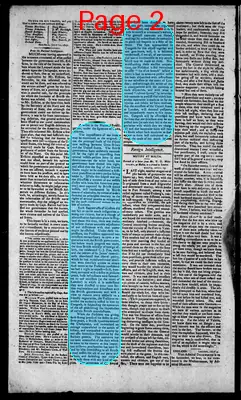
Editorial
August 8, 1807
Herald Of The United States
Warren, Bristol County, Rhode Island
What is this article about?
An editorial discusses the US-British dispute originating from impressment of seamen, captures of American vessels, failed negotiations after C.J. Fox's death, and the Chesapeake outrage. It praises President Jefferson's peace efforts, defensive preparations, and predicts demand for reparation or return of ministers if unmet.
Clipping
OCR Quality
95%
Excellent
Full Text
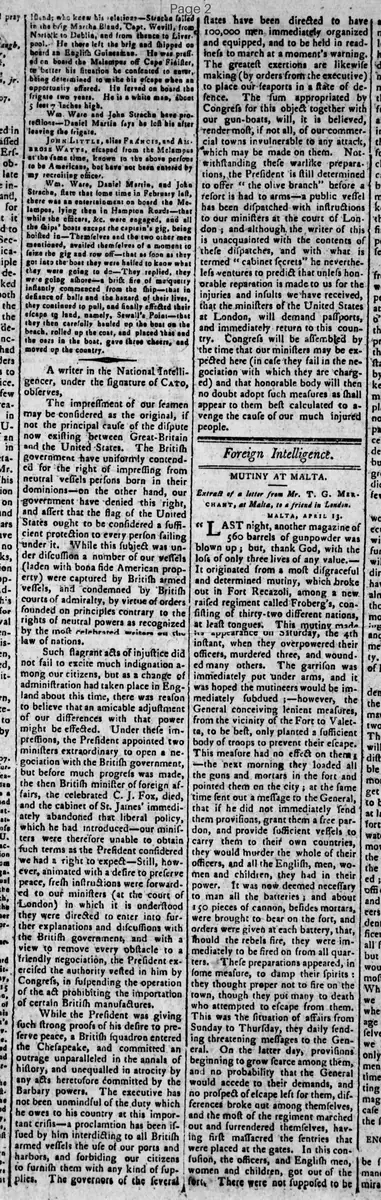
A writer in the National Intelligencer, under the signature of Cato, observes,
The impressment of our seamen may be considered as the original, if not the principal cause of the dispute now existing between Great-Britain and the United States. The British government have uniformly contended for the right of impressing from neutral vessels persons born in their dominions—on the other hand, our government have denied this right, and assert that the flag of the United States ought to be considered a sufficient protection to every person sailing under it. While this subject was under discussion a number of our vessels (laden with bona fide American property) were captured by British armed vessels, and condemned by British courts of admiralty, by virtue of orders founded on principles contrary to the rights of neutral powers as recognized by the most celebrated writers on the law of nations.
Such flagrant acts of injustice did not fail to excite much indignation among our citizens, but as a change of administration had taken place in England about this time, there was reason to believe that an amicable adjustment of our differences with that power might be effected. Under these impressions, the President appointed two ministers extraordinary to open a negotiation with the British government, but before much progress was made, the then British minister of foreign affairs, the celebrated C. J. Fox, died, and the cabinet of St. James' immediately abandoned that liberal policy, which he had introduced—our ministers were therefore unable to obtain such terms as the President considered we had a right to expect—Still, however, animated with a desire to preserve peace, fresh instructions were forwarded to our ministers (at the court of London) in which it is understood they were directed to enter into further explanations and discussions with the British government, and with a view to remove every obstacle to a friendly negotiation, the President exercised the authority vested in him by Congress, in suspending the operation of the act prohibiting the importation of certain British manufactures.
While the President was giving such strong proofs of his desire to preserve peace, a British squadron entered the Chesapeake, and committed an outrage unparalleled in the annals of history, and unequalled in atrocity by any acts heretofore committed by the Barbary powers. The executive has not been unmindful of the duty which he owes to his country at this important crisis—a proclamation has been issued by him interdicting to all British armed vessels the use of our ports and harbors, and forbidding our citizens to furnish them with any kind of supplies. The governors of the several states have been directed to have 100,000 men immediately organized and equipped, and to be held in readiness to march at a moment's warning. The greatest exertions are likewise making (by orders from the executive) to place our seaports in a state of defence. The sum appropriated by Congress for this object together with our gun-boats, will, it is believed, render most, if not all, of our commercial towns invulnerable to any attack, which may be made on them. Notwithstanding these warlike preparations, the President is still determined to offer "the olive branch" before a resort is had to arms—a public vessel has been dispatched with instructions to our ministers at the court of London; and although the writer of this is unacquainted with the contents of these dispatches, and with what is termed "cabinet secrets" he nevertheless ventures to predict that unless honorable reparation is made to us for the injuries and insults we have received, that the ministers of the United States at London, will demand passports, and immediately return to this country.
Congress will be assembled by the time that our ministers may be expected here (in case they fail in the negotiation with which they are charged) and that honorable body will then no doubt adopt such measures as shall appear to them best calculated to avenge the cause of our much injured people.
The impressment of our seamen may be considered as the original, if not the principal cause of the dispute now existing between Great-Britain and the United States. The British government have uniformly contended for the right of impressing from neutral vessels persons born in their dominions—on the other hand, our government have denied this right, and assert that the flag of the United States ought to be considered a sufficient protection to every person sailing under it. While this subject was under discussion a number of our vessels (laden with bona fide American property) were captured by British armed vessels, and condemned by British courts of admiralty, by virtue of orders founded on principles contrary to the rights of neutral powers as recognized by the most celebrated writers on the law of nations.
Such flagrant acts of injustice did not fail to excite much indignation among our citizens, but as a change of administration had taken place in England about this time, there was reason to believe that an amicable adjustment of our differences with that power might be effected. Under these impressions, the President appointed two ministers extraordinary to open a negotiation with the British government, but before much progress was made, the then British minister of foreign affairs, the celebrated C. J. Fox, died, and the cabinet of St. James' immediately abandoned that liberal policy, which he had introduced—our ministers were therefore unable to obtain such terms as the President considered we had a right to expect—Still, however, animated with a desire to preserve peace, fresh instructions were forwarded to our ministers (at the court of London) in which it is understood they were directed to enter into further explanations and discussions with the British government, and with a view to remove every obstacle to a friendly negotiation, the President exercised the authority vested in him by Congress, in suspending the operation of the act prohibiting the importation of certain British manufactures.
While the President was giving such strong proofs of his desire to preserve peace, a British squadron entered the Chesapeake, and committed an outrage unparalleled in the annals of history, and unequalled in atrocity by any acts heretofore committed by the Barbary powers. The executive has not been unmindful of the duty which he owes to his country at this important crisis—a proclamation has been issued by him interdicting to all British armed vessels the use of our ports and harbors, and forbidding our citizens to furnish them with any kind of supplies. The governors of the several states have been directed to have 100,000 men immediately organized and equipped, and to be held in readiness to march at a moment's warning. The greatest exertions are likewise making (by orders from the executive) to place our seaports in a state of defence. The sum appropriated by Congress for this object together with our gun-boats, will, it is believed, render most, if not all, of our commercial towns invulnerable to any attack, which may be made on them. Notwithstanding these warlike preparations, the President is still determined to offer "the olive branch" before a resort is had to arms—a public vessel has been dispatched with instructions to our ministers at the court of London; and although the writer of this is unacquainted with the contents of these dispatches, and with what is termed "cabinet secrets" he nevertheless ventures to predict that unless honorable reparation is made to us for the injuries and insults we have received, that the ministers of the United States at London, will demand passports, and immediately return to this country.
Congress will be assembled by the time that our ministers may be expected here (in case they fail in the negotiation with which they are charged) and that honorable body will then no doubt adopt such measures as shall appear to them best calculated to avenge the cause of our much injured people.
What sub-type of article is it?
Foreign Affairs
War Or Peace
Military Affairs
What keywords are associated?
Impressment
Neutral Rights
Chesapeake Outrage
British Negotiations
Presidential Diplomacy
War Preparations
Reparation Demands
What entities or persons were involved?
President
C. J. Fox
British Government
Cato
National Intelligencer
Congress
Editorial Details
Primary Topic
Us British Dispute Over Impressment, Neutral Rights, And Chesapeake Incident
Stance / Tone
Supportive Of Presidential Peace Efforts With Firm Demand For Reparation
Key Figures
President
C. J. Fox
British Government
Cato
National Intelligencer
Congress
Key Arguments
Impressment Of Us Seamen Is The Main Cause Of The Dispute
British Claims Violate Neutral Rights Under International Law
Failed Negotiations Due To Fox's Death And Policy Shift
President Suspended Non Importation Act To Aid Talks
Chesapeake Outrage Demands Response
Defensive Preparations Including 100,000 Militia And Port Defenses
Ministers Instructed To Demand Reparation Or Return Home
Congress Will Address Failures With Vengeful Measures