Thank you for visiting SNEWPapers!
Sign up free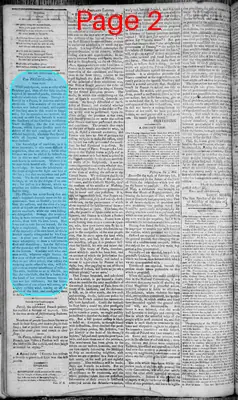
Literary
December 10, 1803
Jenks' Portland Gazette
Portland, Cumberland County, Maine
What is this article about?
An essay in 'The Pilgrim' series, No. 2, explores the Delphic maxim 'Know thyself' as central to human duty. It contrasts refined pagan morality with the broader sanctions of Christian revelation, emphasizing self-examination over judging others, and warns of eternal consequences for vices.
Clipping
OCR Quality
98%
Excellent
Full Text
FOR THE PORTLAND GAZETTE
THE PILGRIM.-No. 2.
Know thyself.
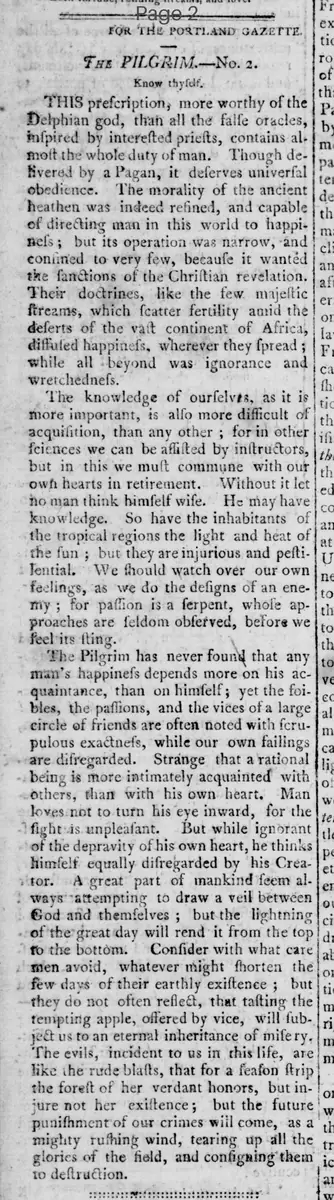
This prescription, more worthy of the Delphian god, than all the false oracles, inspired by interested priests, contains almost the whole duty of man. Though delivered by a Pagan, it deserves universal obedience. The morality of the ancient heathen was indeed refined, and capable of directing man in this world to happiness; but its operation was narrow, and confined to very few, because it wanted the sanctions of the Christian revelation. Their doctrines, like the few majestic streams, which scatter fertility amid the deserts of the vast continent of Africa, diffused happiness, wherever they spread; while all beyond was ignorance and wretchedness.
The knowledge of ourselves, as it is more important, is also more difficult of acquisition, than any other; for in other sciences we can be assisted by instructors, but in this we must commune with our own hearts in retirement. Without it let no man think himself wise. He may have knowledge. So have the inhabitants of the tropical regions the light and heat of the sun; but they are injurious and pestilential. We should watch over our own feelings, as we do the designs of an enemy; for passion is a serpent, whose approaches are seldom observed, before we feel its sting.
The Pilgrim has never found that any man's happiness depends more on his acquaintance, than on himself; yet the foibles, the passions, and the vices of a large circle of friends are often noted with scrupulous exactness, while our own failings are disregarded. Strange that a rational being is more intimately acquainted with others, than with his own heart. Man loves not to turn his eye inward, for the sight is unpleasant. But while ignorant of the depravity of his own heart, he thinks himself equally disregarded by his Creator. A great part of mankind seem always attempting to draw a veil between God and themselves; but the lightning of the great day will rend it from the top to the bottom. Consider with what care men avoid, whatever might shorten the few days of their earthly existence; but they do not often reflect, that tasting the tempting apple, offered by vice, will subject us to an eternal inheritance of misery.
The evils incident to us in this life, are like the rude blasts, that for a season trip the forest of her verdant honors, but injure not her existence; but the future punishment of our crimes will come, as a mighty rushing wind, tearing up all the glories of the field, and consigning them to destruction.
THE PILGRIM.-No. 2.
Know thyself.
This prescription, more worthy of the Delphian god, than all the false oracles, inspired by interested priests, contains almost the whole duty of man. Though delivered by a Pagan, it deserves universal obedience. The morality of the ancient heathen was indeed refined, and capable of directing man in this world to happiness; but its operation was narrow, and confined to very few, because it wanted the sanctions of the Christian revelation. Their doctrines, like the few majestic streams, which scatter fertility amid the deserts of the vast continent of Africa, diffused happiness, wherever they spread; while all beyond was ignorance and wretchedness.
The knowledge of ourselves, as it is more important, is also more difficult of acquisition, than any other; for in other sciences we can be assisted by instructors, but in this we must commune with our own hearts in retirement. Without it let no man think himself wise. He may have knowledge. So have the inhabitants of the tropical regions the light and heat of the sun; but they are injurious and pestilential. We should watch over our own feelings, as we do the designs of an enemy; for passion is a serpent, whose approaches are seldom observed, before we feel its sting.
The Pilgrim has never found that any man's happiness depends more on his acquaintance, than on himself; yet the foibles, the passions, and the vices of a large circle of friends are often noted with scrupulous exactness, while our own failings are disregarded. Strange that a rational being is more intimately acquainted with others, than with his own heart. Man loves not to turn his eye inward, for the sight is unpleasant. But while ignorant of the depravity of his own heart, he thinks himself equally disregarded by his Creator. A great part of mankind seem always attempting to draw a veil between God and themselves; but the lightning of the great day will rend it from the top to the bottom. Consider with what care men avoid, whatever might shorten the few days of their earthly existence; but they do not often reflect, that tasting the tempting apple, offered by vice, will subject us to an eternal inheritance of misery.
The evils incident to us in this life, are like the rude blasts, that for a season trip the forest of her verdant honors, but injure not her existence; but the future punishment of our crimes will come, as a mighty rushing wind, tearing up all the glories of the field, and consigning them to destruction.
What sub-type of article is it?
Essay
What themes does it cover?
Moral Virtue
Religious
What keywords are associated?
Self Knowledge
Pagan Morality
Christian Revelation
Human Vices
Eternal Punishment
Literary Details
Title
The Pilgrim. No. 2.
Subject
Know Thyself.
Key Lines
Know Thyself.
This Prescription, More Worthy Of The Delphian God, Than All The False Oracles, Inspired By Interested Priests, Contains Almost The Whole Duty Of Man.
The Knowledge Of Ourselves, As It Is More Important, Is Also More Difficult Of Acquisition, Than Any Other;
We Should Watch Over Our Own Feelings, As We Do The Designs Of An Enemy; For Passion Is A Serpent, Whose Approaches Are Seldom Observed, Before We Feel Its Sting.
Tasting The Tempting Apple, Offered By Vice, Will Subject Us To An Eternal Inheritance Of Misery.