Thank you for visiting SNEWPapers!
Sign up free
Literary
February 8, 1883
The News And Herald
Winnsboro, Fairfield County, South Carolina
What is this article about?
An essay instructing amateurs on preparing coffee as a fine art, emphasizing buying whole beans, home roasting, pounding rather than grinding, and a specific boiling method to preserve flavor, with references to Swift and Austrian practices.
Clipping
OCR Quality
95%
Excellent
Full Text
Coffee Making as a Fine Art.
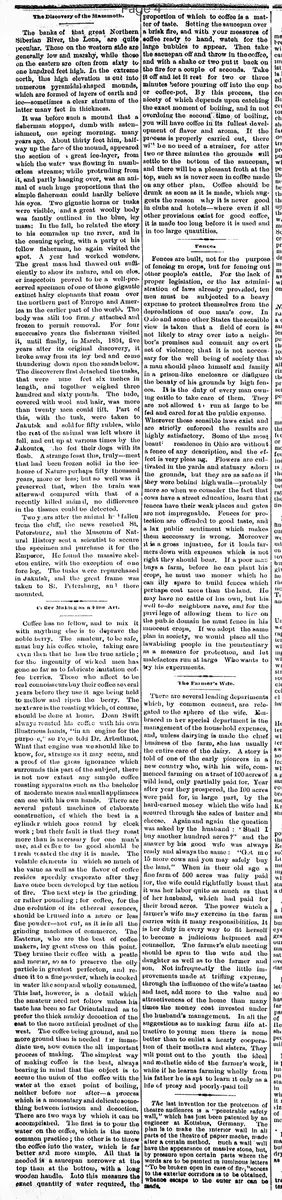
Coffee has no fellow, and to mix it with anything else is to deprave the noble berry. The amateur, to be safe, must buy his coffee whole, taking care even then that he has the true article; for the ingenuity of wicked men has gone so far as to fabricate imitation coffee berries. Those who affect to be real connoisseurs buy their coffee several years before they use it, so as to be held to mellow and ripen the berry. The next care is the roasting which, of course, should be done at home. Dean Swift always roasted his coffee with his own illustrious hands 'in an engine for the purpose,' so Pope told Dr. Arbuthnot. What that engine was we should like to know, for, strange as it may seem, and as a proof of the gross ignorance which surrounds this part of the subject, there is not now extant any simple coffee roasting apparatus such as the bachelor of moderate means and small appliances can use with his own hands. There are several patent machines of elaborate construction, of which the best is a cylinder, which goes round by clock work; but their fault is that they roast more than is necessary for one man's use, and coffee to be good should be freshly roasted the day it is made. The volatile elements in which so much of the value as well as the flavor of coffee resides speedily evaporate after they have once been developed by the action of fire. The next step is the grinding or rather pounding; for coffee, for the due evolution of its ethereal essences, should be bruised into a more or less fine powder—not cut, as it is in all the grinding machines of commerce. The Austrians, who are the best of coffee makers, lay great stress on this point. They bruise their coffee with a pestle and mortar, so as to preserve the oily particle in greatest perfection, and reduce it to a fine powder, which is cooked in water like soup and wholly consumed. This last, however, is a detail which the amateur need not follow unless his taste has been so far Orientalized as to prefer the thick muddy decoction of the east to the more artificial product of the west. The coffee being ground, and no more ground than is needed for immediate use, now comes the all important process of making. The simplest way of making coffee is the best, always bearing in mind that the object is to secure the union of the coffee with the water at the exact point of boiling, neither before nor after—a process which is a momentary and delicate something between infusion and decoction. There are two ways by which it can be accomplished. The first is to pour the water on the coffee, which is the more common practice; the other is to throw the coffee into the water, which is far better and more simple. All that is needed is a saucepan narrower at the top than at the bottom, with a long wooden handle. Into this measure the exact quantity of water required, the proportion of which to coffee is a matter of taste. Setting the saucepan over a brisk fire, and with your measures of coffee ready to hand, watch for the large bubbles to appear. Then take the saucepan off and throw in the coffee, and with a shake or two put it back on the fire for a couple of seconds. Take it off and let it rest for two or three minutes before pouring off into the cup or coffee-pot. By this process, the nicety of which depends upon catching the exact moment of boiling, and in not overdoing the second time of boiling, you will have coffee in its fullest development of flavor and aroma. If the process is properly carried out, there will be no need of a strainer, for after two or three minutes the grounds will settle to the bottom of the saucepan, and there will be a pleasant froth at the top, such as is never seen in coffee made on any other plan. Coffee should be drunk as soon as it is made, which suggests the reason why it is never good in clubs and hotels—where even if all other provisions exist for good coffee, it is made too long before it is used and in too large quantities.
Coffee has no fellow, and to mix it with anything else is to deprave the noble berry. The amateur, to be safe, must buy his coffee whole, taking care even then that he has the true article; for the ingenuity of wicked men has gone so far as to fabricate imitation coffee berries. Those who affect to be real connoisseurs buy their coffee several years before they use it, so as to be held to mellow and ripen the berry. The next care is the roasting which, of course, should be done at home. Dean Swift always roasted his coffee with his own illustrious hands 'in an engine for the purpose,' so Pope told Dr. Arbuthnot. What that engine was we should like to know, for, strange as it may seem, and as a proof of the gross ignorance which surrounds this part of the subject, there is not now extant any simple coffee roasting apparatus such as the bachelor of moderate means and small appliances can use with his own hands. There are several patent machines of elaborate construction, of which the best is a cylinder, which goes round by clock work; but their fault is that they roast more than is necessary for one man's use, and coffee to be good should be freshly roasted the day it is made. The volatile elements in which so much of the value as well as the flavor of coffee resides speedily evaporate after they have once been developed by the action of fire. The next step is the grinding or rather pounding; for coffee, for the due evolution of its ethereal essences, should be bruised into a more or less fine powder—not cut, as it is in all the grinding machines of commerce. The Austrians, who are the best of coffee makers, lay great stress on this point. They bruise their coffee with a pestle and mortar, so as to preserve the oily particle in greatest perfection, and reduce it to a fine powder, which is cooked in water like soup and wholly consumed. This last, however, is a detail which the amateur need not follow unless his taste has been so far Orientalized as to prefer the thick muddy decoction of the east to the more artificial product of the west. The coffee being ground, and no more ground than is needed for immediate use, now comes the all important process of making. The simplest way of making coffee is the best, always bearing in mind that the object is to secure the union of the coffee with the water at the exact point of boiling, neither before nor after—a process which is a momentary and delicate something between infusion and decoction. There are two ways by which it can be accomplished. The first is to pour the water on the coffee, which is the more common practice; the other is to throw the coffee into the water, which is far better and more simple. All that is needed is a saucepan narrower at the top than at the bottom, with a long wooden handle. Into this measure the exact quantity of water required, the proportion of which to coffee is a matter of taste. Setting the saucepan over a brisk fire, and with your measures of coffee ready to hand, watch for the large bubbles to appear. Then take the saucepan off and throw in the coffee, and with a shake or two put it back on the fire for a couple of seconds. Take it off and let it rest for two or three minutes before pouring off into the cup or coffee-pot. By this process, the nicety of which depends upon catching the exact moment of boiling, and in not overdoing the second time of boiling, you will have coffee in its fullest development of flavor and aroma. If the process is properly carried out, there will be no need of a strainer, for after two or three minutes the grounds will settle to the bottom of the saucepan, and there will be a pleasant froth at the top, such as is never seen in coffee made on any other plan. Coffee should be drunk as soon as it is made, which suggests the reason why it is never good in clubs and hotels—where even if all other provisions exist for good coffee, it is made too long before it is used and in too large quantities.
What sub-type of article is it?
Essay
What themes does it cover?
Social Manners
Commerce Trade
What keywords are associated?
Coffee Making
Fine Art
Roasting
Grinding
Brewing
Connoisseurs
Austrian Method
Literary Details
Title
Coffee Making As A Fine Art.
Subject
On The Proper Method Of Preparing Coffee
Key Lines
Coffee Has No Fellow, And To Mix It With Anything Else Is To Deprave The Noble Berry.
Dean Swift Always Roasted His Coffee With His Own Illustrious Hands 'In An Engine For The Purpose,' So Pope Told Dr. Arbuthnot.
The Simplest Way Of Making Coffee Is The Best, Always Bearing In Mind That The Object Is To Secure The Union Of The Coffee With The Water At The Exact Point Of Boiling, Neither Before Nor After—A Process Which Is A Momentary And Delicate Something Between Infusion And Decoction.
By This Process, The Nicety Of Which Depends Upon Catching The Exact Moment Of Boiling, And In Not Overdoing The Second Time Of Boiling, You Will Have Coffee In Its Fullest Development Of Flavor And Aroma.
Coffee Should Be Drunk As Soon As It Is Made, Which Suggests The Reason Why It Is Never Good In Clubs And Hotels—Where Even If All Other Provisions Exist For Good Coffee, It Is Made Too Long Before It Is Used And In Too Large Quantities.