Thank you for visiting SNEWPapers!
Sign up free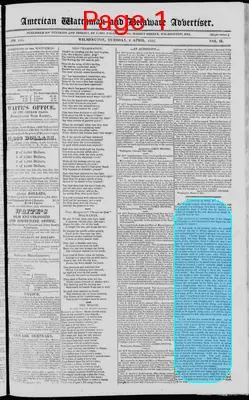
Literary
April 8, 1823
American Watchman And Delaware Advertiser
Wilmington, New Castle County, Delaware
What is this article about?
Biblical excerpt from Jonah 4:8 illustrates Nineveh's extreme heat, supported by Mr. Campbell's travel account of Mosul's barren plain, intense daytime heat, dried Tigris River, and the deadly Samiel east wind that consumes victims like fire.
Clipping
OCR Quality
98%
Excellent
Full Text
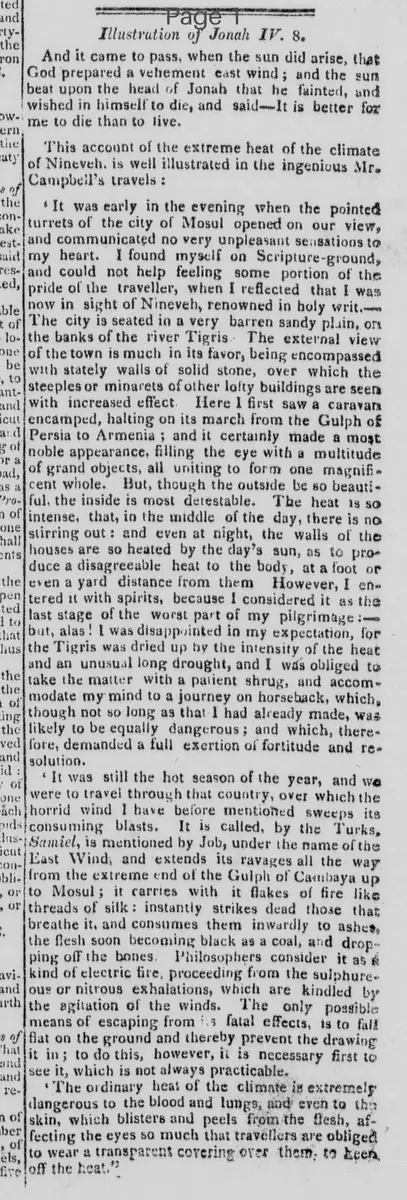
Illustration of Jonah IV. 8.
And it came to pass, when the sun did arise, that God prepared a vehement east wind; and the sun beat upon the head of Jonah that he fainted, and wished in himself to die, and said—It is better for me to die than to live.
This account of the extreme heat of the climate of Nineveh, is well illustrated in the ingenious Mr. Campbell's travels:
'It was early in the evening when the pointed turrets of the city of Mosul opened on our view, and communicated no very unpleasant sensations to my heart. I found myself on Scripture-ground, and could not help feeling some portion of the pride of the traveller, when I reflected that I was now in sight of Nineveh, renowned in holy writ.— The city is seated in a very barren sandy plain, on the banks of the river Tigris. The external view of the town is much in its favor, being encompassed with stately walls of solid stone, over which the steeples or minarets of other lofty buildings are seen with increased effect. Here I first saw a caravan encamped, halting on its march from the Gulph of Persia to Armenia; and it certainly made a most noble appearance, filling the eye with a multitude of grand objects, all uniting to form one magnificent whole. But, though the outside be so beautiful, the inside is most detestable. The heat is so intense, that, in the middle of the day, there is no stirring out: and even at night, the walls of the houses are so heated by the day's sun, as to produce a disagreeable heat to the body, at a foot or even a yard distance from them However, I entered it with spirits, because I considered it as the last stage of the worst part of my pilgrimage:— but, alas! I was disappointed in my expectation, for the Tigris was dried up by the intensity of the heat and an unusual long drought, and I was obliged to take the matter with a patient shrug, and accommodate my mind to a journey on horseback, which, though not so long as that I had already made, was likely to be equally dangerous; and which, therefore, demanded a full exertion of fortitude and resolution.
' It was still the hot season of the year, and we were to travel through that country, over which the horrid wind I have before mentioned sweeps its consuming blasts. It is called, by the Turks, Samiel, is mentioned by Job, under the name of the East Wind, and extends its ravages all the way from the extreme end of the Gulph of Cambaya up to Mosul; it carries with it flakes of fire like threads of silk: instantly strikes dead those that breathe it, and consumes them inwardly to ashes, the flesh soon becoming black as a coal, and dropping off the bones. Philosophers consider it as kind of electric fire, proceeding from the sulphureous or nitrous exhalations, which are kindled by the agitation of the winds. The only possible means of escaping from its fatal effects, is to fall flat on the ground and thereby prevent the drawing it in; to do this, however, it is necessary first to see it, which is not always practicable.
The ordinary heat of the climate is extremely dangerous to the blood and lungs, and even to the skin, which blisters and peels from the flesh, affecting the eyes so much that travellers are obliged to wear a transparent covering over them: to keep off the heat."
And it came to pass, when the sun did arise, that God prepared a vehement east wind; and the sun beat upon the head of Jonah that he fainted, and wished in himself to die, and said—It is better for me to die than to live.
This account of the extreme heat of the climate of Nineveh, is well illustrated in the ingenious Mr. Campbell's travels:
'It was early in the evening when the pointed turrets of the city of Mosul opened on our view, and communicated no very unpleasant sensations to my heart. I found myself on Scripture-ground, and could not help feeling some portion of the pride of the traveller, when I reflected that I was now in sight of Nineveh, renowned in holy writ.— The city is seated in a very barren sandy plain, on the banks of the river Tigris. The external view of the town is much in its favor, being encompassed with stately walls of solid stone, over which the steeples or minarets of other lofty buildings are seen with increased effect. Here I first saw a caravan encamped, halting on its march from the Gulph of Persia to Armenia; and it certainly made a most noble appearance, filling the eye with a multitude of grand objects, all uniting to form one magnificent whole. But, though the outside be so beautiful, the inside is most detestable. The heat is so intense, that, in the middle of the day, there is no stirring out: and even at night, the walls of the houses are so heated by the day's sun, as to produce a disagreeable heat to the body, at a foot or even a yard distance from them However, I entered it with spirits, because I considered it as the last stage of the worst part of my pilgrimage:— but, alas! I was disappointed in my expectation, for the Tigris was dried up by the intensity of the heat and an unusual long drought, and I was obliged to take the matter with a patient shrug, and accommodate my mind to a journey on horseback, which, though not so long as that I had already made, was likely to be equally dangerous; and which, therefore, demanded a full exertion of fortitude and resolution.
' It was still the hot season of the year, and we were to travel through that country, over which the horrid wind I have before mentioned sweeps its consuming blasts. It is called, by the Turks, Samiel, is mentioned by Job, under the name of the East Wind, and extends its ravages all the way from the extreme end of the Gulph of Cambaya up to Mosul; it carries with it flakes of fire like threads of silk: instantly strikes dead those that breathe it, and consumes them inwardly to ashes, the flesh soon becoming black as a coal, and dropping off the bones. Philosophers consider it as kind of electric fire, proceeding from the sulphureous or nitrous exhalations, which are kindled by the agitation of the winds. The only possible means of escaping from its fatal effects, is to fall flat on the ground and thereby prevent the drawing it in; to do this, however, it is necessary first to see it, which is not always practicable.
The ordinary heat of the climate is extremely dangerous to the blood and lungs, and even to the skin, which blisters and peels from the flesh, affecting the eyes so much that travellers are obliged to wear a transparent covering over them: to keep off the heat."
What sub-type of article is it?
Essay
Journey Narrative
What themes does it cover?
Religious
Nature
What keywords are associated?
Jonah
Nineveh
Heat
Mosul
Tigris
Samiel
East Wind
Travels
Campbell
What entities or persons were involved?
Mr. Campbell's Travels
Literary Details
Title
Illustration Of Jonah Iv. 8.
Author
Mr. Campbell's Travels
Subject
Extreme Heat Of The Climate Of Nineveh
Form / Style
Prose Illustration With Travel Excerpt
Key Lines
And It Came To Pass, When The Sun Did Arise, That God Prepared A Vehement East Wind; And The Sun Beat Upon The Head Of Jonah That He Fainted, And Wished In Himself To Die, And Said—It Is Better For Me To Die Than To Live.
The Heat Is So Intense, That, In The Middle Of The Day, There Is No Stirring Out: And Even At Night, The Walls Of The Houses Are So Heated By The Day's Sun, As To Produce A Disagreeable Heat To The Body, At A Foot Or Even A Yard Distance From Them
It Is Called, By The Turks, Samiel, Is Mentioned By Job, Under The Name Of The East Wind, And Extends Its Ravages All The Way From The Extreme End Of The Gulph Of Cambaya Up To Mosul; It Carries With It Flakes Of Fire Like Threads Of Silk: Instantly Strikes Dead Those That Breathe It, And Consumes Them Inwardly To Ashes