Thank you for visiting SNEWPapers!
Sign up free
Editorial
May 8, 1810
Alexandria Daily Gazette, Commercial & Political
Alexandria, Virginia
What is this article about?
The author, a former Democratic representative who switched parties, introduces a series of letters critiquing French influence on U.S. politics since Jefferson's administration. He explains his background, party change due to disillusionment with Democratic leaders' ties to France, and references a 1805-6 congressional session where Rep. Joseph Clay revealed a French war threat.
Clipping
OCR Quality
95%
Excellent
Full Text
From the Freeman's Journal.
Letters upon French Influence
No. I.
To the People of the United States.
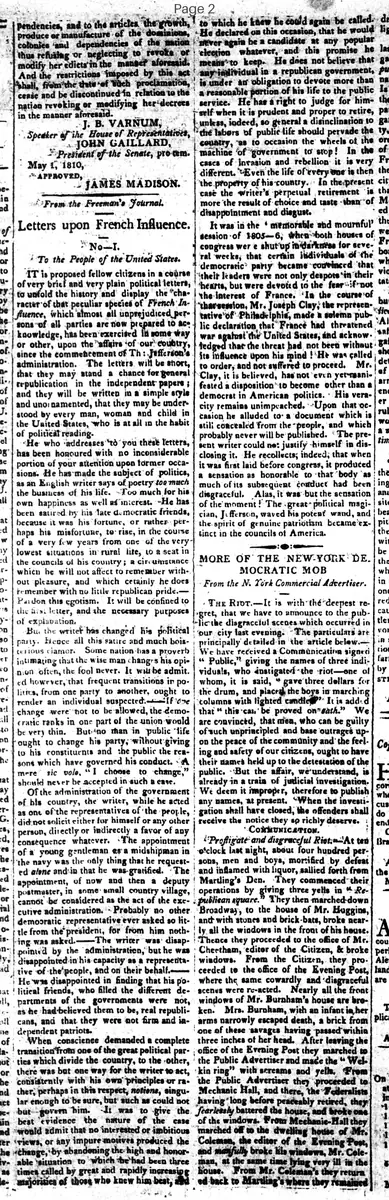
IT is proposed fellow citizens in a course of very brief and very plain political letters to unfold the history and display the character of that peculiar species of French Influence, which almost all unprejudiced persons of all parties are now prepared to acknowledge, has been exercised in some way or other, upon the affairs of our country, since the commencement of the Jefferson's administration. The letters will be short, that they may stand a chance for general republication in the independent papers; and they will be written in a simple style and unornamented, that they may be understood by every man, woman and child in the United States, who is at all in the habit of political reading.
He who addresses to you these letters, has been honoured with no inconsiderable portion of your attention upon former occasions. He has made the subject of politics, as an English writer says of poetry too much the business of his life. Too much for his own happiness as well as interest. He has been satirized by his late democratic friends, because it was his fortune, or rather perhaps his misfortune, to rise, in the course of a very few years from one of the very lowest situations in rural life, to a seat in the councils of his country; a circumstance which he will not affect to remember without pleasure, and which certainly he does remember with no little republican pride. Pardon this egotism. It will be confined to the first letter, and the necessary purposes of explanation.
But the writer has changed his political party. Hence all this satire and much boisterous clamor. Some nation has a proverb intimating that the wise man changes his opinion often, the fool never. It will be admitted however, that frequent transitions in politics, from one party to another, ought to render an individual suspected. If such change were not to be allowed, the democratic ranks in one part of the union would be very thin. But no man in public life ought to change his party; without giving to his constituents and the public the reasons which have governed his conduct. A mere sic vole, "I choose to change," should never be accepted in such a case.
Of the administration of the government of his country, the writer, while he acted as one of the representatives of the people, did not solicit either for himself or any other person, directly or indirectly a favor of any consequence whatever. The appointment of a young gentleman as a midshipman in the navy was the only thing that he requested alone and in that he was gratified. The appointment, of now and then a deputy postmaster, in some small country village, cannot be considered as the act of the executive administration. Probably no other democratic representative ever asked so little from the president, for from him nothing was asked. The writer "was disappointed by the administration," but he was disappointed in his capacity as a representative of the people, and on their behalf. He was disappointed in finding that his political friends, who filled the different departments of the government were not, as he had believed them to be, real republicans, and that they were not firm and independent patriots.
When conscience demanded a complete transition from one of the great political parties which divide the country, to the other, there was but one way for the writer to act consistently with his own principles or rather, perhaps in this respect, notiers, singular enough to be sure, but such as could not but govern him. It was to give the best evidence the nature of the case would admit that no interested or ambitious views, or any impure motives produced the change, by abandoning the high and honorable situation to which he had been three times called by great and rapidly increasing majorities of those who knew him best, and to which he knew he could again be called.
He declared on this occasion, that he would never again be a candidate at any popular election whatever, and this promise he means to keep. He does not believe that any individual in a republican government, is under an obligation to devote more than a reasonable portion of his life to the public service. He has a right to judge for himself when it is prudent and proper to retire, unless, indeed, so general a disinclination to the labors of public life should pervade the country, as to occasion the wheels of the machine of government to stop! In the cases of invasion and rebellion it is very different. Even the life of everyone is then the property of his country. In the present case the writer's perpetual retirement is more the result of choice and taste than of disappointment and disgust.
It was in the memorable and mournful session of 1805-6, when both houses of congress were shut up in darkness for several weeks; that certain individuals of the democratic party became convinced that their leaders were not only despotic in their hearts, but were devoted to the fear if not the interest of France. In the course of that session, Mr. Joseph Clay, the representative of Philadelphia, made a solemn public declaration that France had threatened war against the United States, and acknowledged that the threat had not been without its influence upon his mind! He was called to order, and not suffered to proceed. Mr. Clay, it is believed, has not even yet manifested a disposition to become other than a democrat in American politics. His veracity remains unimpeached. Upon that occasion he alluded to; a document which is still concealed from the people, and which probably never will be published. The present writer could not justify himself in disclosing it. He recollects; indeed; that when it was first laid before congress, it produced a sensation as honorable to that body as much of its subsequent conduct had been disgraceful. Alas, it was but the sensation of the moment! The great political magician, Jefferson, waved his potent wand, and the spirit of genuine patriotism became extinct in the councils of America.
Letters upon French Influence
No. I.
To the People of the United States.
IT is proposed fellow citizens in a course of very brief and very plain political letters to unfold the history and display the character of that peculiar species of French Influence, which almost all unprejudiced persons of all parties are now prepared to acknowledge, has been exercised in some way or other, upon the affairs of our country, since the commencement of the Jefferson's administration. The letters will be short, that they may stand a chance for general republication in the independent papers; and they will be written in a simple style and unornamented, that they may be understood by every man, woman and child in the United States, who is at all in the habit of political reading.
He who addresses to you these letters, has been honoured with no inconsiderable portion of your attention upon former occasions. He has made the subject of politics, as an English writer says of poetry too much the business of his life. Too much for his own happiness as well as interest. He has been satirized by his late democratic friends, because it was his fortune, or rather perhaps his misfortune, to rise, in the course of a very few years from one of the very lowest situations in rural life, to a seat in the councils of his country; a circumstance which he will not affect to remember without pleasure, and which certainly he does remember with no little republican pride. Pardon this egotism. It will be confined to the first letter, and the necessary purposes of explanation.
But the writer has changed his political party. Hence all this satire and much boisterous clamor. Some nation has a proverb intimating that the wise man changes his opinion often, the fool never. It will be admitted however, that frequent transitions in politics, from one party to another, ought to render an individual suspected. If such change were not to be allowed, the democratic ranks in one part of the union would be very thin. But no man in public life ought to change his party; without giving to his constituents and the public the reasons which have governed his conduct. A mere sic vole, "I choose to change," should never be accepted in such a case.
Of the administration of the government of his country, the writer, while he acted as one of the representatives of the people, did not solicit either for himself or any other person, directly or indirectly a favor of any consequence whatever. The appointment of a young gentleman as a midshipman in the navy was the only thing that he requested alone and in that he was gratified. The appointment, of now and then a deputy postmaster, in some small country village, cannot be considered as the act of the executive administration. Probably no other democratic representative ever asked so little from the president, for from him nothing was asked. The writer "was disappointed by the administration," but he was disappointed in his capacity as a representative of the people, and on their behalf. He was disappointed in finding that his political friends, who filled the different departments of the government were not, as he had believed them to be, real republicans, and that they were not firm and independent patriots.
When conscience demanded a complete transition from one of the great political parties which divide the country, to the other, there was but one way for the writer to act consistently with his own principles or rather, perhaps in this respect, notiers, singular enough to be sure, but such as could not but govern him. It was to give the best evidence the nature of the case would admit that no interested or ambitious views, or any impure motives produced the change, by abandoning the high and honorable situation to which he had been three times called by great and rapidly increasing majorities of those who knew him best, and to which he knew he could again be called.
He declared on this occasion, that he would never again be a candidate at any popular election whatever, and this promise he means to keep. He does not believe that any individual in a republican government, is under an obligation to devote more than a reasonable portion of his life to the public service. He has a right to judge for himself when it is prudent and proper to retire, unless, indeed, so general a disinclination to the labors of public life should pervade the country, as to occasion the wheels of the machine of government to stop! In the cases of invasion and rebellion it is very different. Even the life of everyone is then the property of his country. In the present case the writer's perpetual retirement is more the result of choice and taste than of disappointment and disgust.
It was in the memorable and mournful session of 1805-6, when both houses of congress were shut up in darkness for several weeks; that certain individuals of the democratic party became convinced that their leaders were not only despotic in their hearts, but were devoted to the fear if not the interest of France. In the course of that session, Mr. Joseph Clay, the representative of Philadelphia, made a solemn public declaration that France had threatened war against the United States, and acknowledged that the threat had not been without its influence upon his mind! He was called to order, and not suffered to proceed. Mr. Clay, it is believed, has not even yet manifested a disposition to become other than a democrat in American politics. His veracity remains unimpeached. Upon that occasion he alluded to; a document which is still concealed from the people, and which probably never will be published. The present writer could not justify himself in disclosing it. He recollects; indeed; that when it was first laid before congress, it produced a sensation as honorable to that body as much of its subsequent conduct had been disgraceful. Alas, it was but the sensation of the moment! The great political magician, Jefferson, waved his potent wand, and the spirit of genuine patriotism became extinct in the councils of America.
What sub-type of article is it?
Foreign Affairs
Partisan Politics
What keywords are associated?
French Influence
Jefferson Administration
Party Change
Congressional Session
War Threat
What entities or persons were involved?
Jefferson
Joseph Clay
Democratic Party
France
Editorial Details
Primary Topic
French Influence On Jefferson's Administration
Stance / Tone
Critical Of Democratic Leaders And French Influence
Key Figures
Jefferson
Joseph Clay
Democratic Party
France
Key Arguments
French Influence Has Affected U.S. Affairs Since Jefferson's Administration
Author Changed Parties Due To Disillusionment With Democratic Leaders' Ties To France
Author Sought No Favors From Administration Except Minor Ones
In 1805 6 Session, Clay Revealed French War Threat Influencing Congress
Jefferson Suppressed Patriotic Response To The Threat