Thank you for visiting SNEWPapers!
Sign up free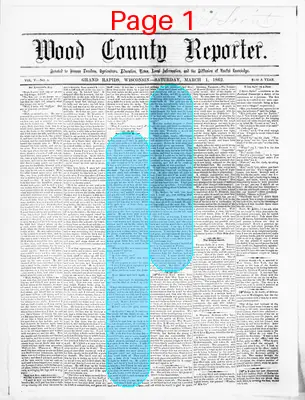
Story
March 1, 1862
Wood County Reporter
Wisconsin Rapids, Wood County, Wisconsin
What is this article about?
A grieving mother recounts her son Charley's enlistment in the 1847 Mexican-American War due to unemployment, her reluctant consent, his departure without farewell, and his death from fever in Puebla, contrasting it bitterly with the Civil War's fight for liberties.
Clipping
OCR Quality
85%
Good
Full Text
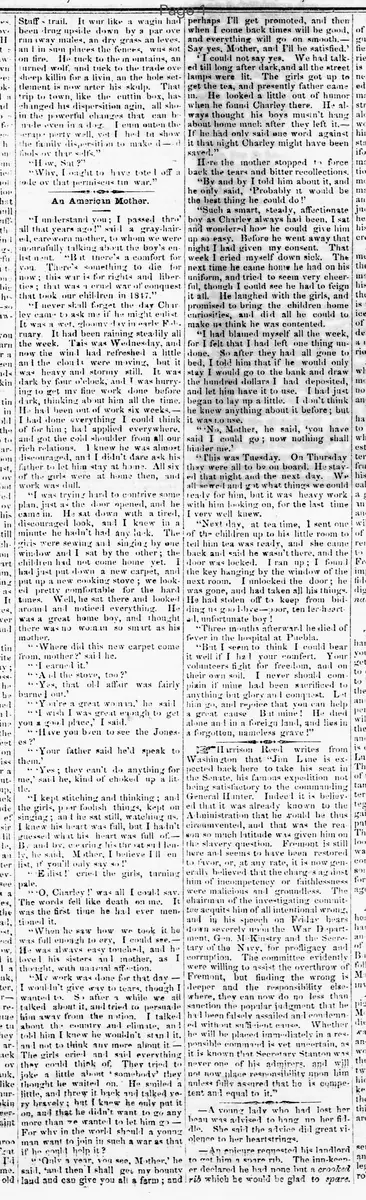
An American Mother.
"I understand you; I passed through all that years ago!" said a gray-haired, careworn mother, to whom we were mournfully talking about the boy's enlistment. "But where's a comfort for you. There's something to die for now; this war is for rights and liberties; that was a cruel war of conquest that took our children in 1847."
"I never shall forget the day Charley came to ask me if he might enlist. It was a wet, gloomy day in early February. It had been raining steadily all the week. This was Wednesday, and now the wind had refreshed a little and the clouds were moving, but it was heavy and stormy still. It was dark by four o'clock; and I was hurrying to get my fine work done before dark, thinking about him all the time. He had been out of work six weeks. I had done everything I could think of for him; had applied everywhere, and got the cold shoulder from all our rich relations. I knew he was almost discouraged, and I didn't dare ask his father to let him stay at home. All six of the girls were at home then, and work was dull.
"I was trying hard to contrive some plan, just as the door opened, and he came in. He sat down with a tired, discouraged look, and I knew in a minute he hadn't had any luck. The girls were sewing and singing by one window and I sat by the other: the children had not come home yet. I had just put down a new carpet, and put up a new cooking stove; we looked pretty comfortable for the hard times. Well, he sat there and looked around and noticed everything. He was a great home boy, and thought there was no woman so smart as his mother.
"Where did this new carpet come from, mother?" said he.
"I earned it."
"And the stove, too?"
"Yes, that old affair was fairly burned out."
"You're a great woman," he said "I wish I was great enough to get you a good place," I said.
"Have you been to see the Joneses?"
"Your father said he'd speak to them."
"Yes; they can't do anything for me," said he, kind of choked up a little.
"I kept stitching and thinking: and the girls, poor foolish things, kept on singing; and he sat still, watching us. I knew his heart was full, but I hadn't guessed what his heart was full of. By and by, clearing his throat sniffling and hemming, he said, 'Mother, I believe I'll enlist, if you'll only say so!'
"Enlist!" cried the girls, turning pale.
"O, Charley!" was all I could say. The words fell like death on me. It was the first time he had ever mentioned it.
"When he saw how we took it he was full enough to cry, I could see. He was always easy touched, and had loved his sisters and mother, as I thought, with unusual affection.
"My work was done for that day - I wouldn't give way to tears, though I wanted to. So after a while we all talked about it, and tried to persuade him away from the notion. I talked about the country and climate, and told him I knew he wouldn't stand it. and to think any more about it - The girls cried and said everything they could think of They tried to joke a little about somebody they thought he waited on. He smiled a little, and threw it back and talked so bravely; but I knew he only put it on, and that he didn't want to go any more than we wanted to let him go - For why in the world should a young man want to join in such a war as that if he could help it?
"'Only a year, you see, Mother,' he said, 'and then I shall get my bounty land and can give you all a farm; and perhaps I'll get promoted, and then when I come back times will be good, and everything will go on smooth. Say yes, Mother, and I'll be satisfied.'
I could not say yes. We had talked till long after dark, and all the street lamps were lit. The girls got up to get the tea, and presently father came in. He looked a little out of humor when he found Charley there. He always thought his boys mustn't hang about home much after they left it. If he had only said one word against it that night Charley might have been saved."
Here the mother stopped to force back the tears and bitter recollections.
"By and by I told him about it, and he only said: Probably it would be the best thing he could do!"
"Such a smart, steady, affectionate boy as Charley always had been, I sat and wondered how he could give him up so easy. Before he went away that night I had given my consent. That week I cried myself down sick. The next time he came home he had on his uniform, and tried to seem very cheerful, though I could see he had to feign it all. He laughed with the girls, and promised to bring the children home curiosities, and did all he could to make us think he was contented.
"I had blamed myself all the week, for I felt that I had left one thing undone. So after they had all gone to bed, I told him that if he would only stay I would go to the bank and draw the hundred dollars I had deposited, and let him have it to use. I had just began to lay up a little. I don't think he knew anything about it before; but it was no use.
"'No, Mother,' he said, 'you have said I could go; now nothing shall hinder me.'"
"This was Tuesday. On Thursday they were all to be on board. He stayed that night and the next day. We all sewed and got what things we could ready for him, but it was heavy work with him looking on, for the last time I very well knew.
"Next day, at tea time, I sent one of the children up to his little room to tell him tea was ready, and she came back and said he wasn't there, and the door was locked. I ran up: I found the key hanging by the window of the next room. I unlocked the door; he was gone, and had taken all his things. He had stolen off to keep from bidding us good-bye - poor, tender-hearted unfortunate boy!
"Three months afterward he died of fever in the hospital at Puebla.
"But I seem to think I could bear it well if I had your comfort. Your volunteers fight for freedom, and on their own soil. I never shall complain if mine had been sacrificed to anything but glory and conquest. Let him go, and rejoice that you can help a great cause But mine! He died alone and in a foreign land, and lies in a forgotten, nameless grave!"
"I understand you; I passed through all that years ago!" said a gray-haired, careworn mother, to whom we were mournfully talking about the boy's enlistment. "But where's a comfort for you. There's something to die for now; this war is for rights and liberties; that was a cruel war of conquest that took our children in 1847."
"I never shall forget the day Charley came to ask me if he might enlist. It was a wet, gloomy day in early February. It had been raining steadily all the week. This was Wednesday, and now the wind had refreshed a little and the clouds were moving, but it was heavy and stormy still. It was dark by four o'clock; and I was hurrying to get my fine work done before dark, thinking about him all the time. He had been out of work six weeks. I had done everything I could think of for him; had applied everywhere, and got the cold shoulder from all our rich relations. I knew he was almost discouraged, and I didn't dare ask his father to let him stay at home. All six of the girls were at home then, and work was dull.
"I was trying hard to contrive some plan, just as the door opened, and he came in. He sat down with a tired, discouraged look, and I knew in a minute he hadn't had any luck. The girls were sewing and singing by one window and I sat by the other: the children had not come home yet. I had just put down a new carpet, and put up a new cooking stove; we looked pretty comfortable for the hard times. Well, he sat there and looked around and noticed everything. He was a great home boy, and thought there was no woman so smart as his mother.
"Where did this new carpet come from, mother?" said he.
"I earned it."
"And the stove, too?"
"Yes, that old affair was fairly burned out."
"You're a great woman," he said "I wish I was great enough to get you a good place," I said.
"Have you been to see the Joneses?"
"Your father said he'd speak to them."
"Yes; they can't do anything for me," said he, kind of choked up a little.
"I kept stitching and thinking: and the girls, poor foolish things, kept on singing; and he sat still, watching us. I knew his heart was full, but I hadn't guessed what his heart was full of. By and by, clearing his throat sniffling and hemming, he said, 'Mother, I believe I'll enlist, if you'll only say so!'
"Enlist!" cried the girls, turning pale.
"O, Charley!" was all I could say. The words fell like death on me. It was the first time he had ever mentioned it.
"When he saw how we took it he was full enough to cry, I could see. He was always easy touched, and had loved his sisters and mother, as I thought, with unusual affection.
"My work was done for that day - I wouldn't give way to tears, though I wanted to. So after a while we all talked about it, and tried to persuade him away from the notion. I talked about the country and climate, and told him I knew he wouldn't stand it. and to think any more about it - The girls cried and said everything they could think of They tried to joke a little about somebody they thought he waited on. He smiled a little, and threw it back and talked so bravely; but I knew he only put it on, and that he didn't want to go any more than we wanted to let him go - For why in the world should a young man want to join in such a war as that if he could help it?
"'Only a year, you see, Mother,' he said, 'and then I shall get my bounty land and can give you all a farm; and perhaps I'll get promoted, and then when I come back times will be good, and everything will go on smooth. Say yes, Mother, and I'll be satisfied.'
I could not say yes. We had talked till long after dark, and all the street lamps were lit. The girls got up to get the tea, and presently father came in. He looked a little out of humor when he found Charley there. He always thought his boys mustn't hang about home much after they left it. If he had only said one word against it that night Charley might have been saved."
Here the mother stopped to force back the tears and bitter recollections.
"By and by I told him about it, and he only said: Probably it would be the best thing he could do!"
"Such a smart, steady, affectionate boy as Charley always had been, I sat and wondered how he could give him up so easy. Before he went away that night I had given my consent. That week I cried myself down sick. The next time he came home he had on his uniform, and tried to seem very cheerful, though I could see he had to feign it all. He laughed with the girls, and promised to bring the children home curiosities, and did all he could to make us think he was contented.
"I had blamed myself all the week, for I felt that I had left one thing undone. So after they had all gone to bed, I told him that if he would only stay I would go to the bank and draw the hundred dollars I had deposited, and let him have it to use. I had just began to lay up a little. I don't think he knew anything about it before; but it was no use.
"'No, Mother,' he said, 'you have said I could go; now nothing shall hinder me.'"
"This was Tuesday. On Thursday they were all to be on board. He stayed that night and the next day. We all sewed and got what things we could ready for him, but it was heavy work with him looking on, for the last time I very well knew.
"Next day, at tea time, I sent one of the children up to his little room to tell him tea was ready, and she came back and said he wasn't there, and the door was locked. I ran up: I found the key hanging by the window of the next room. I unlocked the door; he was gone, and had taken all his things. He had stolen off to keep from bidding us good-bye - poor, tender-hearted unfortunate boy!
"Three months afterward he died of fever in the hospital at Puebla.
"But I seem to think I could bear it well if I had your comfort. Your volunteers fight for freedom, and on their own soil. I never shall complain if mine had been sacrificed to anything but glory and conquest. Let him go, and rejoice that you can help a great cause But mine! He died alone and in a foreign land, and lies in a forgotten, nameless grave!"
What sub-type of article is it?
Biography
Family Drama
Tragedy
What themes does it cover?
Family
Misfortune
Tragedy
What keywords are associated?
Mother Son
Enlistment
Mexican War
Family Tragedy
Unemployment
Death In Service
What entities or persons were involved?
Charley
Mother
Father
Sisters
Where did it happen?
American Home, Puebla
Story Details
Key Persons
Charley
Mother
Father
Sisters
Location
American Home, Puebla
Event Date
Early February 1847
Story Details
Unemployed son Charley enlists in the Mexican War with mother's reluctant consent, departs without farewell, and dies of fever in Puebla three months later; mother regrets the war of conquest unlike the current fight for liberties.