Thank you for visiting SNEWPapers!
Sign up free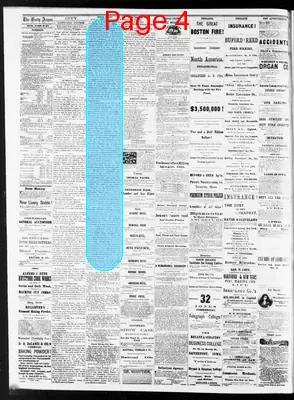
Story
November 30, 1872
The Rock Island Daily Argus
Rock Island, Rock Island County County, Illinois
What is this article about?
Eulogy for Horace Greeley, born February 3, 1811, in Amherst, N.H., died November 29, 1872, near Tarrytown, N.Y. Chronicles his rise from poverty to founding the New York Tribune, anti-slavery advocacy, and efforts to reconcile North and South after the Civil War.
Clipping

OCR Quality
95%
Excellent
Full Text
In the quiet little town of Amherst, N.H., on the 3d of February, 1811, Horace Greeley was born. In the stillness of a rural retreat, near Tarrytown, N.Y., away from any public road, among loving friends, a little after dark, on the evening of November 29th, 1872, he died. His ancestors were Scotch-Irish people. In his youth he was, physically and mentally, the superior of all his companions; he rose to be a great chieftain among his fellow-men, having, as we think, no previous equal save Benjamin Franklin; and he died when in the very zenith of his fame. His life was devoted to the good of his fellow-men, and he sacrificed it, at last, to one great effort to reconcile his countrymen to one another. Nothing could have been added to his fame had he lived; and now that he is dead, all his countrymen will join in doing honor to the memory of one of the purest and best of all the great men America has produced.
It is probable that his affectionate vigils by the bedside of his dying wife had their effect upon him, as also other domestic griefs, but it is also certain that, like Douglas, who wore himself out in an effort to avert a civil war, the excitement and labor incident to the late campaign superinduced the mental disorder from which death was the only possible relief. The voice of Douglas and the labor of his friends were not sufficient to prevent a war between our countrymen, but may we not hope that now, over the grave of the dead patriot, Greeley, the people of the South and the North may become so reconciled to each other that no future strife can separate them?
The striking facts in the life of Mr. Greeley are well known to the public. When 10 years of age his father removed to West Haven, Vermont. At 15 he became a printer's apprentice in the office of the Northern Spectator, East Poultney, Vermont. In 1832 he was a journeyman printer in New York. The next year he was a partner in publishing the Morning Post, a two cent paper—but it was not a success. In 1834 he started the New Yorker as a Whig paper. He was the editor of The Jeffersonian in 1838, and The Log Cabin, a campaign paper, in 1840. In 1841 The Tribune was started, and since that most school boys know his history. As the founder and chief editor of one of the greatest newspapers in the world his fame will be enduring, his brow will be lustrous with no borrowed rays and his name will be cherished among the purest and greatest of America's great men. Few of our countrymen are not indebted to his labors for some service in the advancement of their hopes, or some gentle deed in aid of their personal needs. His heart was the seat of generosity; his mind the throne of nobleness; his pen their quick and powerful servitor, and we believe in our heart that that pen never willingly championed an unworthy cause, never took inspiration from a selfish motive. He was more instrumental than any other man who ever lived, in liberating this country from the curse of slavery. And afterwards more instrumental than any other man in liberating three million of Democrats from a most ill-starred party servitude. He gained for the cause of reform a real victory, buried dead issues, and brought into the foreground those living ones which must now be tried upon their merits. These things are worth all they cost. Let us be grateful for the great and the good men of our land, among the greatest of which was Horace Greeley.
The death of no man in all our borders would have produced such unaffected tears and sorrow. He had his foibles, and even they made him the familiar of every household. His life will rise like a shaft to his own memory, what he has done will be his own best monument, and the sentences he has so often fitly uttered are his best eulogy and epitaph. His unrivaled industry, leaving volumes economic, literary and historical, his tremendous energy fed by a life of Spartan temperance, his purity of character unsoiled as a woman's, his charity which never looked at the recipient before he gave, his utter indifference to worldly glitter, denoted by his courage in the presence of royalty, and his apparel, and manners at all times, his death, which would have borne a stain like a wound; his child-like trust in an active providence and his manly support of God's intentions by a life of probity and a determination to leave nothing to be done by God which he could do for himself—all these are what come to men's minds, now they learn that Horace Greeley is dead, and that his giant mind has gone to the mysterious hereafter. None need say "Peace to his memory," for his few slight faults are all forgotten and his late foes are now trying to outdo his friends in mourning his death and doing honor to his memory.
It is probable that his affectionate vigils by the bedside of his dying wife had their effect upon him, as also other domestic griefs, but it is also certain that, like Douglas, who wore himself out in an effort to avert a civil war, the excitement and labor incident to the late campaign superinduced the mental disorder from which death was the only possible relief. The voice of Douglas and the labor of his friends were not sufficient to prevent a war between our countrymen, but may we not hope that now, over the grave of the dead patriot, Greeley, the people of the South and the North may become so reconciled to each other that no future strife can separate them?
The striking facts in the life of Mr. Greeley are well known to the public. When 10 years of age his father removed to West Haven, Vermont. At 15 he became a printer's apprentice in the office of the Northern Spectator, East Poultney, Vermont. In 1832 he was a journeyman printer in New York. The next year he was a partner in publishing the Morning Post, a two cent paper—but it was not a success. In 1834 he started the New Yorker as a Whig paper. He was the editor of The Jeffersonian in 1838, and The Log Cabin, a campaign paper, in 1840. In 1841 The Tribune was started, and since that most school boys know his history. As the founder and chief editor of one of the greatest newspapers in the world his fame will be enduring, his brow will be lustrous with no borrowed rays and his name will be cherished among the purest and greatest of America's great men. Few of our countrymen are not indebted to his labors for some service in the advancement of their hopes, or some gentle deed in aid of their personal needs. His heart was the seat of generosity; his mind the throne of nobleness; his pen their quick and powerful servitor, and we believe in our heart that that pen never willingly championed an unworthy cause, never took inspiration from a selfish motive. He was more instrumental than any other man who ever lived, in liberating this country from the curse of slavery. And afterwards more instrumental than any other man in liberating three million of Democrats from a most ill-starred party servitude. He gained for the cause of reform a real victory, buried dead issues, and brought into the foreground those living ones which must now be tried upon their merits. These things are worth all they cost. Let us be grateful for the great and the good men of our land, among the greatest of which was Horace Greeley.
The death of no man in all our borders would have produced such unaffected tears and sorrow. He had his foibles, and even they made him the familiar of every household. His life will rise like a shaft to his own memory, what he has done will be his own best monument, and the sentences he has so often fitly uttered are his best eulogy and epitaph. His unrivaled industry, leaving volumes economic, literary and historical, his tremendous energy fed by a life of Spartan temperance, his purity of character unsoiled as a woman's, his charity which never looked at the recipient before he gave, his utter indifference to worldly glitter, denoted by his courage in the presence of royalty, and his apparel, and manners at all times, his death, which would have borne a stain like a wound; his child-like trust in an active providence and his manly support of God's intentions by a life of probity and a determination to leave nothing to be done by God which he could do for himself—all these are what come to men's minds, now they learn that Horace Greeley is dead, and that his giant mind has gone to the mysterious hereafter. None need say "Peace to his memory," for his few slight faults are all forgotten and his late foes are now trying to outdo his friends in mourning his death and doing honor to his memory.
What sub-type of article is it?
Biography
Personal Triumph
What themes does it cover?
Triumph
Moral Virtue
Justice
What keywords are associated?
Horace Greeley
Biography
New York Tribune
Abolition Slavery
Journalism
Civil War Reconciliation
Eulogy
What entities or persons were involved?
Horace Greeley
Where did it happen?
Amherst, N.H.; Tarrytown, N.Y.; West Haven, Vermont; East Poultney, Vermont; New York
Story Details
Key Persons
Horace Greeley
Location
Amherst, N.H.; Tarrytown, N.Y.; West Haven, Vermont; East Poultney, Vermont; New York
Event Date
Born February 3, 1811; Died November 29, 1872
Story Details
Horace Greeley born in rural New Hampshire, apprenticed as printer, founded New York Tribune, led anti-slavery efforts, ran for president to promote reconciliation, died from exhaustion after campaign.