Thank you for visiting SNEWPapers!
Sign up free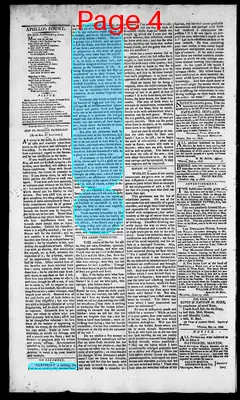
Literary
August 23, 1806
Herald Of The United States
Warren, Bristol County, Rhode Island
What is this article about?
An essay reflecting on ceremony as a social art of disguising faults to compliment others, essential for breeding and distinguishing social ranks, yet merely decorative and potentially hypocritical if overdone. It advocates balanced good manners founded on tolerance of others' frailties without offending.
Clipping
OCR Quality
98%
Excellent
Full Text
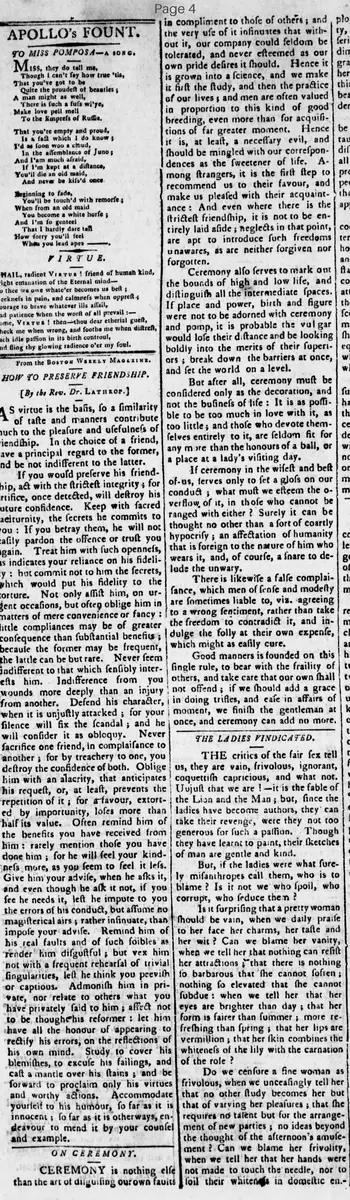
ON CEREMONY.
CEREMONY is nothing else than the art of disguising our own faults in compliment to those of others; and the very use of it insinuates that without it, our company could seldom be tolerated, and never esteemed as our own pride desires it should. Hence it is grown into a science, and we make it first the study, and then the practice of our lives; and men are often valued in proportion to this kind of good breeding, even more than for acquisitions of far greater moment. Hence it is, at least, a necessary evil, and should be mingled with our correspondences as the sweetener of life. Among strangers, it is the first step to recommend us to their favour, and make us pleased with their acquaintance: And even where there is the strictest friendship, it is not to be entirely laid aside; neglects in that point, are apt to introduce such freedoms unawares, as are neither forgiven nor forgotten.
Ceremony also serves to mark out the bounds of high and low life, and distinguish all the intermediate places. If place and power, birth and figure were not to be adorned with ceremony and pomp, it is probable the vulgar would lose their distance and be looking boldly into the merits of their superiors; break down the barriers at once, and set the world on a level.
But after all, ceremony must be considered only as the decoration, and not the business of life: It is as possible to be too much in love with it, as too little; and those who devote themselves entirely to it, are seldom fit for any more than the honours of a ball, or a place at a lady's visiting day.
If ceremony in the wisest and best of us, serves only to set a gloss on our conduct; what must we esteem the overflow of it, in those who cannot be ranged with either? Surely it can be thought no other than a sort of courtly hypocrisy; an affectation of humanity that is foreign to the nature of him who wears it, and, of course, a snare to delude the unwary.
There is likewise a false complaisance, which men of sense and modesty are sometimes liable to, viz. agreeing to a wrong sentiment, rather than take the freedom to contradict it, and indulge the folly at their own expense, which might as easily cure.
Good manners is founded on this single rule, to bear with the frailty of others, and take care that our own shall not offend; if we should add a grace in doing trifles, and ease in affairs of moment, we finish the gentleman at once, and ceremony can add no more.
CEREMONY is nothing else than the art of disguising our own faults in compliment to those of others; and the very use of it insinuates that without it, our company could seldom be tolerated, and never esteemed as our own pride desires it should. Hence it is grown into a science, and we make it first the study, and then the practice of our lives; and men are often valued in proportion to this kind of good breeding, even more than for acquisitions of far greater moment. Hence it is, at least, a necessary evil, and should be mingled with our correspondences as the sweetener of life. Among strangers, it is the first step to recommend us to their favour, and make us pleased with their acquaintance: And even where there is the strictest friendship, it is not to be entirely laid aside; neglects in that point, are apt to introduce such freedoms unawares, as are neither forgiven nor forgotten.
Ceremony also serves to mark out the bounds of high and low life, and distinguish all the intermediate places. If place and power, birth and figure were not to be adorned with ceremony and pomp, it is probable the vulgar would lose their distance and be looking boldly into the merits of their superiors; break down the barriers at once, and set the world on a level.
But after all, ceremony must be considered only as the decoration, and not the business of life: It is as possible to be too much in love with it, as too little; and those who devote themselves entirely to it, are seldom fit for any more than the honours of a ball, or a place at a lady's visiting day.
If ceremony in the wisest and best of us, serves only to set a gloss on our conduct; what must we esteem the overflow of it, in those who cannot be ranged with either? Surely it can be thought no other than a sort of courtly hypocrisy; an affectation of humanity that is foreign to the nature of him who wears it, and, of course, a snare to delude the unwary.
There is likewise a false complaisance, which men of sense and modesty are sometimes liable to, viz. agreeing to a wrong sentiment, rather than take the freedom to contradict it, and indulge the folly at their own expense, which might as easily cure.
Good manners is founded on this single rule, to bear with the frailty of others, and take care that our own shall not offend; if we should add a grace in doing trifles, and ease in affairs of moment, we finish the gentleman at once, and ceremony can add no more.
What sub-type of article is it?
Essay
What themes does it cover?
Social Manners
Moral Virtue
What keywords are associated?
Ceremony
Good Manners
Social Conduct
Hypocrisy
Breeding
Complaisance
Literary Details
Title
On Ceremony.
Key Lines
Ceremony Is Nothing Else Than The Art Of Disguising Our Own Faults In Compliment To Those Of Others;
Hence It Is, At Least, A Necessary Evil, And Should Be Mingled With Our Correspondences As The Sweetener Of Life.
But After All, Ceremony Must Be Considered Only As The Decoration, And Not The Business Of Life:
Surely It Can Be Thought No Other Than A Sort Of Courtly Hypocrisy;
Good Manners Is Founded On This Single Rule, To Bear With The Frailty Of Others, And Take Care That Our Own Shall Not Offend;