Thank you for visiting SNEWPapers!
Sign up free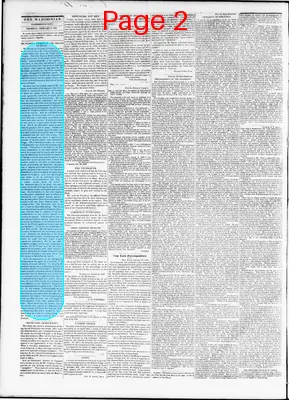
Editorial
February 2, 1843
The Daily Madisonian
Washington, District Of Columbia
What is this article about?
Editorial praises Senator Calhoun's speech on the Oregon question but critiques his view on the government's political weakness due to party balances. Defends the Executive's constitutional power and the President's independence from party politics, aligning him with the people's interests against politicians.
Clipping

OCR Quality
98%
Excellent
Full Text
MR. CALHOUN'S SPEECH ON THE OREGON QUESTION.
We listened on Tuesday with great pleasure, as we ever do when Mr. Calhoun speaks, to the remarks which fell from the South Carolina Senator. The little State of South Carolina is nobly represented in the Senate of the United States. General McDuffie is the superior of most men in that body, and inferior to none; and, in expressing this sentiment, we hold that no matter what regard we may have for Mr. McDuffie personally, we only do the reputation of this distinguished statesman justice. Mr. Calhoun's powers of intellect are unquestioned, and if his mind be not of a higher order, he has a more extended reputation than that of his eloquent colleague.
But there was one remark made by Mr. Calhoun, in the course of his argument, the force of which we cannot perceive, and to the sentiment of which we cannot subscribe. As an argument against Mr. Linn's bill, he urged the political weakness of the Government. He said that the Government politically had never been so weak; that there were but three parties in the country, one in possession of the Executive department of the Government—another in possession of Congress—and the third in possession of the country. And he concluded by declaring that the three parties were so constituted in reference to each other, as to balance and check each other's action. If this latter remark be true, then, in a party sense, the first cannot be so. For if the Executive party, no matter what its numbers, few or many, embodies the positive fact of a check upon the other two, then does it follow by necessity that it is equally powerful with the other two parties. Neither is the remark true, when it applies to the question of abstract power and constitutional design. The Constitution makes the strength of the Executive arm of the Government, and not parties. The power of the letter of the Executive department, is the same whether supported or unsupported by a party, and its spirit may be affected by the accidental circumstance of having or not having a majority party at command but in the one case it has a direct and positive action, in the other a direct negative action of precisely the same force. As a question of original power and constitutional prerogative, the party in possession of the Executive department is just as strong as the party in possession of Congress. It is true that Congress may refuse to act in conformity with the Executive recommendations, and thus, to a certain extent, check the power of the Executive party to do good; but such a course on the part of Congress, does not injure the Executive, or alter, or lessen its powers in the least. On the contrary, in this very exigency, the Executive department may be called on to exercise its very highest powers, namely, to use the veto power. Thus the account stands balanced, to say the least, between them. But enough of this. The Executive does not aspire to have an Executive party. The President has voluntarily placed himself in his present altitude, and in defiance of all party combinations, he has thrown himself on the country for support. If the People do not sustain him they will not sustain themselves, for he is now in advocacy of the interests and welfare of the People against politicians and caucus legislation. If they do not sustain him it is their fault, not his. He will regard it as a misfortune to be lamented by succeeding generations. Does any one doubt that, if the President had looked to party combinations and alliances, he could not have found a party among the politicians? No, he has made a desperate struggle, and is now continuing the contest, for the People and for the country, against the politicians, who have usurped all power, and ridden the People nearly unto death, and he will do battle in this cause till he wins the victory, or falls before the sword.
As for the observation of the distinguished Senator about the party in possession of the country, if he has reference to the great Republican party, this is a fraternity of which the President claims to be a member. And the Senator, no doubt, with his accustomed frankness will admit that the President has, by his firmness and patriotism, brought this party from utter prostration back again into power. His vetoes, the votes of his friends, the moral and political influence of the Executive Department, have accomplished this great work. The Senator, by his remark, (unintentionally we presume) would seem to have excluded the President from any association with the party in possession of the country. As well might the limb of the tree deny the roots. As well might the other members of the body quarrel with the belly. There can be but two parties, the one for, and the other against the Administration. Unquestionably the People are with the Administration, and this is as it should be, for the Administration is just as unquestionably with the People in point both of interest and principle.
We listened on Tuesday with great pleasure, as we ever do when Mr. Calhoun speaks, to the remarks which fell from the South Carolina Senator. The little State of South Carolina is nobly represented in the Senate of the United States. General McDuffie is the superior of most men in that body, and inferior to none; and, in expressing this sentiment, we hold that no matter what regard we may have for Mr. McDuffie personally, we only do the reputation of this distinguished statesman justice. Mr. Calhoun's powers of intellect are unquestioned, and if his mind be not of a higher order, he has a more extended reputation than that of his eloquent colleague.
But there was one remark made by Mr. Calhoun, in the course of his argument, the force of which we cannot perceive, and to the sentiment of which we cannot subscribe. As an argument against Mr. Linn's bill, he urged the political weakness of the Government. He said that the Government politically had never been so weak; that there were but three parties in the country, one in possession of the Executive department of the Government—another in possession of Congress—and the third in possession of the country. And he concluded by declaring that the three parties were so constituted in reference to each other, as to balance and check each other's action. If this latter remark be true, then, in a party sense, the first cannot be so. For if the Executive party, no matter what its numbers, few or many, embodies the positive fact of a check upon the other two, then does it follow by necessity that it is equally powerful with the other two parties. Neither is the remark true, when it applies to the question of abstract power and constitutional design. The Constitution makes the strength of the Executive arm of the Government, and not parties. The power of the letter of the Executive department, is the same whether supported or unsupported by a party, and its spirit may be affected by the accidental circumstance of having or not having a majority party at command but in the one case it has a direct and positive action, in the other a direct negative action of precisely the same force. As a question of original power and constitutional prerogative, the party in possession of the Executive department is just as strong as the party in possession of Congress. It is true that Congress may refuse to act in conformity with the Executive recommendations, and thus, to a certain extent, check the power of the Executive party to do good; but such a course on the part of Congress, does not injure the Executive, or alter, or lessen its powers in the least. On the contrary, in this very exigency, the Executive department may be called on to exercise its very highest powers, namely, to use the veto power. Thus the account stands balanced, to say the least, between them. But enough of this. The Executive does not aspire to have an Executive party. The President has voluntarily placed himself in his present altitude, and in defiance of all party combinations, he has thrown himself on the country for support. If the People do not sustain him they will not sustain themselves, for he is now in advocacy of the interests and welfare of the People against politicians and caucus legislation. If they do not sustain him it is their fault, not his. He will regard it as a misfortune to be lamented by succeeding generations. Does any one doubt that, if the President had looked to party combinations and alliances, he could not have found a party among the politicians? No, he has made a desperate struggle, and is now continuing the contest, for the People and for the country, against the politicians, who have usurped all power, and ridden the People nearly unto death, and he will do battle in this cause till he wins the victory, or falls before the sword.
As for the observation of the distinguished Senator about the party in possession of the country, if he has reference to the great Republican party, this is a fraternity of which the President claims to be a member. And the Senator, no doubt, with his accustomed frankness will admit that the President has, by his firmness and patriotism, brought this party from utter prostration back again into power. His vetoes, the votes of his friends, the moral and political influence of the Executive Department, have accomplished this great work. The Senator, by his remark, (unintentionally we presume) would seem to have excluded the President from any association with the party in possession of the country. As well might the limb of the tree deny the roots. As well might the other members of the body quarrel with the belly. There can be but two parties, the one for, and the other against the Administration. Unquestionably the People are with the Administration, and this is as it should be, for the Administration is just as unquestionably with the People in point both of interest and principle.
What sub-type of article is it?
Partisan Politics
Constitutional
Foreign Affairs
What keywords are associated?
Calhoun Speech
Oregon Question
Executive Power
Party Balance
Presidential Veto
Republican Party
Political Weakness
What entities or persons were involved?
Mr. Calhoun
General Mcduffie
Mr. Linn
The President
South Carolina Senator
Editorial Details
Primary Topic
Critique Of Calhoun's Remarks On Government Weakness In Oregon Debate
Stance / Tone
Supportive Of The President And Executive Power, Critical Of Calhoun's Party Balance Argument
Key Figures
Mr. Calhoun
General Mcduffie
Mr. Linn
The President
South Carolina Senator
Key Arguments
Calhoun's Argument On Government Weakness Due To Three Balanced Parties Is Flawed
Executive Power Is Constitutionally Equal To Congress Regardless Of Party Support
President Acts Independently For The People's Interests Against Politicians
President Has Revived The Republican Party Through Firmness And Vetoes
Only Two Real Parties: For Or Against The Administration, With People Supporting It