Thank you for visiting SNEWPapers!
Sign up free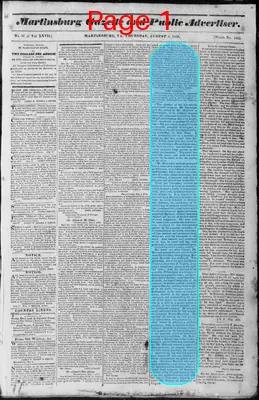
Story
August 3, 1826
Martinsburg Gazette And Public Advertiser
Martinsburg, Berkeley County, West Virginia
What is this article about?
Account of John Hancock's election as President of the Continental Congress in 1775, amid enthusiasm against Gen. Gage's proclamation. Nominated over others like Benjamin Harrison, Hancock hesitated modestly; Harrison carried him to the chair. From Mrs. Warren's history.
Clipping

OCR Quality
95%
Excellent
Full Text
JOHN HANCOCK
The circumstances attending the election of
John Hancock, to the Presidency of the Continental
Congress, in 1775, are thus related by
Mrs. Warren, in her history of the American
Revolution:
"The absence of the late worthy
president of congress, Mr. Randolph,
and the arrival of Mr. Hancock at
Philadelphia, at the fortunate moment
when the enthusiasm inspired by Gen.
Gage's proclamation was at its height,
both concurred to promote his elevation.
—He was chosen to preside in the
respectable assembly of delegates, avowedly
on the sole principle of his being
proscribed by Gen. Gage. It
was uncouthly said by a member of
congress, that they would show Mother
Britain, how little they cared for
her, by choosing a Massachusetts man,
for their president, who had been recently
excluded from pardon by the
public proclamation." The choice was
suddenly made, and with too much
levity for the times, or for the dignity
of the office.
"Mr. Hancock's modesty prompted
him a moment to hesitate on the unexpected
event, as if diffident of his own
qualifications, when one of the members
of a more robust constitution, and
less delicacy of manners, took him in
his arms and placed him in the chair"
From this interesting incident the
reader is forced to draw an inference,
which beyond a doubt, is erroneous in
itself, and unjust, in relation to the persons
alluded to. It is absurd to im-
pute any thing like fear to Hancock; for
were he really deficient in decision
and firmness, his acceptance of the
presidency of congress would scarcely
have increased the odium under which
he already laboured; he had previously
passed the Rubicon, and had been long
marked out as one of the first objects
of royal vengeance. We must seek
for some other cause for the backward-
ness displayed by this distinguished
patriot, on this occasion, and none, offer
themselves to our minds, more natural
than modesty and unobtrusiveness,
which are ever the attendants of real
merit. And eminent and prominent
as he was, he could still say, with
great truth, in reference to his colleagues,
"Never before stood I in such a presence."
But there are other reasons: Mr.
Hancock was not the only member nominated
for this office; among others, Benjamin
Harrison was spoken of. This
gentleman, one of the most distinguished
and zealous men of Virginia, occupied
a conspicuous station in our political
ranks, from the moment of his
arrival in Philadelphia as a delegate.—
Inheriting a princely estate, which enabled
him to indulge, to the most liberal
extent, the natural hospitality of his
character, he formed a noble establishment
in the city, and kept what is called
in the south, "an open house."
Enthusiastic in the cause of independence,
decided in the means to be
employed, and unwearied in the pursuit
of his object, his friends viewed
him, it is said as a proper person to
preside, at this critical juncture, over
the continental congress. He was also
nearly connected with the late venerable
president, Peyton Randolph. He
repelled all advances on this subject,
and joined those, who perceived a peculiar
fitness in selecting a northern
gentleman, who, in addition to his unbounded
devotion to the cause of freedom
appeared on the floor of congress.
as the particular object of ministerial
jealousy and proscription. Mr. Harrison
took a decided part in the election:
when the appointment was announced.
and Mr. Hancock evinced a degree of
embarrassment, he stepped forward
and bore him to the chair, not rudely
or indelicately, but with that kind of
good humoured and easy familiarity,
which characterizes the gentry of the
south. Benjamin Harrison was a polished
gentleman, and always high in
the confidence of his country; when he
retired from congress, he became a
member of the Virginia house of delegates,
and continued as such until after
the siege of York town, when he succeeded
Mr. Nelson, as Governor of
Virginia.
The circumstances attending the election of
John Hancock, to the Presidency of the Continental
Congress, in 1775, are thus related by
Mrs. Warren, in her history of the American
Revolution:
"The absence of the late worthy
president of congress, Mr. Randolph,
and the arrival of Mr. Hancock at
Philadelphia, at the fortunate moment
when the enthusiasm inspired by Gen.
Gage's proclamation was at its height,
both concurred to promote his elevation.
—He was chosen to preside in the
respectable assembly of delegates, avowedly
on the sole principle of his being
proscribed by Gen. Gage. It
was uncouthly said by a member of
congress, that they would show Mother
Britain, how little they cared for
her, by choosing a Massachusetts man,
for their president, who had been recently
excluded from pardon by the
public proclamation." The choice was
suddenly made, and with too much
levity for the times, or for the dignity
of the office.
"Mr. Hancock's modesty prompted
him a moment to hesitate on the unexpected
event, as if diffident of his own
qualifications, when one of the members
of a more robust constitution, and
less delicacy of manners, took him in
his arms and placed him in the chair"
From this interesting incident the
reader is forced to draw an inference,
which beyond a doubt, is erroneous in
itself, and unjust, in relation to the persons
alluded to. It is absurd to im-
pute any thing like fear to Hancock; for
were he really deficient in decision
and firmness, his acceptance of the
presidency of congress would scarcely
have increased the odium under which
he already laboured; he had previously
passed the Rubicon, and had been long
marked out as one of the first objects
of royal vengeance. We must seek
for some other cause for the backward-
ness displayed by this distinguished
patriot, on this occasion, and none, offer
themselves to our minds, more natural
than modesty and unobtrusiveness,
which are ever the attendants of real
merit. And eminent and prominent
as he was, he could still say, with
great truth, in reference to his colleagues,
"Never before stood I in such a presence."
But there are other reasons: Mr.
Hancock was not the only member nominated
for this office; among others, Benjamin
Harrison was spoken of. This
gentleman, one of the most distinguished
and zealous men of Virginia, occupied
a conspicuous station in our political
ranks, from the moment of his
arrival in Philadelphia as a delegate.—
Inheriting a princely estate, which enabled
him to indulge, to the most liberal
extent, the natural hospitality of his
character, he formed a noble establishment
in the city, and kept what is called
in the south, "an open house."
Enthusiastic in the cause of independence,
decided in the means to be
employed, and unwearied in the pursuit
of his object, his friends viewed
him, it is said as a proper person to
preside, at this critical juncture, over
the continental congress. He was also
nearly connected with the late venerable
president, Peyton Randolph. He
repelled all advances on this subject,
and joined those, who perceived a peculiar
fitness in selecting a northern
gentleman, who, in addition to his unbounded
devotion to the cause of freedom
appeared on the floor of congress.
as the particular object of ministerial
jealousy and proscription. Mr. Harrison
took a decided part in the election:
when the appointment was announced.
and Mr. Hancock evinced a degree of
embarrassment, he stepped forward
and bore him to the chair, not rudely
or indelicately, but with that kind of
good humoured and easy familiarity,
which characterizes the gentry of the
south. Benjamin Harrison was a polished
gentleman, and always high in
the confidence of his country; when he
retired from congress, he became a
member of the Virginia house of delegates,
and continued as such until after
the siege of York town, when he succeeded
Mr. Nelson, as Governor of
Virginia.
What sub-type of article is it?
Biography
Historical Event
What themes does it cover?
Bravery Heroism
Fortune Reversal
Moral Virtue
What keywords are associated?
John Hancock
Continental Congress
Election 1775
Benjamin Harrison
American Revolution
Gen Gage Proclamation
Philadelphia Delegates
What entities or persons were involved?
John Hancock
Mrs. Warren
Mr. Randolph
Gen. Gage
Benjamin Harrison
Peyton Randolph
Mr. Nelson
Where did it happen?
Philadelphia
Story Details
Key Persons
John Hancock
Mrs. Warren
Mr. Randolph
Gen. Gage
Benjamin Harrison
Peyton Randolph
Mr. Nelson
Location
Philadelphia
Event Date
1775
Story Details
John Hancock elected President of Continental Congress due to his proscription by Gen. Gage; hesitated modestly, carried to chair by Benjamin Harrison, who supported the choice over his own nomination.