Thank you for visiting SNEWPapers!
Sign up free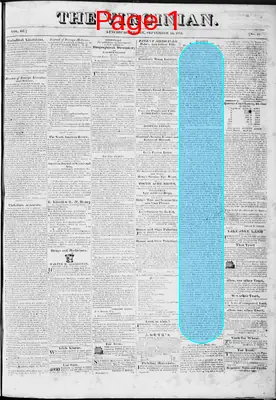
Story
September 10, 1824
The Virginian
Lynchburg, Virginia
What is this article about?
Praise for American women's heroism in the Revolutionary War, contrasting with Saragossa's fighters; anecdote of a mother near Boston in 1775 arming sons with fowling piece and melted spoons against British, urging youngest John Harris to bravery.
Clipping

OCR Quality
95%
Excellent
Full Text
From the Boston Gazette
The heroic conduct of a young lady of the south, in the revolutionary war, Miss Geiger, has been mentioned of late with some just encomium: We were happy to see this notice, for, in our opinion, the females of this country have not had that just share of praise for their privations, and sufferings, and brave and generous excitement and feeling, for the common cause of liberty, in that eventful contest. The females of Saragossa have obtained immortal glory for their martial prowess, during the memorable siege of that city as they fought and fell with the courage of 'the sacred band,' and deserve imperishable glory. Our women had not the same opportunity, or they would have merited the same praise: theirs was heroism of a different nature, but required as much soul and nerve to go through with. Is it not as hard to consent that a father, husband, brother or son, should go to the wars, and then go silently to work to prepare them for the fight, brighten their armour, make up the cartridges, adjust the ball to the calibre of their muskets, and then bid them God-speed, with a face full of hope and a heart full of grief, and then sit down, at home, with a double portion of domestic cares, as it is to fight? And as they rocked the cradle of unconscious infancy, they shed the tear of fearful accident and lonely distress, catching the slightest noise made by the passing traveller or watching the countenance of every friend who chanced to cross the threshold, to see if they could read in his eyes, any news from the camp.
How often has the painful question been asked, have you heard anything from our army?—and the countenance of woe has been to the enquirer, a full answer—your husband is no more, he sleeps with the brave. Does not such a situation require as much fortitude and courage as to bear the fatigues and dangers of the service?
The 'pomp, pride and circumstance of war,' excites each the ordinary mind to deeds of 'pith and moment,' but that silent, solemn, patient courage, which waits the events of Providence in calmness, is of a higher cast in the scale of moral virtues. Our females possessed this beyond all women—it was not the unnatural elevation of the Spartan matron, because it contained a softness from christian humanity which nature never teaches. It is to be desired that all the anecdotes which will serve to illustrate the female character, and to shew the part they took in the contest should be collected as soon as possible. It will soon be too late for accurate details.—We recollect of hearing an anecdote from an unquestionable source, illustrative of the spirit and feelings prevailing among the females of that day. Although it is not marked by the slightest touch of the romantic, yet it has sufficiently of strength to keep it from being vulgar. A good lady—we knew her well when she had grown old—in 1775, lived on the sea board, about a day's march from Boston, where the British army then was. By some unaccountable accident, a rumour was spread, in town and country, in and about there, that the Regulars were on a full march for the place, and would probably arrive in three hours at farthest. This was after the battle of Lexington, and all, as might be well supposed, was in sad confusion—some were boiling with rage and full of fight, some with fear and confusion, some hiding their treasures, and others flying for 'life. In this wild moment, when most people, in some way or other, were frightened from their property, our heroine, who had two sons, one about nineteen years of age, and the other about sixteen, was seen by our informant, preparing them to discharge their duty. The eldest she was able to equip in fine style; she took her husband's fowling piece, 'made for duck or plover,' (the good man being absent on a coasting voyage to Virginia) and filled the powder horn and shot bag; but the lad thinking the duck and goose shot not quite the size to kill red coats, his mother took a chisel, cut up her silver spoons, and hammered them into slug, and put them into his bag, and he set off in great earnest, but thought he would call one moment and see the parson, who said, well done, my brave boy—God preserve you—and on he went in the way of his duty. The youngest was importunate for his equipments, but his mother could find nothing to arm him with but an old rusty sword; the boy seemed rather unwilling to risk himself with this alone, but lingered in the street, in a state of hesitation, when his mother thus upbraided him. 'You John Harris, what will you father say if he hears that a child of his is afraid to meet the British, go along; beg, borrow or steal a gun, or you will find one, child, some coward, I dare say, will be running away, then take his gun and march forward, and if you come back, and I hear you have not behaved like a man. I shall carry the blush of shame on my face to the grave.' She then shut the door, wiped the tear from her eye, and waited the issue: the boy joined the march. Such a woman could not have cowards for her sons. Instances of refined and delicate pride and affection occurred, at that period, every day, in different places, and in fact this disposition and feeling was then so common, that it now operates as one great cause of our not having more facts of this kind recorded. What few there are remembered should not be lost. Nothing great or glorious was ever achieved which woman did not act in, advise or consent to.
The heroic conduct of a young lady of the south, in the revolutionary war, Miss Geiger, has been mentioned of late with some just encomium: We were happy to see this notice, for, in our opinion, the females of this country have not had that just share of praise for their privations, and sufferings, and brave and generous excitement and feeling, for the common cause of liberty, in that eventful contest. The females of Saragossa have obtained immortal glory for their martial prowess, during the memorable siege of that city as they fought and fell with the courage of 'the sacred band,' and deserve imperishable glory. Our women had not the same opportunity, or they would have merited the same praise: theirs was heroism of a different nature, but required as much soul and nerve to go through with. Is it not as hard to consent that a father, husband, brother or son, should go to the wars, and then go silently to work to prepare them for the fight, brighten their armour, make up the cartridges, adjust the ball to the calibre of their muskets, and then bid them God-speed, with a face full of hope and a heart full of grief, and then sit down, at home, with a double portion of domestic cares, as it is to fight? And as they rocked the cradle of unconscious infancy, they shed the tear of fearful accident and lonely distress, catching the slightest noise made by the passing traveller or watching the countenance of every friend who chanced to cross the threshold, to see if they could read in his eyes, any news from the camp.
How often has the painful question been asked, have you heard anything from our army?—and the countenance of woe has been to the enquirer, a full answer—your husband is no more, he sleeps with the brave. Does not such a situation require as much fortitude and courage as to bear the fatigues and dangers of the service?
The 'pomp, pride and circumstance of war,' excites each the ordinary mind to deeds of 'pith and moment,' but that silent, solemn, patient courage, which waits the events of Providence in calmness, is of a higher cast in the scale of moral virtues. Our females possessed this beyond all women—it was not the unnatural elevation of the Spartan matron, because it contained a softness from christian humanity which nature never teaches. It is to be desired that all the anecdotes which will serve to illustrate the female character, and to shew the part they took in the contest should be collected as soon as possible. It will soon be too late for accurate details.—We recollect of hearing an anecdote from an unquestionable source, illustrative of the spirit and feelings prevailing among the females of that day. Although it is not marked by the slightest touch of the romantic, yet it has sufficiently of strength to keep it from being vulgar. A good lady—we knew her well when she had grown old—in 1775, lived on the sea board, about a day's march from Boston, where the British army then was. By some unaccountable accident, a rumour was spread, in town and country, in and about there, that the Regulars were on a full march for the place, and would probably arrive in three hours at farthest. This was after the battle of Lexington, and all, as might be well supposed, was in sad confusion—some were boiling with rage and full of fight, some with fear and confusion, some hiding their treasures, and others flying for 'life. In this wild moment, when most people, in some way or other, were frightened from their property, our heroine, who had two sons, one about nineteen years of age, and the other about sixteen, was seen by our informant, preparing them to discharge their duty. The eldest she was able to equip in fine style; she took her husband's fowling piece, 'made for duck or plover,' (the good man being absent on a coasting voyage to Virginia) and filled the powder horn and shot bag; but the lad thinking the duck and goose shot not quite the size to kill red coats, his mother took a chisel, cut up her silver spoons, and hammered them into slug, and put them into his bag, and he set off in great earnest, but thought he would call one moment and see the parson, who said, well done, my brave boy—God preserve you—and on he went in the way of his duty. The youngest was importunate for his equipments, but his mother could find nothing to arm him with but an old rusty sword; the boy seemed rather unwilling to risk himself with this alone, but lingered in the street, in a state of hesitation, when his mother thus upbraided him. 'You John Harris, what will you father say if he hears that a child of his is afraid to meet the British, go along; beg, borrow or steal a gun, or you will find one, child, some coward, I dare say, will be running away, then take his gun and march forward, and if you come back, and I hear you have not behaved like a man. I shall carry the blush of shame on my face to the grave.' She then shut the door, wiped the tear from her eye, and waited the issue: the boy joined the march. Such a woman could not have cowards for her sons. Instances of refined and delicate pride and affection occurred, at that period, every day, in different places, and in fact this disposition and feeling was then so common, that it now operates as one great cause of our not having more facts of this kind recorded. What few there are remembered should not be lost. Nothing great or glorious was ever achieved which woman did not act in, advise or consent to.
What sub-type of article is it?
Historical Event
Heroic Act
Biography
What themes does it cover?
Bravery Heroism
Family
Moral Virtue
What keywords are associated?
Revolutionary War
Women Heroism
Mother Sons
British Advance
1775 Anecdote
What entities or persons were involved?
Miss Geiger
John Harris
Where did it happen?
Near Boston, Sea Board
Story Details
Key Persons
Miss Geiger
John Harris
Location
Near Boston, Sea Board
Event Date
1775, After The Battle Of Lexington
Story Details
The article praises the overlooked heroism of American women in the Revolutionary War, exemplified by Miss Geiger and an anecdote of a mother who equips her two sons, including melting silver spoons into slugs for ammunition and urging the younger, John Harris, to join the fight against approaching British forces.