Thank you for visiting SNEWPapers!
Sign up free
Literary
June 27, 1872
The Elk County Advocate
Ridgway, Elk County, Pennsylvania
What is this article about?
Anecdotal accounts of toads' harmlessness and utility in gardens for eating bugs, excluding potato bugs. Includes personal experience taming a toad in Pittsfield, Mass., and Dr. Harris's experiments with squash bugs and larvae, where one toad reacts poorly but another consumes many.
Clipping
OCR Quality
98%
Excellent
Full Text
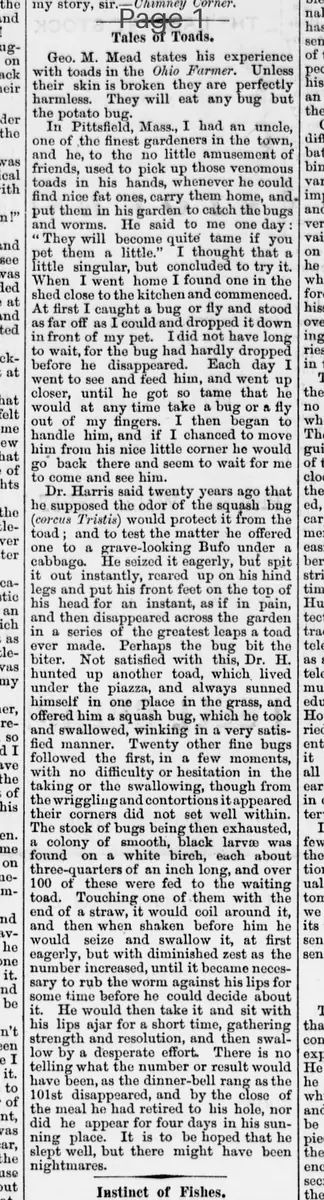
Tales of Toads.
Geo. M. Mead states his experience with toads in the Ohio Farmer. Unless their skin is broken they are perfectly harmless. They will eat any bug but the potato bug.
In Pittsfield, Mass., I had an uncle one of the finest gardeners in the town, and he, to the no little amusement of friends, used to pick up those venomous toads in his hands, whenever he could find nice fat ones, carry them home, and put them in his garden to catch the bugs and worms. He said to me one day: "They will become quite tame if you pet them a little." I thought that a little singular, but concluded to try it.
When I went home I found one in the shed close to the kitchen and commenced. At first I caught a bug or fly and stood as far off as I could and dropped it down in front of my pet. I did not have long to wait, for the bug had hardly dropped before he disappeared. Each day I went to see and feed him, and went up closer, until he got so tame that he would at any time take a bug or a fly out of my fingers. I then began to handle him, and if I chanced to move him from his nice little corner he would go back there and seem to wait for me to come and see him.
Dr. Harris said twenty years ago that he supposed the odor of the squash bug (corcus tristis) would protect it from the toad; and to test the matter he offered one to a grave-looking Bufo under a cabbage. He seized it eagerly, but spit it out instantly, reared up on his hind legs and put his front feet on the top of his head for an instant, as if in pain, and then disappeared across the garden in a series of the greatest leaps a toad ever made. Perhaps the bug bit the biter. Not satisfied with this, Dr. H. hunted up another toad, which lived under the piazza, and always sunned himself in one place in the grass, and offered him a squash bug, which he took and swallowed, winking in a very satisfied manner. Twenty other fine bugs followed the first, in a few moments, with no difficulty or hesitation in the taking or the swallowing, though from the wriggling and contortions it appeared their corners did not set well within.
The stock of bugs being then exhausted, a colony of smooth, black larva was found on a white birch, each about three-quarters of an inch long, and over 100 of these were fed to the waiting toad. Touching one of them with the end of a straw, it would coil around it, and then when shaken before him he would seize and swallow it, at first eagerly, but with diminished zest as the number increased, until it became necessary to rub the worm against his lips for some time before he could decide about it. He would then take it and sit with his lips ajar for a short time, gathering strength and resolution, and then swallow by a desperate effort. There is no telling what the number or result would have been, as the dinner-bell rang as the 101st disappeared, and by the close of the meal he had retired to his hole, nor did he appear for four days in his sunning place. It is to be hoped that he slept well, but there might have been nightmares.
Geo. M. Mead states his experience with toads in the Ohio Farmer. Unless their skin is broken they are perfectly harmless. They will eat any bug but the potato bug.
In Pittsfield, Mass., I had an uncle one of the finest gardeners in the town, and he, to the no little amusement of friends, used to pick up those venomous toads in his hands, whenever he could find nice fat ones, carry them home, and put them in his garden to catch the bugs and worms. He said to me one day: "They will become quite tame if you pet them a little." I thought that a little singular, but concluded to try it.
When I went home I found one in the shed close to the kitchen and commenced. At first I caught a bug or fly and stood as far off as I could and dropped it down in front of my pet. I did not have long to wait, for the bug had hardly dropped before he disappeared. Each day I went to see and feed him, and went up closer, until he got so tame that he would at any time take a bug or a fly out of my fingers. I then began to handle him, and if I chanced to move him from his nice little corner he would go back there and seem to wait for me to come and see him.
Dr. Harris said twenty years ago that he supposed the odor of the squash bug (corcus tristis) would protect it from the toad; and to test the matter he offered one to a grave-looking Bufo under a cabbage. He seized it eagerly, but spit it out instantly, reared up on his hind legs and put his front feet on the top of his head for an instant, as if in pain, and then disappeared across the garden in a series of the greatest leaps a toad ever made. Perhaps the bug bit the biter. Not satisfied with this, Dr. H. hunted up another toad, which lived under the piazza, and always sunned himself in one place in the grass, and offered him a squash bug, which he took and swallowed, winking in a very satisfied manner. Twenty other fine bugs followed the first, in a few moments, with no difficulty or hesitation in the taking or the swallowing, though from the wriggling and contortions it appeared their corners did not set well within.
The stock of bugs being then exhausted, a colony of smooth, black larva was found on a white birch, each about three-quarters of an inch long, and over 100 of these were fed to the waiting toad. Touching one of them with the end of a straw, it would coil around it, and then when shaken before him he would seize and swallow it, at first eagerly, but with diminished zest as the number increased, until it became necessary to rub the worm against his lips for some time before he could decide about it. He would then take it and sit with his lips ajar for a short time, gathering strength and resolution, and then swallow by a desperate effort. There is no telling what the number or result would have been, as the dinner-bell rang as the 101st disappeared, and by the close of the meal he had retired to his hole, nor did he appear for four days in his sunning place. It is to be hoped that he slept well, but there might have been nightmares.
What sub-type of article is it?
Essay
What themes does it cover?
Nature
Agriculture Rural
What keywords are associated?
Toads
Gardening
Bugs
Pests
Anecdotes
Taming
Experiments
Literary Details
Title
Tales Of Toads
Subject
Experiences With Toads Eating Garden Pests
Key Lines
They Will Become Quite Tame If You Pet Them A Little.
He Seized It Eagerly, But Spit It Out Instantly, Reared Up On His Hind Legs And Put His Front Feet On The Top Of His Head For An Instant, As If In Pain, And Then Disappeared Across The Garden In A Series Of The Greatest Leaps A Toad Ever Made.
Twenty Other Fine Bugs Followed The First, In A Few Moments, With No Difficulty Or Hesitation In The Taking Or The Swallowing.
Over 100 Of These Were Fed To The Waiting Toad.
It Is To Be Hoped That He Slept Well, But There Might Have Been Nightmares.