Thank you for visiting SNEWPapers!
Sign up free
Literary
April 16, 1840
Watchman Of The South
Richmond, Virginia
What is this article about?
A narrator recounts a childhood incident where he struck his young sister in anger during play, leading to her sudden illness and death. He reflects on the remorse and the moral lesson of always being kind to siblings, as life is uncertain.
Clipping
OCR Quality
98%
Excellent
Full Text
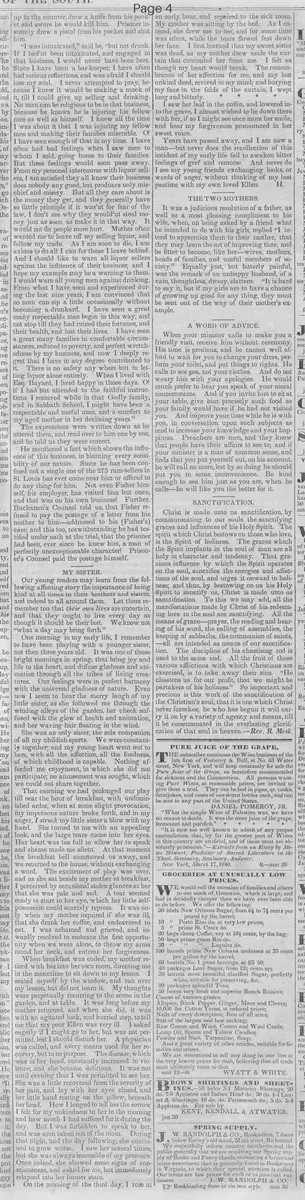
MY SISTER.
Our young readers may learn from the following affecting story the importance of being kind at all times to their brothers and sisters, and indeed to all around them. Let them remember too that their own lives are uncertain, and that they ought to live every day as though it should be their last. We know not "what a day may bring forth."
One morning in my early life, I remember to have been playing with a younger sister, not then three years old. It was one of those bright mornings in spring, that bring joy and life to the heart, and diffuse gladness and animation through all the tribes of living creatures. Our feelings were in perfect harmony with the universal gladness of nature. Even now I seem to hear the merry laugh of my little sister, as she followed me through the winding alleys of the garden, her cheek suffused with the glow of health and animation, and her waving hair floating in the wind.
She was an only sister, the sole companion of all my childish sports. We were constantly together; and my young heart went out to hers, with all the affection, all the fondness, of which childhood is capable. Nothing afforded me enjoyment, in which she did not participate; no amusement was sought, which we could not share together.
That morning we had prolonged our play till near the hour of breakfast, with undiminished ardor, when at some slight provocation, my impetuous nature broke forth, and in my anger, I struck my little sister a blow with my hand. She turned to me with an appealing look, and the large tears came into her eyes. Her heart was too full to allow her to speak and shame made me silent. At that moment the breakfast bell summoned us away, and we returned to the house, without exchanging a word. The excitement of play was over, and as she sat beside my mother at breakfast, I perceived by occasional stolen glances at her that she was pale and sad. A tear seemed ready to start in her eye, which her little self-possession could scarcely repress. It was only when my mother inquired if she was ill, that she drank her coffee, and endeavored to eat. I was ashamed and grieved, and inwardly resolved to embrace the first opportunity when we were alone, to throw my arms round her neck, and entreat her forgiveness.
When breakfast was ended, my mother retired with her into her own room, directing me in the meantime to sit down to my lesson. I seated myself by the window, and ran over my lesson, but did not learn it. My thoughts were perpetually recurring to the scene in the garden, and at table. It was long before my mother returned, and when she did, it was with an agitated look, and hurried step, to tell me that my poor Ellen was very ill. I asked eagerly if I might go to her, but was not permitted, lest I should disturb her. A physician was called, and every means used for her recovery, but to no purpose. The disease, which was in her head, constantly increased in violence, and she became delirious. It was not until evening that I was permitted to see her. She was a little recovered from the severity of her pain, and lay with her eyes closed, and her little hand resting on the pillow, beneath her head. How I longed to tell her the sorrow I felt for my unkindness to her in the morning and how much I had suffered for it during the day. But I was forbidden to speak to her, and was soon taken out of the room. During that night, and the day following, she continued to grow worse. I saw her several times, but she was always insensible of my presence. Once indeed, she showed some signs of consciousness, and asked for me, but immediately relapsed into her former state.
On the morning of the third day, I rose at an early hour, and repaired to the sick room My mother was sitting by the bed. As I entered, she drew me to her, and for some time was silent, while the tears flowed fast down her face. I first learned that my sweet sister was dead, as my mother drew aside the curtain that concealed her from me. I felt as though my heart would break. The remembrance of her affection for me, and my last unkind deed, revived in my mind; and burying my face in the folds of the curtain, I wept long and bitterly.
I saw her laid in the coffin, and lowered into the grave, I almost wished to lie down there with her, if so I might see once more her smile, and hear my forgiveness pronounced in her sweet voice.
Years have passed away, and I am now a man—but never does the recollection of this incident of my early life fail to awaken bitter feelings of grief and remorse. And never do I see my young friends exchanging looks, or words of anger, without thinking of my last pastime with my own loved Ellen.
H.
Our young readers may learn from the following affecting story the importance of being kind at all times to their brothers and sisters, and indeed to all around them. Let them remember too that their own lives are uncertain, and that they ought to live every day as though it should be their last. We know not "what a day may bring forth."
One morning in my early life, I remember to have been playing with a younger sister, not then three years old. It was one of those bright mornings in spring, that bring joy and life to the heart, and diffuse gladness and animation through all the tribes of living creatures. Our feelings were in perfect harmony with the universal gladness of nature. Even now I seem to hear the merry laugh of my little sister, as she followed me through the winding alleys of the garden, her cheek suffused with the glow of health and animation, and her waving hair floating in the wind.
She was an only sister, the sole companion of all my childish sports. We were constantly together; and my young heart went out to hers, with all the affection, all the fondness, of which childhood is capable. Nothing afforded me enjoyment, in which she did not participate; no amusement was sought, which we could not share together.
That morning we had prolonged our play till near the hour of breakfast, with undiminished ardor, when at some slight provocation, my impetuous nature broke forth, and in my anger, I struck my little sister a blow with my hand. She turned to me with an appealing look, and the large tears came into her eyes. Her heart was too full to allow her to speak and shame made me silent. At that moment the breakfast bell summoned us away, and we returned to the house, without exchanging a word. The excitement of play was over, and as she sat beside my mother at breakfast, I perceived by occasional stolen glances at her that she was pale and sad. A tear seemed ready to start in her eye, which her little self-possession could scarcely repress. It was only when my mother inquired if she was ill, that she drank her coffee, and endeavored to eat. I was ashamed and grieved, and inwardly resolved to embrace the first opportunity when we were alone, to throw my arms round her neck, and entreat her forgiveness.
When breakfast was ended, my mother retired with her into her own room, directing me in the meantime to sit down to my lesson. I seated myself by the window, and ran over my lesson, but did not learn it. My thoughts were perpetually recurring to the scene in the garden, and at table. It was long before my mother returned, and when she did, it was with an agitated look, and hurried step, to tell me that my poor Ellen was very ill. I asked eagerly if I might go to her, but was not permitted, lest I should disturb her. A physician was called, and every means used for her recovery, but to no purpose. The disease, which was in her head, constantly increased in violence, and she became delirious. It was not until evening that I was permitted to see her. She was a little recovered from the severity of her pain, and lay with her eyes closed, and her little hand resting on the pillow, beneath her head. How I longed to tell her the sorrow I felt for my unkindness to her in the morning and how much I had suffered for it during the day. But I was forbidden to speak to her, and was soon taken out of the room. During that night, and the day following, she continued to grow worse. I saw her several times, but she was always insensible of my presence. Once indeed, she showed some signs of consciousness, and asked for me, but immediately relapsed into her former state.
On the morning of the third day, I rose at an early hour, and repaired to the sick room My mother was sitting by the bed. As I entered, she drew me to her, and for some time was silent, while the tears flowed fast down her face. I first learned that my sweet sister was dead, as my mother drew aside the curtain that concealed her from me. I felt as though my heart would break. The remembrance of her affection for me, and my last unkind deed, revived in my mind; and burying my face in the folds of the curtain, I wept long and bitterly.
I saw her laid in the coffin, and lowered into the grave, I almost wished to lie down there with her, if so I might see once more her smile, and hear my forgiveness pronounced in her sweet voice.
Years have passed away, and I am now a man—but never does the recollection of this incident of my early life fail to awaken bitter feelings of grief and remorse. And never do I see my young friends exchanging looks, or words of anger, without thinking of my last pastime with my own loved Ellen.
H.
What sub-type of article is it?
Prose Fiction
What themes does it cover?
Moral Virtue
Death Mortality
Friendship
What keywords are associated?
Sibling Kindness
Childhood Remorse
Sister Death
Moral Lesson
Family Affection
What entities or persons were involved?
H.
Literary Details
Title
My Sister.
Author
H.
Subject
Importance Of Kindness To Siblings And Living Each Day As If It Were The Last
Key Lines
One Morning In My Early Life, I Remember To Have Been Playing With A Younger Sister, Not Then Three Years Old.
That Morning We Had Prolonged Our Play Till Near The Hour Of Breakfast, With Undiminished Ardor, When At Some Slight Provocation, My Impetuous Nature Broke Forth, And In My Anger, I Struck My Little Sister A Blow With My Hand.
I First Learned That My Sweet Sister Was Dead, As My Mother Drew Aside The Curtain That Concealed Her From Me.
Years Have Passed Away, And I Am Now A Man—But Never Does The Recollection Of This Incident Of My Early Life Fail To Awaken Bitter Feelings Of Grief And Remorse.