Thank you for visiting SNEWPapers!
Sign up free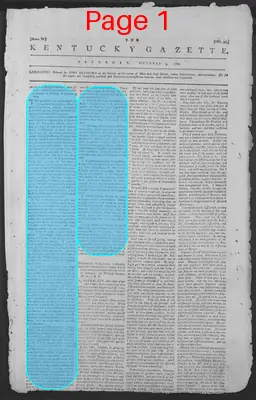
Editorial
October 3, 1789
The Kentucky Gazette
Lexington, Fayette County, Kentucky
What is this article about?
This essay argues that effective government relies more on appointing virtuous individuals to public offices than on constitutional forms or laws. It outlines essential qualities for officials: integrity, good reputation, sincere piety, suitability, gravity and wisdom, decision and perseverance, command of passions, and steady attendance, urging electors to choose wisely for the state's honor and safety.
Clipping
OCR Quality
98%
Excellent
Full Text
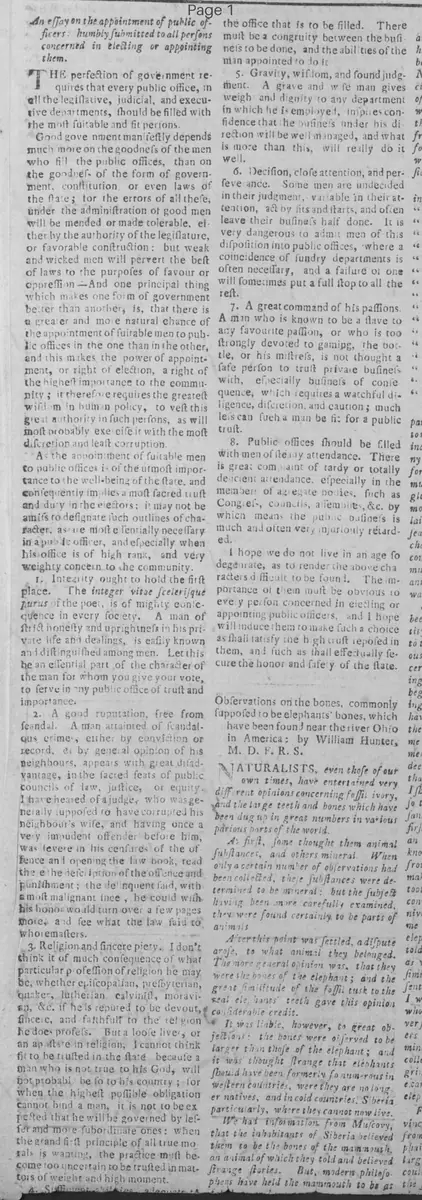
An essay on the appointment of public officers, humbly submitted to all persons concerned in electing or appointing them.
THE end of all the legislative, judicial, and executive departments, should be filled with the most suitable and fit persons. Good government manifestly depends much more on the goodness of the men who fill the public offices, than on the goodness of the form of government, constitution or even laws of the state; for the errors of all these, under the administration of good men will be mended or made tolerable, either by the authority of the legislature, or favorable construction: but weak and wicked men will pervert the best of laws to the purposes of favour or oppression. And one principal thing which makes one form of government better than another, is, that there is a greater and more natural chance of the appointment of suitable men to public offices in the one than in the other, and this makes the power of appointment, or right of election, a right of the highest importance to the community; it therefore requires the greatest wisdom in human policy, to vest this great authority in such persons, as will most probably exercise it with the most discretion and least corruption.
As the appointment of suitable men to public offices is of the utmost importance to the well-being of the state, and consequently implies a most sacred trust and duty in the electors; it may not be amiss to designate such outlines of character, as are most essentially necessary in a public officer, and especially when his office is of high rank, and very weighty concern to the community.
I. Integrity ought to hold the first place. The integer vitae scelerisque purus of the poet, is of mighty consequence in every society. A man of strict honesty and uprightness in his private life and dealings, is easily known and distinguished among men. Let this be an essential part of the character of the man for whom you give your vote, to serve in any public office of trust and importance.
2. A good reputation, free from scandal. A man attainted of scandalous crime, either by conviction or record, or by general opinion of his neighbours, appears with great disadvantage, in the sacred seats of public councils of law, justice, or equity. I have heard of a judge, who was generally supposed to have corrupted his neighbour's wife, and having once a very impudent offender before him, was severe in his censures of the offence and opening the law book, read the legal definition of the offence and punishment: the delinquent said, with almost malignant sneer, he could wish his honor would turn over a few pages more, and see what the law said to whole masters.
3. Religion and sincere piety. I don't think it of much consequence of what particular profession of religion he may be, whether episcopalian, presbyterian, quaker, lutheran, calvinist, moravian, &c. if he is reputed to be devout, sincere, and faithful to the religion he does profess. But a loose liver, or an atheist in religion, I cannot think fit to be trusted in the state because a man who is not true to his God, will not probably be so to his country; for when the highest possible obligation cannot bind a man, it is not to be expected that he will be governed by lesser and more subordinate ones: when the grand first principle of all true morals is wanting, the practice must be come too uncertain to be trusted in matters of weight and high moment.
4. Suitableness to the office that is to be filled. There must be a congruity between the business to be done, and the abilities of the man appointed to do it.
5. Gravity, wisdom, and sound judgment. A grave and wise man gives weigh and dignity to any department in which he is employed, inspires confidence that the business under his direction will be well managed, and what is more than this, will really do it well.
6. Decision, close attention, and perseverance. Some men are undecided in their judgment, variable in their attention, act by fits and starts, and often leave their business half done. It is very dangerous to admit men of this disposition into public offices, where a coincidence of sundry departments is often necessary, and a failure of one will sometimes put a full stop to all the rest.
7. A great command of his passions. A man who is known to be a slave to any favourite passion, or who is too strongly devoted to gaming, the bottle, or his mistress, is not thought a safe person to trust private business with, especially business of consequence, which requires a watchful diligence, discretion, and caution; much less can such a man be fit for a public trust.
8. Public offices should be filled with men of steady attendance. There is great complaint of tardy or totally deficient attendance, especially in the members of aggregate bodies, such as Congress, councils, assemblies, &c. by which means the public business is much and often very injuriously retarded.
I hope we do not live in an age so degenerate, as to render the above characters difficult to be found. Their importance must be obvious to every person concerned in electing or appointing public officers, and I hope will induce them to make such a choice as shall satisfy the high trust reposed in them, and such as shall effectually secure the honor and safety of the state.
THE end of all the legislative, judicial, and executive departments, should be filled with the most suitable and fit persons. Good government manifestly depends much more on the goodness of the men who fill the public offices, than on the goodness of the form of government, constitution or even laws of the state; for the errors of all these, under the administration of good men will be mended or made tolerable, either by the authority of the legislature, or favorable construction: but weak and wicked men will pervert the best of laws to the purposes of favour or oppression. And one principal thing which makes one form of government better than another, is, that there is a greater and more natural chance of the appointment of suitable men to public offices in the one than in the other, and this makes the power of appointment, or right of election, a right of the highest importance to the community; it therefore requires the greatest wisdom in human policy, to vest this great authority in such persons, as will most probably exercise it with the most discretion and least corruption.
As the appointment of suitable men to public offices is of the utmost importance to the well-being of the state, and consequently implies a most sacred trust and duty in the electors; it may not be amiss to designate such outlines of character, as are most essentially necessary in a public officer, and especially when his office is of high rank, and very weighty concern to the community.
I. Integrity ought to hold the first place. The integer vitae scelerisque purus of the poet, is of mighty consequence in every society. A man of strict honesty and uprightness in his private life and dealings, is easily known and distinguished among men. Let this be an essential part of the character of the man for whom you give your vote, to serve in any public office of trust and importance.
2. A good reputation, free from scandal. A man attainted of scandalous crime, either by conviction or record, or by general opinion of his neighbours, appears with great disadvantage, in the sacred seats of public councils of law, justice, or equity. I have heard of a judge, who was generally supposed to have corrupted his neighbour's wife, and having once a very impudent offender before him, was severe in his censures of the offence and opening the law book, read the legal definition of the offence and punishment: the delinquent said, with almost malignant sneer, he could wish his honor would turn over a few pages more, and see what the law said to whole masters.
3. Religion and sincere piety. I don't think it of much consequence of what particular profession of religion he may be, whether episcopalian, presbyterian, quaker, lutheran, calvinist, moravian, &c. if he is reputed to be devout, sincere, and faithful to the religion he does profess. But a loose liver, or an atheist in religion, I cannot think fit to be trusted in the state because a man who is not true to his God, will not probably be so to his country; for when the highest possible obligation cannot bind a man, it is not to be expected that he will be governed by lesser and more subordinate ones: when the grand first principle of all true morals is wanting, the practice must be come too uncertain to be trusted in matters of weight and high moment.
4. Suitableness to the office that is to be filled. There must be a congruity between the business to be done, and the abilities of the man appointed to do it.
5. Gravity, wisdom, and sound judgment. A grave and wise man gives weigh and dignity to any department in which he is employed, inspires confidence that the business under his direction will be well managed, and what is more than this, will really do it well.
6. Decision, close attention, and perseverance. Some men are undecided in their judgment, variable in their attention, act by fits and starts, and often leave their business half done. It is very dangerous to admit men of this disposition into public offices, where a coincidence of sundry departments is often necessary, and a failure of one will sometimes put a full stop to all the rest.
7. A great command of his passions. A man who is known to be a slave to any favourite passion, or who is too strongly devoted to gaming, the bottle, or his mistress, is not thought a safe person to trust private business with, especially business of consequence, which requires a watchful diligence, discretion, and caution; much less can such a man be fit for a public trust.
8. Public offices should be filled with men of steady attendance. There is great complaint of tardy or totally deficient attendance, especially in the members of aggregate bodies, such as Congress, councils, assemblies, &c. by which means the public business is much and often very injuriously retarded.
I hope we do not live in an age so degenerate, as to render the above characters difficult to be found. Their importance must be obvious to every person concerned in electing or appointing public officers, and I hope will induce them to make such a choice as shall satisfy the high trust reposed in them, and such as shall effectually secure the honor and safety of the state.
What sub-type of article is it?
Constitutional
Moral Or Religious
Legal Reform
What keywords are associated?
Public Appointments
Officer Qualities
Integrity
Piety
Government Virtue
Elections
Moral Character
What entities or persons were involved?
Electors
Public Officers
Congress
Councils
Assemblies
Editorial Details
Primary Topic
Appointment Of Suitable Public Officers
Stance / Tone
Exhortation For Virtuous Selections In Government
Key Figures
Electors
Public Officers
Congress
Councils
Assemblies
Key Arguments
Good Government Depends More On Virtuous Men In Office Than On Laws Or Constitution
Power Of Appointment Requires Wisdom To Avoid Corruption
Essential Qualities: Integrity, Good Reputation Free From Scandal, Sincere Piety Regardless Of Denomination
Suitability To The Office, Gravity, Wisdom, And Sound Judgment
Decision, Close Attention, Perseverance, Command Of Passions, Steady Attendance