Thank you for visiting SNEWPapers!
Sign up free
Literary
July 28, 1843
Southern Christian Advocate
Charleston, Charleston County, South Carolina
What is this article about?
The author explains the three uses of grape juice in Persia: unfermented shireh, boiled syrup for sweetening like molasses, and distilled arrak brandy. Persian wines are lighter than European but intoxicating. Expresses regret over societal shifts away from scriptural prohibitions on alcohol, referencing Perkin's new work.
Clipping
OCR Quality
95%
Excellent
Full Text
THE WINES OF PERSIA.
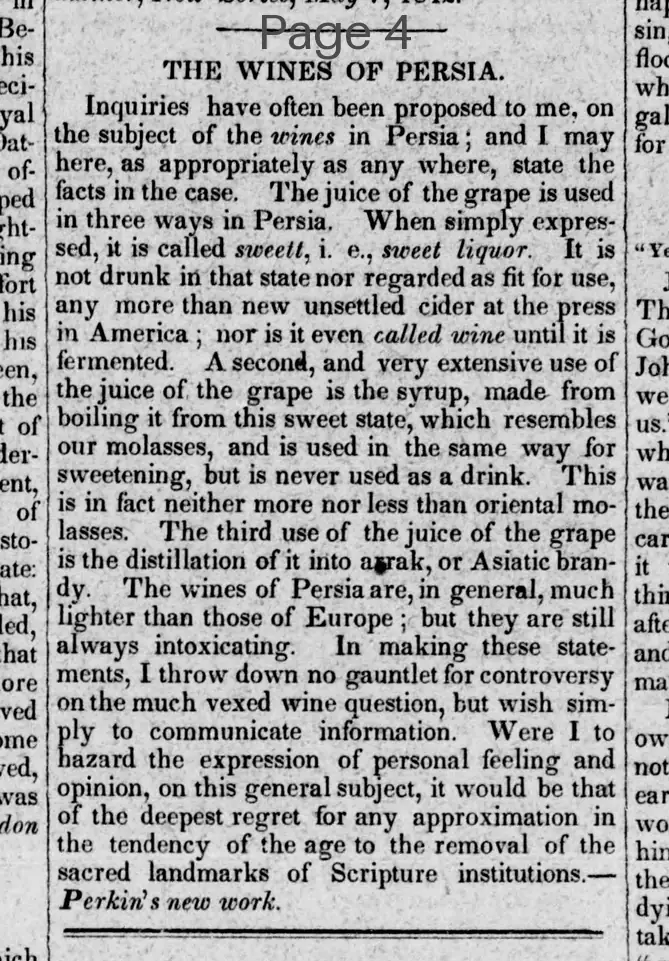
Inquiries have often been proposed to me, on the subject of the wines in Persia; and I may here, as appropriately as any where, state the facts in the case. The juice of the grape is used in three ways in Persia. When simply expressed, it is called shireh, i. e., sweet liquor. It is not drunk in that state nor regarded as fit for use, any more than new unsettled cider at the press in America; nor is it even called wine until it is fermented. A second, and very extensive use of the juice of the grape is the syrup, made from boiling it from this sweet state, which resembles our molasses, and is used in the same way for sweetening, but is never used as a drink. This is in fact neither more nor less than oriental molasses. The third use of the juice of the grape is the distillation of it into arrak, or Asiatic brandy. The wines of Persia are, in general, much lighter than those of Europe; but they are still always intoxicating. In making these statements, I throw down no gauntlet for controversy on the much vexed wine question, but wish simply to communicate information. Were I to hazard the expression of personal feeling and opinion, on this general subject, it would be that of the deepest regret for any approximation in the tendency of the age to the removal of the sacred landmarks of Scripture institutions.—
Perkin's new work.
Inquiries have often been proposed to me, on the subject of the wines in Persia; and I may here, as appropriately as any where, state the facts in the case. The juice of the grape is used in three ways in Persia. When simply expressed, it is called shireh, i. e., sweet liquor. It is not drunk in that state nor regarded as fit for use, any more than new unsettled cider at the press in America; nor is it even called wine until it is fermented. A second, and very extensive use of the juice of the grape is the syrup, made from boiling it from this sweet state, which resembles our molasses, and is used in the same way for sweetening, but is never used as a drink. This is in fact neither more nor less than oriental molasses. The third use of the juice of the grape is the distillation of it into arrak, or Asiatic brandy. The wines of Persia are, in general, much lighter than those of Europe; but they are still always intoxicating. In making these statements, I throw down no gauntlet for controversy on the much vexed wine question, but wish simply to communicate information. Were I to hazard the expression of personal feeling and opinion, on this general subject, it would be that of the deepest regret for any approximation in the tendency of the age to the removal of the sacred landmarks of Scripture institutions.—
Perkin's new work.
What sub-type of article is it?
Essay
What themes does it cover?
Temperance
Religious
What keywords are associated?
Persian Wines
Grape Juice
Shireh
Arrak
Oriental Molasses
Scripture Institutions
What entities or persons were involved?
Perkin's New Work
Literary Details
Title
The Wines Of Persia.
Author
Perkin's New Work
Subject
Wines In Persia
Key Lines
The Juice Of The Grape Is Used In Three Ways In Persia.
The Wines Of Persia Are, In General, Much Lighter Than Those Of Europe; But They Are Still Always Intoxicating.
Were I To Hazard The Expression Of Personal Feeling And Opinion, On This General Subject, It Would Be That Of The Deepest Regret For Any Approximation In The Tendency Of The Age To The Removal Of The Sacred Landmarks Of Scripture Institutions.