Thank you for visiting SNEWPapers!
Sign up free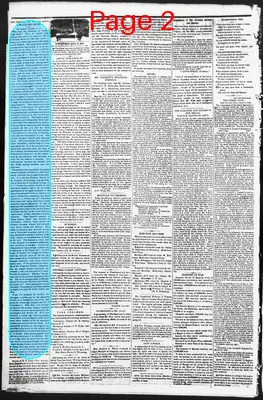
Story
May 6, 1847
Litchfield Enquirer
Litchfield, Litchfield County, Connecticut
What is this article about?
Justin Edwards explains how alcohol poisons the body by irritating the stomach lining, causing inflammation, ulcers, thickening, and mortification, leading to systemic disease and death. Quotes Dr. Thomas Sewall on alcohol's harmful effects even in moderate use.
Clipping

OCR Quality
95%
Excellent
Full Text
THE PROCESS BY WHICH ALCOHOL CAUSES DEATH.
By JUSTIN EDWARDS, D. D.
Why does the drinking of alcohol cause death? Were the human body transparent, and could we see the effects of alcohol as we see the color of muscles through the skin, every man might answer this question for himself. He would have ocular facts, by a demonstration that alcohol is a poison, and that the drinking of it, is a violation of natural and moral laws. It has no nourishment in it. The digestive organs cannot decompose it or turn it into blood, flesh, bones, or anything by which the human body is nourished, strengthened, and supported. When swallowed, it goes into the stomach, the common receptacle of food. This is a delicate and principal organ, and its state affects the whole body. Its inner coat in a healthy condition is slightly tinged with a reddish color. The blood vessels which spread over it are exceedingly numerous, and yet so exceedingly small that the naked eye cannot discern them. They give to it a delicate reddish hue, like the delicate tinge on the cheek of a healthy child.
Alcohol, when it touches that delicate organ, irritates the surface, and produces, through the medium of the nerves, a tingling sensation. This sensation is a note of alarm; a warning to the system, that an enemy has invaded it. The heart, that great sentinel, starts anew and throws additional forces on to the invaded spot in order to protect it. The blood in greater quantity, and with greater force, rushes into those little vessels till, by and by, if the process be continued, they become enlarged, so that you can see them spreading out all over the inner surface of the stomach in thousands of ramifications, like the branches of a tree. The surface becomes inflamed and becomes black. The blood settles: the coats become thickened; ulcers begin to form and spread out, till, if the process is continued and increased, as in the case of the drunkard, the whole inner coat of that fundamental organ puts on the appearance of mortification, and becomes in color like the back of a chimney. Not unfrequently cancers are formed, and the whole surface becomes one common sore.
The system is not nourished; the organs become diseased, till the body itself is literally little else than a mass of putrefaction. Says the late Thomas Sewall, M. D., Professor of Pathology, and the Practice of Medicine in Columbia College, D. C.— 'Alcohol is a poison, forever at war with man's nature; and in all its forms and degrees of strength, produces irritation of the stomach which is liable to result in inflammation, ulceration, and mortification; a thickening and induration of its coats and finally scirrhus, cancer and other organic affections. It may be asserted with confidence that no one who indulges habitually in the use of alcoholic drinks whether in the form of wine or more ardent drinks, possesses a healthy stomach.' That beautiful network of blood vessels, which was invisible in the healthy stomach, being excited by alcohol, becomes dilated and extended with blood, visible and distinct. This effect is produced upon the well known law of the animal economy, that an irritant applied to a sensitive texture of the body induces an increased flow of blood to the part. The mucous or inner coat of the stomach is a sensitive membrane, and is subject to this law. A practical illustration of this principle is shown by a reference to the human eye. If a few drops of alcohol be brought in contact with the delicate coats of the eye, the fine vessels which were before invisible become distended with blood, and are easily seen. If this operation be repeated as the temperate drinker takes alcohol, the vessels become habitually increased in size, and distended with blood. So with the stomach. Besides, 'the mucous coat of the stomach becomes softened. And these changes occur in the temperate drinker, as well as in the confirmed drunkard.' The consequence is, that the stomach necessarily becomes unfitted to digest food, and the whole system suffers.
From the stomach the alcohol, unchanged, is taken up by the absorbent vessels and carried into the blood, that great receptacle and common carrier of nourishment. With that, it is circulated through the system, till as a nuisance it is seized upon by the emunctories, the scavengers, and thrown off. But it was alcohol, a subtle and irritating poison, when taken into the stomach, and it is the same when sucked up by the absorbent vessels and carried into the blood. It is alcohol in the heart, in the lungs, in the arteries, in the brain, in the nerves and fissures and fibres of the whole body and it is alcohol when, having passed thro' all the circulations, it is expelled. Give it to a dog, take the blood from his foot and distil it, you have alcohol—the same which the dog drank—no not that which he drank, for a dog knows too much to drink it: it is the same which in opposition to the instinct which God gave him, and drunkenness had not obliterated, you forced upon him.
By JUSTIN EDWARDS, D. D.
Why does the drinking of alcohol cause death? Were the human body transparent, and could we see the effects of alcohol as we see the color of muscles through the skin, every man might answer this question for himself. He would have ocular facts, by a demonstration that alcohol is a poison, and that the drinking of it, is a violation of natural and moral laws. It has no nourishment in it. The digestive organs cannot decompose it or turn it into blood, flesh, bones, or anything by which the human body is nourished, strengthened, and supported. When swallowed, it goes into the stomach, the common receptacle of food. This is a delicate and principal organ, and its state affects the whole body. Its inner coat in a healthy condition is slightly tinged with a reddish color. The blood vessels which spread over it are exceedingly numerous, and yet so exceedingly small that the naked eye cannot discern them. They give to it a delicate reddish hue, like the delicate tinge on the cheek of a healthy child.
Alcohol, when it touches that delicate organ, irritates the surface, and produces, through the medium of the nerves, a tingling sensation. This sensation is a note of alarm; a warning to the system, that an enemy has invaded it. The heart, that great sentinel, starts anew and throws additional forces on to the invaded spot in order to protect it. The blood in greater quantity, and with greater force, rushes into those little vessels till, by and by, if the process be continued, they become enlarged, so that you can see them spreading out all over the inner surface of the stomach in thousands of ramifications, like the branches of a tree. The surface becomes inflamed and becomes black. The blood settles: the coats become thickened; ulcers begin to form and spread out, till, if the process is continued and increased, as in the case of the drunkard, the whole inner coat of that fundamental organ puts on the appearance of mortification, and becomes in color like the back of a chimney. Not unfrequently cancers are formed, and the whole surface becomes one common sore.
The system is not nourished; the organs become diseased, till the body itself is literally little else than a mass of putrefaction. Says the late Thomas Sewall, M. D., Professor of Pathology, and the Practice of Medicine in Columbia College, D. C.— 'Alcohol is a poison, forever at war with man's nature; and in all its forms and degrees of strength, produces irritation of the stomach which is liable to result in inflammation, ulceration, and mortification; a thickening and induration of its coats and finally scirrhus, cancer and other organic affections. It may be asserted with confidence that no one who indulges habitually in the use of alcoholic drinks whether in the form of wine or more ardent drinks, possesses a healthy stomach.' That beautiful network of blood vessels, which was invisible in the healthy stomach, being excited by alcohol, becomes dilated and extended with blood, visible and distinct. This effect is produced upon the well known law of the animal economy, that an irritant applied to a sensitive texture of the body induces an increased flow of blood to the part. The mucous or inner coat of the stomach is a sensitive membrane, and is subject to this law. A practical illustration of this principle is shown by a reference to the human eye. If a few drops of alcohol be brought in contact with the delicate coats of the eye, the fine vessels which were before invisible become distended with blood, and are easily seen. If this operation be repeated as the temperate drinker takes alcohol, the vessels become habitually increased in size, and distended with blood. So with the stomach. Besides, 'the mucous coat of the stomach becomes softened. And these changes occur in the temperate drinker, as well as in the confirmed drunkard.' The consequence is, that the stomach necessarily becomes unfitted to digest food, and the whole system suffers.
From the stomach the alcohol, unchanged, is taken up by the absorbent vessels and carried into the blood, that great receptacle and common carrier of nourishment. With that, it is circulated through the system, till as a nuisance it is seized upon by the emunctories, the scavengers, and thrown off. But it was alcohol, a subtle and irritating poison, when taken into the stomach, and it is the same when sucked up by the absorbent vessels and carried into the blood. It is alcohol in the heart, in the lungs, in the arteries, in the brain, in the nerves and fissures and fibres of the whole body and it is alcohol when, having passed thro' all the circulations, it is expelled. Give it to a dog, take the blood from his foot and distil it, you have alcohol—the same which the dog drank—no not that which he drank, for a dog knows too much to drink it: it is the same which in opposition to the instinct which God gave him, and drunkenness had not obliterated, you forced upon him.
What sub-type of article is it?
Medical Curiosity
Curiosity
What themes does it cover?
Misfortune
Moral Virtue
What keywords are associated?
Alcohol Effects
Stomach Irritation
Poisonous Substance
Drunkard Disease
Temperance Warning
Medical Pathology
What entities or persons were involved?
Justin Edwards
Thomas Sewall
Story Details
Key Persons
Justin Edwards
Thomas Sewall
Story Details
Alcohol irritates the stomach's delicate lining, causing blood vessels to dilate, inflammation, thickening, ulcers, mortification, and cancer, leading to poor digestion, systemic poisoning, and death. Effects occur in both moderate and excessive drinkers, as alcohol provides no nourishment and circulates unchanged through the body.