Thank you for visiting SNEWPapers!
Sign up free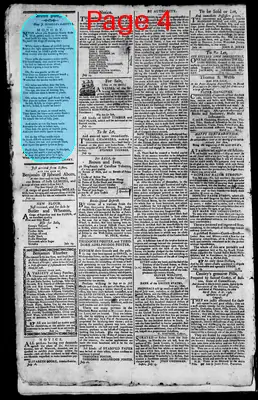
Poem
July 30, 1800
The Providence Journal, And Town And Country Advertiser
Providence, Providence County, Rhode Island
What is this article about?
A monody mourning the death of Jane, a gentle village maiden admired for her beauty and kindness, set in a rural hamlet. Villagers grieve her loss, visiting her grave with flowers and hymns, urging a stranger to pause and sigh for her.
Clipping
OCR Quality
95%
Excellent
Full Text
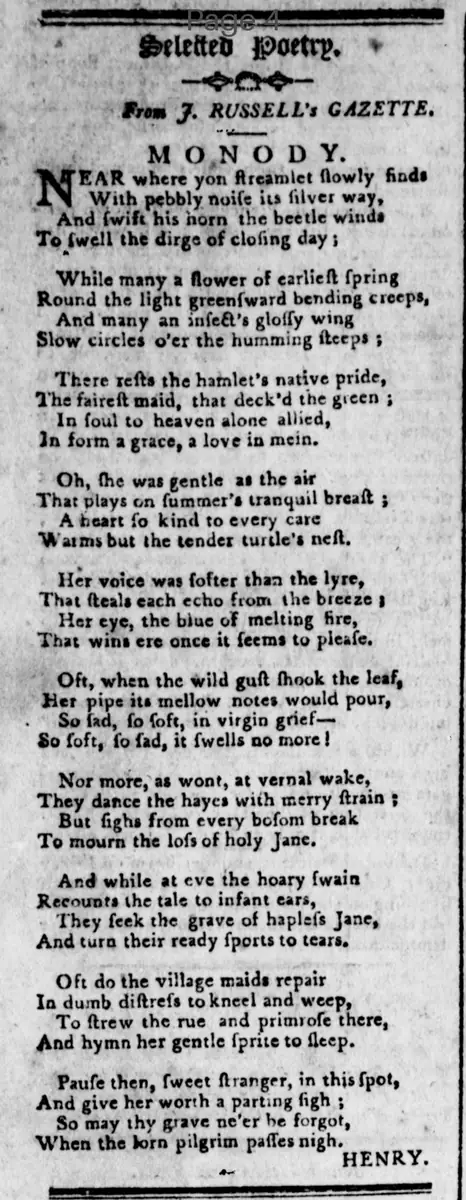
Selected poetry.
From J. RUSSELL's GAZETTE,
MONODY.
Where yon streamlet slowly finds
With pebbly noise its silver way,
And swift his horn the beetle winds
To swell the dirge of closing day;
While many a flower of earliest spring
Round the light greenward bending creeps,
And many an insect's glossy wing
Slow circles o'er the humming steeps;
There rests the hamlet's native pride,
The fairest maid that deck'd the green;
In soul to heaven alone allied,
In form a grace, a love in mien.
Oh, she was gentle as the air
That plays on summer's tranquil breast;
A heart so kind to every care
Warms but the tender turtle's nest.
Her voice was softer than the lyre,
That steals each echo from the breeze;
Her eye, the blue of melting fire,
That wins ere once it seems to please.
Oft, when the wild gust shook the leaf,
Her pipe its mellow notes would pour,
So sad, so oft, in virgin grief-
So oft, so sad, it wells no more!
No more, as wont, at vernal wake,
They dance the hayes with merry train;
But sighs from every bosom break
To mourn this loss of holy Jane.
And while at eve the hoary swain
Recounts the tale to infant ears,
They seek the grave of hapless Jane,
And turn their ready eyes to tears.
Oft do the village maids repair
In dumb distress to kneel and weep,
To strew the rue and primrose there,
And hymn her gentle spirit to sleep.
Pause then, sweet stranger, in this spot,
And give her worth a parting sigh;
So may thy grave ne'er be forgot,
When the lorn pilgrim passes nigh.
HENRY.
From J. RUSSELL's GAZETTE,
MONODY.
Where yon streamlet slowly finds
With pebbly noise its silver way,
And swift his horn the beetle winds
To swell the dirge of closing day;
While many a flower of earliest spring
Round the light greenward bending creeps,
And many an insect's glossy wing
Slow circles o'er the humming steeps;
There rests the hamlet's native pride,
The fairest maid that deck'd the green;
In soul to heaven alone allied,
In form a grace, a love in mien.
Oh, she was gentle as the air
That plays on summer's tranquil breast;
A heart so kind to every care
Warms but the tender turtle's nest.
Her voice was softer than the lyre,
That steals each echo from the breeze;
Her eye, the blue of melting fire,
That wins ere once it seems to please.
Oft, when the wild gust shook the leaf,
Her pipe its mellow notes would pour,
So sad, so oft, in virgin grief-
So oft, so sad, it wells no more!
No more, as wont, at vernal wake,
They dance the hayes with merry train;
But sighs from every bosom break
To mourn this loss of holy Jane.
And while at eve the hoary swain
Recounts the tale to infant ears,
They seek the grave of hapless Jane,
And turn their ready eyes to tears.
Oft do the village maids repair
In dumb distress to kneel and weep,
To strew the rue and primrose there,
And hymn her gentle spirit to sleep.
Pause then, sweet stranger, in this spot,
And give her worth a parting sigh;
So may thy grave ne'er be forgot,
When the lorn pilgrim passes nigh.
HENRY.
What sub-type of article is it?
Elegy
Pastoral
What themes does it cover?
Death Mourning
Nature Seasons
What keywords are associated?
Monody
Jane
Village Maid
Mourning
Pastoral Elegy
Grave
Rural Lament
What entities or persons were involved?
Henry
Poem Details
Title
Monody
Author
Henry
Subject
On The Death Of Jane
Key Lines
There Rests The Hamlet's Native Pride,
The Fairest Maid That Deck'd The Green;
In Soul To Heaven Alone Allied,
In Form A Grace, A Love In Mien.
But Sighs From Every Bosom Break
To Mourn This Loss Of Holy Jane.
Pause Then, Sweet Stranger, In This Spot,
And Give Her Worth A Parting Sigh;
So May Thy Grave Ne'er Be Forgot,
When The Lorn Pilgrim Passes Nigh.