Thank you for visiting SNEWPapers!
Sign up free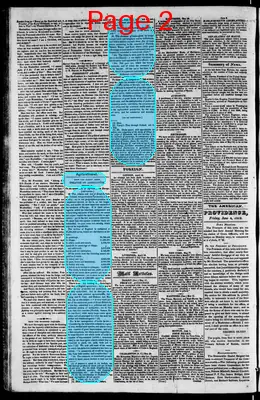
Literary
June 4, 1819
The Rhode Island American, And General Advertiser
Providence, Providence County, Rhode Island
What is this article about?
This continued treatise section analyzes agriculture in Great Britain and Ireland, noting favorable climate and position but poor results due to unenclosed commons, short leases, tithes, poor taxes, population growth, and other factors. Includes land distribution stats and expert critiques showing deficits in yields and management.
Clipping
OCR Quality
95%
Excellent
Full Text
Agricultural.
FROM THE ALBANY ARGUS.
TREATISE ON AGRICULTURE.
SECTION II.
On the actual state of Agriculture in Europe.
[CONTINUED.]
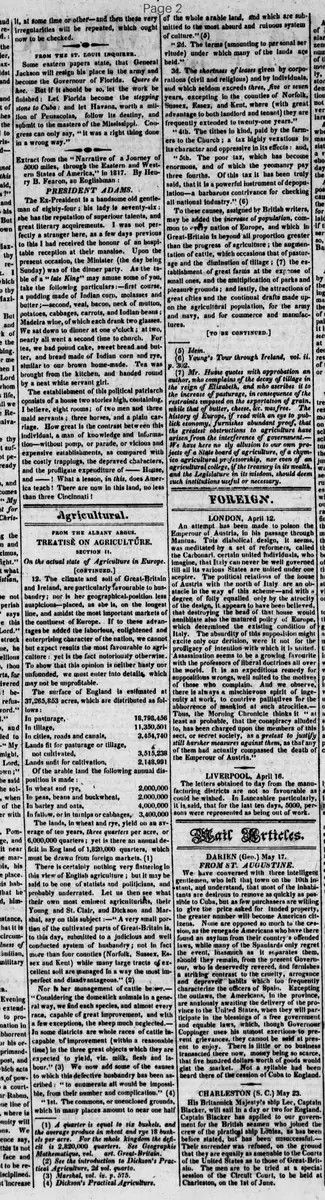
12. The climate and soil of Great-Britain and Ireland, are particularly favourable to husbandry; nor is her geographical-position less auspicious—placed, as she is, on the longest line, and amidst the most important markets of the continent of Europe. If to these advantages be added the laborious, enlightened and enterprising character of the nation, we cannot but expect results the most favourable to agriculture: yet is the fact notoriously otherwise.
To show that this opinion is neither hasty nor unfounded, we must enter into details which may not be unprofitable.
The surface of England is estimated at 37,265,853 acres, which are distributed as follows:
In pasturage, 18,798,456
In tillage, 11,350,501
In cities, roads and canals, 3,454,740
Lands fit for pasturage or tillage, not cultivated, 3,515,238
Lands unfit for cultivation, 2,148,991
Of the arable land the following annual disposition is made:
In wheat and rye, 2,000,000
In peas, beans and buckwheat, 2,000,000
In barley and oats, 4,000,000
In fallow, or in turnips or cabbages, 3,400,000
The lands, in wheat and rye, yield on an average of ten years, three quarters per acre, or 6,000,000 quarters; yet is there an annual deficit in England of 1,820,000 quarters, which must be drawn from foreign markets. (1)
There is certainly nothing very flattering in this view of English agriculture; but it may be said to be one of statists and politicians, and probably underrated. Let us then see what their own most eminent agriculturists, their Young and St. Clair, and Dickson and Marshall, say on this subject:—"A very small portion of the cultivated parts of Great-Britain is, to this day, submitted to a judicious and well conducted system of husbandry; not in fact more than four counties (Norfolk, Sussex, Essex and Kent) while many large tracts of excellent soil are managed in a way the most imperfect and disadvantageous." (2)
Nor is her management of cattle better.—"Considering the domestic animals in a general way, we find each species, and almost every race, capable of great improvement, and with a few exceptions, the sheep much neglected.—In some districts are whole races of cattle incapable of improvement (within a reasonable time) in the three great objects which they are expected to yield, viz. milk, flesh and labour." (3) We now add some of the causes to which this defective husbandry has been ascribed: "to enumerate all would be impossible, from their number and complication."(4)
"Ist. The commons, or unenclosed grounds, which in many places amount to near one half of the whole arable land, and which are submitted to the most absurd and ruinous system of culture." (5)
"2d. The terms (amounting to personal servitude) under which many of the lands are held."
3d. The shortness of leases given by corporations (civil and religious) and by individuals, and which seldom exceeds three, five or seven years, excepting in the counties of Norfolk, Sussex, Essex, and Kent, where (with great advantage to both landlord and tenant) they are frequently extended to twenty-one years."
"4th. The tithes in kind, paid by the farmers to the Church; a tax highly vexatious in its character and oppressive in its effects: and,
"5th. The poor tax, which has become enormous, and of which the yeomanry pay three fourths. Of this tax it has been truly said, that it is a powerful instrument of depopulation—a barbarous contrivance for checking all national industry." (6)
To these causes, assigned by British writers, may be added the increase of population, common to every nation of Europe, and which in Great-Britain is beyond all proportion greater than the progress of agriculture; the augmentation of cattle, which occasions that of pasturage and the diminution of tillage; (7) the establishment of great farms at the expense of small ones, and the multiplication of parks and pleasure grounds; and lastly, the attractions of great cities and the continual drafts made upon the agricultural population, for the army and navy, and for commerce and manufactures.
[TO BE CONTINUED.]
(1) A quarter is equal to eight bushels, and this average produce in wheat and rye is 24 bushels per acre. For the whole kingdom the deficit is 2,820,000 quarters. See Geographic Mathematique, vol. art. Great-Britain.
(2) See the introduction to Dickson's Practical Agriculture, 2d vol. quarto. Marshall, vol. iv. p. 575.
(3) Dickson's Practical Agriculture.
(4) Ibid.
(5) Ibid.
(6) Young's Tour through Ireland, vol. ii. p. 302.
(7) Mr. Hume quotes with approbation an author, who complains of the decay of tillage in the reign of Elizabeth, and who ascribes it to the increase of pasturage, in consequence of the restraints imposed on the exportation of grain, while that of butter, cheese, &c. was free. The history of Europe, if read with an eye to public economy, furnishes abundant proof, that the greatest obstructions to agriculture have arisen from the interference of government.—We have here no sly allusion to our own projects of a State board of agriculture, of a chymico-agricultural professorship, nor even of an agricultural college, if the treasury in its wealth, and the Legislature in its wisdom, should deem such institutions useful or necessary.
FROM THE ALBANY ARGUS.
TREATISE ON AGRICULTURE.
SECTION II.
On the actual state of Agriculture in Europe.
[CONTINUED.]
12. The climate and soil of Great-Britain and Ireland, are particularly favourable to husbandry; nor is her geographical-position less auspicious—placed, as she is, on the longest line, and amidst the most important markets of the continent of Europe. If to these advantages be added the laborious, enlightened and enterprising character of the nation, we cannot but expect results the most favourable to agriculture: yet is the fact notoriously otherwise.
To show that this opinion is neither hasty nor unfounded, we must enter into details which may not be unprofitable.
The surface of England is estimated at 37,265,853 acres, which are distributed as follows:
In pasturage, 18,798,456
In tillage, 11,350,501
In cities, roads and canals, 3,454,740
Lands fit for pasturage or tillage, not cultivated, 3,515,238
Lands unfit for cultivation, 2,148,991
Of the arable land the following annual disposition is made:
In wheat and rye, 2,000,000
In peas, beans and buckwheat, 2,000,000
In barley and oats, 4,000,000
In fallow, or in turnips or cabbages, 3,400,000
The lands, in wheat and rye, yield on an average of ten years, three quarters per acre, or 6,000,000 quarters; yet is there an annual deficit in England of 1,820,000 quarters, which must be drawn from foreign markets. (1)
There is certainly nothing very flattering in this view of English agriculture; but it may be said to be one of statists and politicians, and probably underrated. Let us then see what their own most eminent agriculturists, their Young and St. Clair, and Dickson and Marshall, say on this subject:—"A very small portion of the cultivated parts of Great-Britain is, to this day, submitted to a judicious and well conducted system of husbandry; not in fact more than four counties (Norfolk, Sussex, Essex and Kent) while many large tracts of excellent soil are managed in a way the most imperfect and disadvantageous." (2)
Nor is her management of cattle better.—"Considering the domestic animals in a general way, we find each species, and almost every race, capable of great improvement, and with a few exceptions, the sheep much neglected.—In some districts are whole races of cattle incapable of improvement (within a reasonable time) in the three great objects which they are expected to yield, viz. milk, flesh and labour." (3) We now add some of the causes to which this defective husbandry has been ascribed: "to enumerate all would be impossible, from their number and complication."(4)
"Ist. The commons, or unenclosed grounds, which in many places amount to near one half of the whole arable land, and which are submitted to the most absurd and ruinous system of culture." (5)
"2d. The terms (amounting to personal servitude) under which many of the lands are held."
3d. The shortness of leases given by corporations (civil and religious) and by individuals, and which seldom exceeds three, five or seven years, excepting in the counties of Norfolk, Sussex, Essex, and Kent, where (with great advantage to both landlord and tenant) they are frequently extended to twenty-one years."
"4th. The tithes in kind, paid by the farmers to the Church; a tax highly vexatious in its character and oppressive in its effects: and,
"5th. The poor tax, which has become enormous, and of which the yeomanry pay three fourths. Of this tax it has been truly said, that it is a powerful instrument of depopulation—a barbarous contrivance for checking all national industry." (6)
To these causes, assigned by British writers, may be added the increase of population, common to every nation of Europe, and which in Great-Britain is beyond all proportion greater than the progress of agriculture; the augmentation of cattle, which occasions that of pasturage and the diminution of tillage; (7) the establishment of great farms at the expense of small ones, and the multiplication of parks and pleasure grounds; and lastly, the attractions of great cities and the continual drafts made upon the agricultural population, for the army and navy, and for commerce and manufactures.
[TO BE CONTINUED.]
(1) A quarter is equal to eight bushels, and this average produce in wheat and rye is 24 bushels per acre. For the whole kingdom the deficit is 2,820,000 quarters. See Geographic Mathematique, vol. art. Great-Britain.
(2) See the introduction to Dickson's Practical Agriculture, 2d vol. quarto. Marshall, vol. iv. p. 575.
(3) Dickson's Practical Agriculture.
(4) Ibid.
(5) Ibid.
(6) Young's Tour through Ireland, vol. ii. p. 302.
(7) Mr. Hume quotes with approbation an author, who complains of the decay of tillage in the reign of Elizabeth, and who ascribes it to the increase of pasturage, in consequence of the restraints imposed on the exportation of grain, while that of butter, cheese, &c. was free. The history of Europe, if read with an eye to public economy, furnishes abundant proof, that the greatest obstructions to agriculture have arisen from the interference of government.—We have here no sly allusion to our own projects of a State board of agriculture, of a chymico-agricultural professorship, nor even of an agricultural college, if the treasury in its wealth, and the Legislature in its wisdom, should deem such institutions useful or necessary.
What sub-type of article is it?
Essay
What themes does it cover?
Agriculture Rural
Political
Taxation Oppression
What keywords are associated?
Agriculture
Great Britain
Husbandry
Tillage
Pasturage
Tithes
Poor Tax
Land Use
What entities or persons were involved?
From The Albany Argus
Literary Details
Title
Treatise On Agriculture. Section Ii. On The Actual State Of Agriculture In Europe.
Author
From The Albany Argus
Subject
On The Actual State Of Agriculture In Europe
Key Lines
The Climate And Soil Of Great Britain And Ireland, Are Particularly Favourable To Husbandry; Nor Is Her Geographical Position Less Auspicious—Placed, As She Is, On The Longest Line, And Amidst The Most Important Markets Of The Continent Of Europe.
A Very Small Portion Of The Cultivated Parts Of Great Britain Is, To This Day, Submitted To A Judicious And Well Conducted System Of Husbandry; Not In Fact More Than Four Counties (Norfolk, Sussex, Essex And Kent) While Many Large Tracts Of Excellent Soil Are Managed In A Way The Most Imperfect And Disadvantageous.
The Tithes In Kind, Paid By The Farmers To The Church; A Tax Highly Vexatious In Its Character And Oppressive In Its Effects: And, The Poor Tax, Which Has Become Enormous, And Of Which The Yeomanry Pay Three Fourths.