Thank you for visiting SNEWPapers!
Sign up free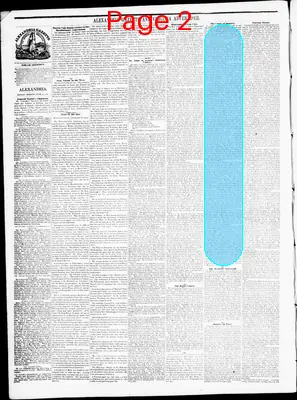
Story
June 26, 1848
Alexandria Gazette
Alexandria, Alexandria County, District Of Columbia
What is this article about?
A reporter visits the Court of Inquiry in Fredericksburg, describing the military arrangement, key figures like President Towson, Gen. Cushing, Col. Belknap, Gen. Scott, Gen. Pillow, and Gen. Twiggs, and the quiet, dull proceedings involving questions to witnesses.
Clipping

OCR Quality
92%
Excellent
Full Text
As it was our "manifest destiny" not to see
the Elephant," we determined to come as near
this felicity as possible, and accordingly, week
before last, we hitched up and drove to Fredericksburg, to take a peep at the Court of Inquiry. This
martial assembly was sitting in the spacious
hall of the new and beautiful engine houses, and
although it has made a tremendous noise over
the country, we must say it was in itself the
most noiseless assemblage we ever witnessed.
Entering the hall upon tiptoe, the first thing that
strikes the observation of the visitor, is the military
arrangement of the tables, drawn up like
regiments in hostile array, commanded by their
appropriate officers. At the head is a large table
covering the members of the Court, and on
either side, at right angles with it, and of course
parallel with each other, are those of the belligerents. Between them, solitary and alone, sits
the Judge Advocate, and off to the right, like
skirmishers, are the reporters.
In the centre of the Court, sits its President,
the venerable Towson. Time has made sad
havoc with the intrepid Captain of Artillery who
won such glorious distinction under the eye
of Scott, at Chippewa and Lundy's Lane. The
hosts of many winters and a feeble gait give
him the appearance of being by many years the
senior (as he doubtless is) of his stately superior
officer, the Commander in Chief. On the right
of the President is one whose appearance at
once rivets attention. A high, prominent and
receding, though rather narrow forehead in proportion to its height, towering, above small penetrating eyes mark the possessor as a man of
unquestionable intellect—whilst a long, narrow
and curved nose, beneath which, over a capacious mouth, hangs, like a dark lowering cloud
a huge moustache, gives rather an outre appearance to the face. The contour of the face
is elongated, and in Gen. Cushing, one might
readily imagine he was gazing upon some eastern magician or the Wandering Jew. On the
other side of the President sits one as unlike the
Brigadier as two persons could be. His forehead is round, his cheeks are round, his nose is
round, his chin is round, his body is round— in
fine, he is a rotundity, possessing but few marks
of genius. This is Col. Belknap, the third member of the Court. In front of him, and at the
head of the left line of tables is the man of the
Court. The first question of a new comer is
"where is Gen. Scott?" and immediately the gaze
of the inquirer is fixed upon this stately personage. Rising, he stands six feet five in his stockings, and is as straight as a musket barrel. This
recent indisposition seems not to have impaired
his elegant proportions or to have dimmed the
lustre of his small eyes, which roll in their
sockets like two balls of intense fire—by far the
most intellectual of all his features. His mouth
when closed is like a vice and indicates unquestionable firmness. His papers are drawn up
without the aid of any one, and are characterised by a vigor and terseness which are not always found in his writings. He plays well the
part of an Advocate. Next to him, at another
table, sits his Adjutant, H. L. Scott, a slender,
plain looking man—and father down, his two
aids Lieuts. Schuyler Hamilton and Williams.
The former is the grand-son of Alexander Hamilton, and bears upon his body the marks of his
bravery, having, as we are informed been pierced entirely through the body, by a Mexican
lance, during an engagement and reconnoissance
in the valley of Mexico.
Almost immediately opposite is one who cannot fail to attract attention—Major General
Pillow, the redoubtable, self-inflated Gideon.
His hand rests with evident satisfaction on his
mighty sword, the instrument of his glory. It
ever there lived a man satisfied with himself, it
is Gideon. He is a trig little personage, of scarcely medium height, rendered more trig by his
assiduous attention to dress. Not a hair of his
head is out of place, and not a speck is to be
found upon a button. His dress too is worn
with satisfaction, for it is the dress of a Major
General U. S. A., who with his own hand killed
a Mexican officer, and had nearly carried off
from the veteran Scott, the palm of "Conqueror
of Mexico." (Gideon too, is a handsome man—the ladies know it, and he knows it and consequently his face is always turned toward—the ladies. In his altercations with Gen. Scott
he is by no means backward, and none but the
speculators can (certainly he cannot) appreciate
the difference between greatness and insignificance between the illustrious General and the
mushroom popinjay. On either side of him is
an Aid to whose military knowledge he is probably indebted for being saved from more humiliating disgraces than he has set in motion.
Between the lines of tables, is that of the Judge
Advocate, Captain Ridgely, a heavy looking
man of powerful frame and in front of him,
seated on a chair, is the witness under examination, General Twiggs, who is every inch a soldier.
His frame is cast in the largest mould every
feature is prominent. Long white hair but un-
perfectly covers an intellectual head, and he
seems to be one born to command.
After a pause of ten or fifteen minutes duration (Gen. Scott hands to the Judge Advocate a
very small slip of paper, on which is written a
question, which is read to the witness by the
Judge Advocate. The answer is given, probably, in monosyllables, is taken down and repeated by the same officer, who then attaches
the question to the record with a wafer, picks up
the Baltimore Sun of the morning, and is soon
lost in a perusal of the second day's proceedings
of the Whig National Convention. Most of the
other officers are similarly engaged. In the
meantime Gen. Scott is leisurely engaged in
preparing another question, and after another
awful pause, the same formula are gone through
with, and all again lapses into silence, to be a-
gain broken in the same way, except when the
dignity of the Court or of one of the officers is
endangered, and then sharp words and fierce
looks are freely indulged in. Such was the
Court of Inquiry as we saw it, the prominent
feature of which, to us, seemed to be dullness.
Hagerstown Torch Light.
the Elephant," we determined to come as near
this felicity as possible, and accordingly, week
before last, we hitched up and drove to Fredericksburg, to take a peep at the Court of Inquiry. This
martial assembly was sitting in the spacious
hall of the new and beautiful engine houses, and
although it has made a tremendous noise over
the country, we must say it was in itself the
most noiseless assemblage we ever witnessed.
Entering the hall upon tiptoe, the first thing that
strikes the observation of the visitor, is the military
arrangement of the tables, drawn up like
regiments in hostile array, commanded by their
appropriate officers. At the head is a large table
covering the members of the Court, and on
either side, at right angles with it, and of course
parallel with each other, are those of the belligerents. Between them, solitary and alone, sits
the Judge Advocate, and off to the right, like
skirmishers, are the reporters.
In the centre of the Court, sits its President,
the venerable Towson. Time has made sad
havoc with the intrepid Captain of Artillery who
won such glorious distinction under the eye
of Scott, at Chippewa and Lundy's Lane. The
hosts of many winters and a feeble gait give
him the appearance of being by many years the
senior (as he doubtless is) of his stately superior
officer, the Commander in Chief. On the right
of the President is one whose appearance at
once rivets attention. A high, prominent and
receding, though rather narrow forehead in proportion to its height, towering, above small penetrating eyes mark the possessor as a man of
unquestionable intellect—whilst a long, narrow
and curved nose, beneath which, over a capacious mouth, hangs, like a dark lowering cloud
a huge moustache, gives rather an outre appearance to the face. The contour of the face
is elongated, and in Gen. Cushing, one might
readily imagine he was gazing upon some eastern magician or the Wandering Jew. On the
other side of the President sits one as unlike the
Brigadier as two persons could be. His forehead is round, his cheeks are round, his nose is
round, his chin is round, his body is round— in
fine, he is a rotundity, possessing but few marks
of genius. This is Col. Belknap, the third member of the Court. In front of him, and at the
head of the left line of tables is the man of the
Court. The first question of a new comer is
"where is Gen. Scott?" and immediately the gaze
of the inquirer is fixed upon this stately personage. Rising, he stands six feet five in his stockings, and is as straight as a musket barrel. This
recent indisposition seems not to have impaired
his elegant proportions or to have dimmed the
lustre of his small eyes, which roll in their
sockets like two balls of intense fire—by far the
most intellectual of all his features. His mouth
when closed is like a vice and indicates unquestionable firmness. His papers are drawn up
without the aid of any one, and are characterised by a vigor and terseness which are not always found in his writings. He plays well the
part of an Advocate. Next to him, at another
table, sits his Adjutant, H. L. Scott, a slender,
plain looking man—and father down, his two
aids Lieuts. Schuyler Hamilton and Williams.
The former is the grand-son of Alexander Hamilton, and bears upon his body the marks of his
bravery, having, as we are informed been pierced entirely through the body, by a Mexican
lance, during an engagement and reconnoissance
in the valley of Mexico.
Almost immediately opposite is one who cannot fail to attract attention—Major General
Pillow, the redoubtable, self-inflated Gideon.
His hand rests with evident satisfaction on his
mighty sword, the instrument of his glory. It
ever there lived a man satisfied with himself, it
is Gideon. He is a trig little personage, of scarcely medium height, rendered more trig by his
assiduous attention to dress. Not a hair of his
head is out of place, and not a speck is to be
found upon a button. His dress too is worn
with satisfaction, for it is the dress of a Major
General U. S. A., who with his own hand killed
a Mexican officer, and had nearly carried off
from the veteran Scott, the palm of "Conqueror
of Mexico." (Gideon too, is a handsome man—the ladies know it, and he knows it and consequently his face is always turned toward—the ladies. In his altercations with Gen. Scott
he is by no means backward, and none but the
speculators can (certainly he cannot) appreciate
the difference between greatness and insignificance between the illustrious General and the
mushroom popinjay. On either side of him is
an Aid to whose military knowledge he is probably indebted for being saved from more humiliating disgraces than he has set in motion.
Between the lines of tables, is that of the Judge
Advocate, Captain Ridgely, a heavy looking
man of powerful frame and in front of him,
seated on a chair, is the witness under examination, General Twiggs, who is every inch a soldier.
His frame is cast in the largest mould every
feature is prominent. Long white hair but un-
perfectly covers an intellectual head, and he
seems to be one born to command.
After a pause of ten or fifteen minutes duration (Gen. Scott hands to the Judge Advocate a
very small slip of paper, on which is written a
question, which is read to the witness by the
Judge Advocate. The answer is given, probably, in monosyllables, is taken down and repeated by the same officer, who then attaches
the question to the record with a wafer, picks up
the Baltimore Sun of the morning, and is soon
lost in a perusal of the second day's proceedings
of the Whig National Convention. Most of the
other officers are similarly engaged. In the
meantime Gen. Scott is leisurely engaged in
preparing another question, and after another
awful pause, the same formula are gone through
with, and all again lapses into silence, to be a-
gain broken in the same way, except when the
dignity of the Court or of one of the officers is
endangered, and then sharp words and fierce
looks are freely indulged in. Such was the
Court of Inquiry as we saw it, the prominent
feature of which, to us, seemed to be dullness.
Hagerstown Torch Light.
What sub-type of article is it?
Historical Event
Biography
What themes does it cover?
Justice
Bravery Heroism
What keywords are associated?
Court Of Inquiry
General Scott
Fredericksburg
Military Court
Mexican War
Gen Pillow
Gen Twiggs
What entities or persons were involved?
Towson
Gen. Cushing
Col. Belknap
Gen. Scott
H. L. Scott
Schuyler Hamilton
Williams
Major General Pillow
Captain Ridgely
General Twiggs
Where did it happen?
Fredericksburg
Story Details
Key Persons
Towson
Gen. Cushing
Col. Belknap
Gen. Scott
H. L. Scott
Schuyler Hamilton
Williams
Major General Pillow
Captain Ridgely
General Twiggs
Location
Fredericksburg
Event Date
Week Before Last
Story Details
Visitors observe the Court of Inquiry in Fredericksburg's engine house, noting the silent proceedings, detailed physical descriptions of military officers including President Towson, Gen. Scott as defendant, Gen. Pillow, and witness Gen. Twiggs, with intermittent questioning amid pauses.