Thank you for visiting SNEWPapers!
Sign up free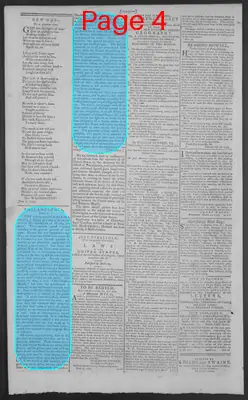
Editorial
June 5, 1793
National Gazette
Philadelphia, Philadelphia County, Pennsylvania
What is this article about?
Philadelphia editorial urges adherence to the US treaty with France amid European conflicts, emphasizing national honor, benefits of French trade over English, and risks of perfidy leading to war, while criticizing sophistry to nullify the treaty.
Clipping
OCR Quality
98%
Excellent
Full Text
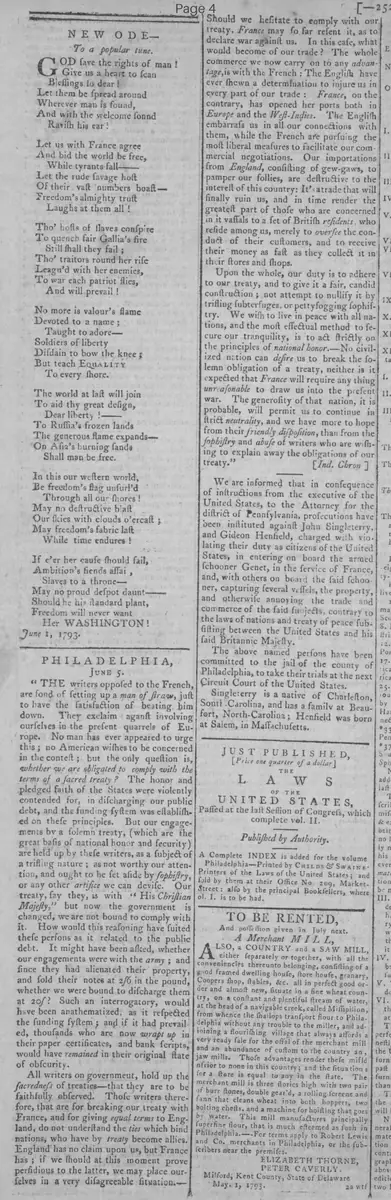
PHILADELPHIA, June 5.
"The writers opposed to the French, are fond of setting up a man of straw, just to have the satisfaction of beating him down. They exclaim against involving ourselves in the present quarrels of Europe. No man has ever appeared to urge this; no American wishes to be concerned in the contest; but the only question is, whether we are obligated to comply with the terms of a sacred treaty? The honor and pledged faith of the States were violently contended for, in discharging our public debt, and the funding system was established on these principles. But our engagements by a solemn treaty, (which are the great basis of national honor and security) are held up by these writers, as a subject of a trifling nature; as not worthy our attention, and ought to be set aside by Sophistry, or any other artifice we can devise. Our treaty, say they, is with 'His Christian Majesty,' but now the government is changed, we are not bound to comply with it. How would this reasoning have suited these persons as it related to the public debt. It might have been asked, whether our engagements were with the army; and since they had alienated their property, and sold their notes at 2s6 in the pound, whether we were bound to discharge them at 20s? Such an interrogatory, would have been anathematized, as it respected the funding system; and if it had prevailed, thousands who are now wrapt up in their paper certificates, and bank scripts, would have remained in their original state of obscurity.
All writers on government, hold up the sacredness of treaties—that they are to be faithfully observed. Those writers therefore, that are for breaking our treaty with France, and for giving equal terms to England, do not understand the ties which bind nations, who have by treaty become allies. England has no claim upon us, but France has; if we should at this moment prove perfidious to the latter, we may place ourselves in a very disagreeable situation.
Should we hesitate to comply with our treaty, France may so far resent it, as to declare war against us. In this case, what would become of our trade? The whole commerce we now carry on to any advantage, is with the French: The English have ever shown a determination to injure us in every part of our trade: France, on the contrary, has opened her ports both in Europe and the West-Indies. The English embarrass us in all our connections with them, while the French are pursuing the most liberal measures to facilitate our commercial negotiations. Our importations from England, consisting of gew-gaws, to pamper our follies, are destructive to the interest of this country: It'a trade that will finally ruin us, and in time render the greatest part of those who are concerned in it vassals to a set of British residents, who reside among us, merely to oversee the conduct of their customers, and to receive their money as fast as they collect it in their stores and shops.
Upon the whole, our duty is to adhere to our treaty, and to give it a fair, candid construction; not attempt to nullify it by trifling subterfuges, or pettifogging sophistry. We wish to live in peace with all nations, and the most effectual method to ensure our tranquility, is to act strictly on the principles of national honor.—No civilized nation can desire us to break the solemn obligation of a treaty, neither is it expected that France will require any thing unreasonable to draw us into the present war. The generosity of that nation, it is probable, will permit us to continue in strict neutrality, and we have more to hope from their friendly disposition, than from the sophistry and abuse of writers who are wishing to explain away the obligations of our treaty."
[Ind. Chron.]
"The writers opposed to the French, are fond of setting up a man of straw, just to have the satisfaction of beating him down. They exclaim against involving ourselves in the present quarrels of Europe. No man has ever appeared to urge this; no American wishes to be concerned in the contest; but the only question is, whether we are obligated to comply with the terms of a sacred treaty? The honor and pledged faith of the States were violently contended for, in discharging our public debt, and the funding system was established on these principles. But our engagements by a solemn treaty, (which are the great basis of national honor and security) are held up by these writers, as a subject of a trifling nature; as not worthy our attention, and ought to be set aside by Sophistry, or any other artifice we can devise. Our treaty, say they, is with 'His Christian Majesty,' but now the government is changed, we are not bound to comply with it. How would this reasoning have suited these persons as it related to the public debt. It might have been asked, whether our engagements were with the army; and since they had alienated their property, and sold their notes at 2s6 in the pound, whether we were bound to discharge them at 20s? Such an interrogatory, would have been anathematized, as it respected the funding system; and if it had prevailed, thousands who are now wrapt up in their paper certificates, and bank scripts, would have remained in their original state of obscurity.
All writers on government, hold up the sacredness of treaties—that they are to be faithfully observed. Those writers therefore, that are for breaking our treaty with France, and for giving equal terms to England, do not understand the ties which bind nations, who have by treaty become allies. England has no claim upon us, but France has; if we should at this moment prove perfidious to the latter, we may place ourselves in a very disagreeable situation.
Should we hesitate to comply with our treaty, France may so far resent it, as to declare war against us. In this case, what would become of our trade? The whole commerce we now carry on to any advantage, is with the French: The English have ever shown a determination to injure us in every part of our trade: France, on the contrary, has opened her ports both in Europe and the West-Indies. The English embarrass us in all our connections with them, while the French are pursuing the most liberal measures to facilitate our commercial negotiations. Our importations from England, consisting of gew-gaws, to pamper our follies, are destructive to the interest of this country: It'a trade that will finally ruin us, and in time render the greatest part of those who are concerned in it vassals to a set of British residents, who reside among us, merely to oversee the conduct of their customers, and to receive their money as fast as they collect it in their stores and shops.
Upon the whole, our duty is to adhere to our treaty, and to give it a fair, candid construction; not attempt to nullify it by trifling subterfuges, or pettifogging sophistry. We wish to live in peace with all nations, and the most effectual method to ensure our tranquility, is to act strictly on the principles of national honor.—No civilized nation can desire us to break the solemn obligation of a treaty, neither is it expected that France will require any thing unreasonable to draw us into the present war. The generosity of that nation, it is probable, will permit us to continue in strict neutrality, and we have more to hope from their friendly disposition, than from the sophistry and abuse of writers who are wishing to explain away the obligations of our treaty."
[Ind. Chron.]
What sub-type of article is it?
Foreign Affairs
War Or Peace
What keywords are associated?
French Treaty
National Honor
European Quarrels
Neutrality
Trade With France
Anti English Commerce
What entities or persons were involved?
France
England
United States
Editorial Details
Primary Topic
Adherence To Us Treaty With France Amid European Quarrels
Stance / Tone
Strongly Pro Treaty Adherence And Neutrality
Key Figures
France
England
United States
Key Arguments
No American Seeks Involvement In European Quarrels, But Treaty Compliance Is Obligatory.
Treaties Are Sacred Like Public Debt Funding; Sophistry To Nullify Them Undermines National Honor.
France Has Claims Via Treaty; Breaking It Risks Perfidy And War.
Us Trade Thrives With France's Open Ports, Unlike England's Restrictions.
English Imports Harm Us Interests; Adhere To Treaty For Peace And Tranquility.