Thank you for visiting SNEWPapers!
Sign up free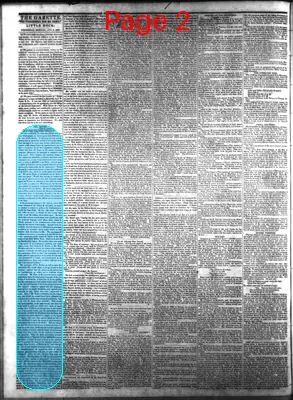
Editorial
August 9, 1843
Arkansas State Gazette
Little Rock, Pulaski County, Arkansas
What is this article about?
Editorial sharply criticizes Col. Sevier for spending entrusted funds from 5% bond sales before returning to Arkansas, violating instructions for the State Bank, and converting proceeds into risky bank paper. It contrasts his lenient treatment due to political power with consequences for ordinary citizens, and refutes his defenses regarding bond sales for the Smithsonian legacy.
Clipping

OCR Quality
95%
Excellent
Full Text
COL. SEVIER.
"Plate it in gold,
And the strong lance of justice hurtless breaks:
Arm it in rags, a pigmy's straw doth pierce it."
We were reminded, the other day, of this sentiment from Shakespeare, by observing its truth illustrated in the case of Col. Sevier. It has been proved, and not denied, that he spent that portion of the money arising from the sale of the 5 per cent. bonds, which was entrusted to his charge, before he reached home; yet we find a committee of the last Legislature seeking to relieve him from all blame in this matter, because, sometime afterwards, he managed to replace it with bank paper. Now, suppose any common citizen of our community—merchant or farmer—had been commissioned, on account of his character for strict integrity, to bring on $10,000 to the Bank, and had spent it, before getting here, for any purpose whatever, would not his good name suffer by the transaction? Would his paying it afterwards restore to him the confidence of his fellow-men, which he would justly have forfeited? Would the Bank, or individuals ever be likely to trust him again? Would they not say, he makes too free use of what is not his own, and, if trusted, might spend the "money of others" at a time when he would not be able to replace it? Would he not, by the common consent of mankind, be deemed untrustworthy? Yet not so with Col. Sevier. He owns a large plantation in Chicot, and is, besides, the Dictator to the great democratic party in Arkansas, therefore, can do no wrong. Conduct which would destroy the prospects of many a young man for life, affects not his reputation in the least.
In his pretended answer to Dr. Gibson, which fills seven columns of the Times & Advocate, he makes no attempt to explain or palliate this faithlessness towards the State Bank. He first talks about "Pistols and coffee for two," as though he had always been ready to use the former, when called upon. He next shows his intimate acquaintance with distilleries, and the technical language used about them, being indebted, perhaps, to the reminiscences of his earlier days, for this species of knowledge. Around them, he, no doubt, learned whatever of refinement he possesses, as well as the excellent moral habits which so well comport with the station he holds. The remaining six columns is devoted to a discussion of the old question—the correctness of his course in regard to the 500 bonds of the Real Estate Bank, which were sold for the Smithsonian legacy. He remarks upon every point in the report of the Legislature seriatim, and closes with a letter from Anthony H. Davies to Mr. Rust.
We have not time to review the whole of his communication, at present, but will notice the main point of the controversy, which is, that "the conversion of the funds, and the appropriation of a portion of it for their own use and that of others, was unauthorized by the instructions given them, and in direct violation of the high trust reposed in them."
The apologists of Col. Sevier, as well as some few individuals who would object to being classed in that category, contend that his course in this matter was not unauthorized, or, rather, not in violation of his instructions. Mr. Rust, of the minority report, relied particularly upon the concluding language of the two letters of instruction, to bear him out in the opinion, that the commissioners had unlimited discretion, both in the sale and disposal of the funds arising from them. The majority committee argued that this language, granting full and ample discretion, only applied to the contracts of sale, which they were empowered to make. Now, if Mr. Rust's construction be the correct one, why should the central board have informed the commissioners, in the same letters of instruction, what to do with the funds when received? Why should they have specified, in the same letters, how much to bring home in gold and silver—how much in small change, &c.? It will be recollected that, by the resolution of the central board, and the instructions of the committee, of which the President was chairman, the commissioners were required to dispose of the bonds for "specie, and such other eastern funds as will be best calculated to meet the wants of the community, and support the credit of the Bank." But we will admit that Col. Sevier did not see or know of such a resolution, at the time, (as he says he was not cognizant of it), yet he, of course, read the letters of instructions which were sent to him, for the guidance of himself and associate. They are more particularly directed in those letters to "deposit at least $200,000 in some safe bank, to enable us here to draw on the cashier," and "to procure the sum of ten thousand dollars, in change, from the mint, at Philadelphia," and "also get the sum of one hundred thousand dollars in gold, for the commencement of operations, both of which amounts you might bring with you, on your return to Arkansas." Now, we ask, did they obey these instructions? Did they bring the different amounts with them, on their "return to Arkansas?" It is not pretended. Did they deposit the "$200,000 in some safe bank?" No. And do not these specific directions, with regard to the disposition of the money, when obtained, go clearly to prove that the broad language, which is usually quoted as conferring so much discretion upon the commissioners, was intended to apply, only, to the contracts of sale they might be about to make? Would not every impartial mind come to this conclusion? We think so. But the good funds were converted into Louisiana, Mississippi, and Tennessee bank paper—a portion of which, it appears, from the testimony of Mr. Newton, the Cashier, came to the Bank and "was disposed of as fast as possible." Why was it disposed of "as fast as possible?" Because they were fearful that the banks, whose paper they had taken, might not be able ever to redeem it and thus entail a heavy loss upon the institution.
But Col. Sevier not only disregarded the instructions given him, but violated the promises made in so confident a manner, in his celebrated letter to "Dear Davies," which he says was pilfered, but does not condescend to inform us who was the pilferer. In that letter he thus discourses: "I will say to you, as I have to the Directors of the State Bank, that it is no time to be dilly-dallying.' If it be important to shut the mouths of our anti-bank adversaries [not as Philip conquered the Athenians, with silver spears], and to give character and stability to our banks, and render the country a service, send on all the bonds that you propose to sell, and I will agree to be taken for a fool, if I don't get them off, by the 1st of July, at par, and for at least . if not o in specie, and the residue in eastern credit and eastern paper, which will answer a valuable purpose." Again, he says: "If I get your letter, in a day or two, and, in a month from the delivery of the bonds, have $400,000, in specie, on the way to Arkansas, or our bank and the balance in bank credits and eastern funds, if I should be authorized to do so." But did any of the specie ever get "on its way to Arkansas?" Yes; but it was low down in the pockets of himself and Williamson, and those stockholders to whom they loaned nine thousand, in New York.
Not satisfied with the letters he has addressed through others, to the people, in exculpation of himself, he has lately taken a crusade into the north-western part of the State, stumping it as he goes. At Capt. Winfrey's, he declared his intention to speak wherever he could get twelve men to hear him. He took the ground boldly, we are told, that the next Legislature must expunge, or draw black lines around the report of the last session, which censures him as one of the commissioners, or he would resign his seat in the Senate, and not serve the people any longer. The charge, in the report, "that the conversion of the funds, and the appropriation of a portion of it for their own use and that of others, was unauthorized by the instructions given them, and in direct violation of the high trust reposed in them," must be taken back, in order to appease the Senator's offended dignity, and to prevail on him not to leave the people without the light of his great name in the national councils.
"Pistols and coffee for two," says the Senator in his long and senseless tirade, in the last Times & Advocate. This comes well from one who was told to his teeth, by Dr. Gibson, on the floor of the House of Representatives, (in the debate between them after the adjournment), that his conduct was ungentlemanly, coupled with the declaration that he, Gibson, held himself responsible to Mr. Sevier, there or elsewhere, for what he then said. Where were then the Senator's bullets, gunpowder, and "pistols and coffee for two?"
Now, that the Senator considers himself fairly caught in the Bond-trap, as fast as a thief in a mill, he would affect to make us believe that he has become exceedingly wolfish about the head and shoulders, all at once. We are not at all alarmed, however, and we are quite certain that the Doctor is not. And we are now willing, to enter into a contract to furnish a burial place for the Senator's dead, which, unlike the field of Machpelah, shall not even cost one shekel of silver per acre.
Our devil, and the other boys of the office, desire us to say to the managers and wire-workers of the Helena Journal, that they are under an engagement, the first leisure moment they have, to print several copies of that toast, on white satin, for some of the author's admirers. After that job is completed, they will notice, in a proper manner, the editorials which appear in that paper of 3d of August.
"Plate it in gold,
And the strong lance of justice hurtless breaks:
Arm it in rags, a pigmy's straw doth pierce it."
We were reminded, the other day, of this sentiment from Shakespeare, by observing its truth illustrated in the case of Col. Sevier. It has been proved, and not denied, that he spent that portion of the money arising from the sale of the 5 per cent. bonds, which was entrusted to his charge, before he reached home; yet we find a committee of the last Legislature seeking to relieve him from all blame in this matter, because, sometime afterwards, he managed to replace it with bank paper. Now, suppose any common citizen of our community—merchant or farmer—had been commissioned, on account of his character for strict integrity, to bring on $10,000 to the Bank, and had spent it, before getting here, for any purpose whatever, would not his good name suffer by the transaction? Would his paying it afterwards restore to him the confidence of his fellow-men, which he would justly have forfeited? Would the Bank, or individuals ever be likely to trust him again? Would they not say, he makes too free use of what is not his own, and, if trusted, might spend the "money of others" at a time when he would not be able to replace it? Would he not, by the common consent of mankind, be deemed untrustworthy? Yet not so with Col. Sevier. He owns a large plantation in Chicot, and is, besides, the Dictator to the great democratic party in Arkansas, therefore, can do no wrong. Conduct which would destroy the prospects of many a young man for life, affects not his reputation in the least.
In his pretended answer to Dr. Gibson, which fills seven columns of the Times & Advocate, he makes no attempt to explain or palliate this faithlessness towards the State Bank. He first talks about "Pistols and coffee for two," as though he had always been ready to use the former, when called upon. He next shows his intimate acquaintance with distilleries, and the technical language used about them, being indebted, perhaps, to the reminiscences of his earlier days, for this species of knowledge. Around them, he, no doubt, learned whatever of refinement he possesses, as well as the excellent moral habits which so well comport with the station he holds. The remaining six columns is devoted to a discussion of the old question—the correctness of his course in regard to the 500 bonds of the Real Estate Bank, which were sold for the Smithsonian legacy. He remarks upon every point in the report of the Legislature seriatim, and closes with a letter from Anthony H. Davies to Mr. Rust.
We have not time to review the whole of his communication, at present, but will notice the main point of the controversy, which is, that "the conversion of the funds, and the appropriation of a portion of it for their own use and that of others, was unauthorized by the instructions given them, and in direct violation of the high trust reposed in them."
The apologists of Col. Sevier, as well as some few individuals who would object to being classed in that category, contend that his course in this matter was not unauthorized, or, rather, not in violation of his instructions. Mr. Rust, of the minority report, relied particularly upon the concluding language of the two letters of instruction, to bear him out in the opinion, that the commissioners had unlimited discretion, both in the sale and disposal of the funds arising from them. The majority committee argued that this language, granting full and ample discretion, only applied to the contracts of sale, which they were empowered to make. Now, if Mr. Rust's construction be the correct one, why should the central board have informed the commissioners, in the same letters of instruction, what to do with the funds when received? Why should they have specified, in the same letters, how much to bring home in gold and silver—how much in small change, &c.? It will be recollected that, by the resolution of the central board, and the instructions of the committee, of which the President was chairman, the commissioners were required to dispose of the bonds for "specie, and such other eastern funds as will be best calculated to meet the wants of the community, and support the credit of the Bank." But we will admit that Col. Sevier did not see or know of such a resolution, at the time, (as he says he was not cognizant of it), yet he, of course, read the letters of instructions which were sent to him, for the guidance of himself and associate. They are more particularly directed in those letters to "deposit at least $200,000 in some safe bank, to enable us here to draw on the cashier," and "to procure the sum of ten thousand dollars, in change, from the mint, at Philadelphia," and "also get the sum of one hundred thousand dollars in gold, for the commencement of operations, both of which amounts you might bring with you, on your return to Arkansas." Now, we ask, did they obey these instructions? Did they bring the different amounts with them, on their "return to Arkansas?" It is not pretended. Did they deposit the "$200,000 in some safe bank?" No. And do not these specific directions, with regard to the disposition of the money, when obtained, go clearly to prove that the broad language, which is usually quoted as conferring so much discretion upon the commissioners, was intended to apply, only, to the contracts of sale they might be about to make? Would not every impartial mind come to this conclusion? We think so. But the good funds were converted into Louisiana, Mississippi, and Tennessee bank paper—a portion of which, it appears, from the testimony of Mr. Newton, the Cashier, came to the Bank and "was disposed of as fast as possible." Why was it disposed of "as fast as possible?" Because they were fearful that the banks, whose paper they had taken, might not be able ever to redeem it and thus entail a heavy loss upon the institution.
But Col. Sevier not only disregarded the instructions given him, but violated the promises made in so confident a manner, in his celebrated letter to "Dear Davies," which he says was pilfered, but does not condescend to inform us who was the pilferer. In that letter he thus discourses: "I will say to you, as I have to the Directors of the State Bank, that it is no time to be dilly-dallying.' If it be important to shut the mouths of our anti-bank adversaries [not as Philip conquered the Athenians, with silver spears], and to give character and stability to our banks, and render the country a service, send on all the bonds that you propose to sell, and I will agree to be taken for a fool, if I don't get them off, by the 1st of July, at par, and for at least . if not o in specie, and the residue in eastern credit and eastern paper, which will answer a valuable purpose." Again, he says: "If I get your letter, in a day or two, and, in a month from the delivery of the bonds, have $400,000, in specie, on the way to Arkansas, or our bank and the balance in bank credits and eastern funds, if I should be authorized to do so." But did any of the specie ever get "on its way to Arkansas?" Yes; but it was low down in the pockets of himself and Williamson, and those stockholders to whom they loaned nine thousand, in New York.
Not satisfied with the letters he has addressed through others, to the people, in exculpation of himself, he has lately taken a crusade into the north-western part of the State, stumping it as he goes. At Capt. Winfrey's, he declared his intention to speak wherever he could get twelve men to hear him. He took the ground boldly, we are told, that the next Legislature must expunge, or draw black lines around the report of the last session, which censures him as one of the commissioners, or he would resign his seat in the Senate, and not serve the people any longer. The charge, in the report, "that the conversion of the funds, and the appropriation of a portion of it for their own use and that of others, was unauthorized by the instructions given them, and in direct violation of the high trust reposed in them," must be taken back, in order to appease the Senator's offended dignity, and to prevail on him not to leave the people without the light of his great name in the national councils.
"Pistols and coffee for two," says the Senator in his long and senseless tirade, in the last Times & Advocate. This comes well from one who was told to his teeth, by Dr. Gibson, on the floor of the House of Representatives, (in the debate between them after the adjournment), that his conduct was ungentlemanly, coupled with the declaration that he, Gibson, held himself responsible to Mr. Sevier, there or elsewhere, for what he then said. Where were then the Senator's bullets, gunpowder, and "pistols and coffee for two?"
Now, that the Senator considers himself fairly caught in the Bond-trap, as fast as a thief in a mill, he would affect to make us believe that he has become exceedingly wolfish about the head and shoulders, all at once. We are not at all alarmed, however, and we are quite certain that the Doctor is not. And we are now willing, to enter into a contract to furnish a burial place for the Senator's dead, which, unlike the field of Machpelah, shall not even cost one shekel of silver per acre.
Our devil, and the other boys of the office, desire us to say to the managers and wire-workers of the Helena Journal, that they are under an engagement, the first leisure moment they have, to print several copies of that toast, on white satin, for some of the author's admirers. After that job is completed, they will notice, in a proper manner, the editorials which appear in that paper of 3d of August.
What sub-type of article is it?
Partisan Politics
Economic Policy
What keywords are associated?
Col Sevier
State Bank Bonds
Financial Misconduct
Arkansas Politics
Bond Sales
Legislative Report
Smithsonian Legacy
What entities or persons were involved?
Col. Sevier
Dr. Gibson
Mr. Rust
Anthony H. Davies
State Bank Of Arkansas
Arkansas Legislature
Real Estate Bank
Editorial Details
Primary Topic
Criticism Of Col. Sevier's Financial Misconduct With State Bank Bonds
Stance / Tone
Strongly Critical And Satirical
Key Figures
Col. Sevier
Dr. Gibson
Mr. Rust
Anthony H. Davies
State Bank Of Arkansas
Arkansas Legislature
Real Estate Bank
Key Arguments
Sevier Spent Entrusted Bond Sale Funds Before Returning Home, Violating Trust
His Replacement With Bank Paper Does Not Excuse The Initial Misuse
Instructions Specified Bringing Specie And Depositing Funds, Which Were Ignored
Conversion To Risky Louisiana, Mississippi, And Tennessee Bank Paper Endangered The Bank
Sevier's Political Influence Shields Him From Consequences Faced By Ordinary Citizens
His Promises In Letters To Davies Were Not Fulfilled
Legislative Report Censuring Him Must Be Expunged Or He Threatens To Resign