Thank you for visiting SNEWPapers!
Sign up free
Literary
June 14, 1929
The Midland Journal
Rising Sun, Cecil County, Maryland
What is this article about?
Historical overview of early explosive and steam engine principles, starting with Huygens' 1680 gunpowder motor using atmospheric pressure for work, similar to 1705 steam engine, noting lack of rotary motion until later.
Clipping
OCR Quality
95%
Excellent
Full Text
Working Principle of Explosive Engine Old
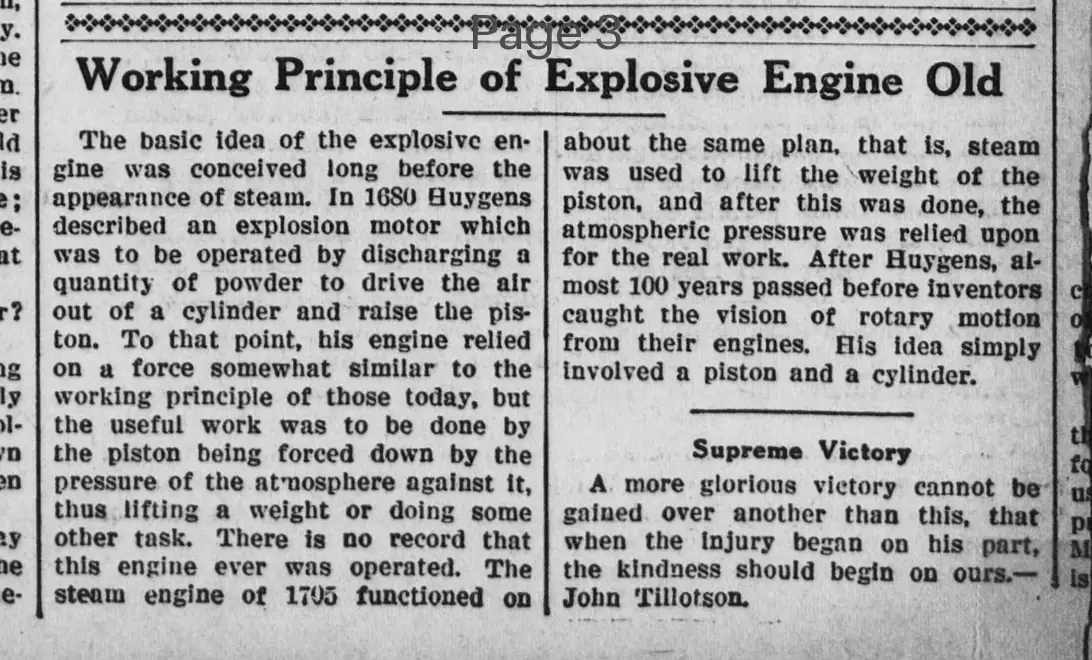
The basic idea of the explosive engine was conceived long before the appearance of steam. In 1680 Huygens described an explosion motor which was to be operated by discharging a quantity of powder to drive the air out of a cylinder and raise the piston. To that point, his engine relied on a force somewhat similar to the working principle of those today, but the useful work was to be done by the piston being forced down by the pressure of the atmosphere against it, thus lifting a weight or doing some other task. There is no record that this engine ever was operated. The steam engine of 1705 functioned on about the same plan, that is, steam was used to lift the weight of the piston, and after this was done, the atmospheric pressure was relied upon for the real work. After Huygens, almost 100 years passed before inventors caught the vision of rotary motion from their engines. His idea simply involved a piston and a cylinder.
The basic idea of the explosive engine was conceived long before the appearance of steam. In 1680 Huygens described an explosion motor which was to be operated by discharging a quantity of powder to drive the air out of a cylinder and raise the piston. To that point, his engine relied on a force somewhat similar to the working principle of those today, but the useful work was to be done by the piston being forced down by the pressure of the atmosphere against it, thus lifting a weight or doing some other task. There is no record that this engine ever was operated. The steam engine of 1705 functioned on about the same plan, that is, steam was used to lift the weight of the piston, and after this was done, the atmospheric pressure was relied upon for the real work. After Huygens, almost 100 years passed before inventors caught the vision of rotary motion from their engines. His idea simply involved a piston and a cylinder.
What sub-type of article is it?
Essay
What keywords are associated?
Explosive Engine
Huygens
Steam Engine
Piston
Cylinder
Atmospheric Pressure
Rotary Motion
Literary Details
Title
Working Principle Of Explosive Engine Old
Subject
Historical Explanation Of Early Engine Principles
Form / Style
Prose Reflection On Invention History
Key Lines
In 1680 Huygens Described An Explosion Motor Which Was To Be Operated By Discharging A Quantity Of Powder To Drive The Air Out Of A Cylinder And Raise The Piston.
The Steam Engine Of 1705 Functioned On About The Same Plan, That Is, Steam Was Used To Lift The Weight Of The Piston, And After This Was Done, The Atmospheric Pressure Was Relied Upon For The Real Work.