Thank you for visiting SNEWPapers!
Sign up free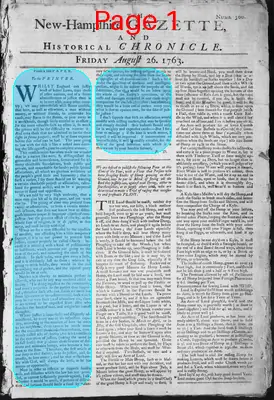
Letter to Editor
August 26, 1763
The New Hampshire Gazette And Historical Chronicle
Portsmouth, Greenland, Rockingham County, New Hampshire
What is this article about?
A letter critiques superficial charity and proposes a voluntary fund by affluent individuals to help the poor access justice in costly legal battles against oppressors, emphasizing that true charity means doing justice and loving mercy.
Clipping
OCR Quality
98%
Excellent
Full Text
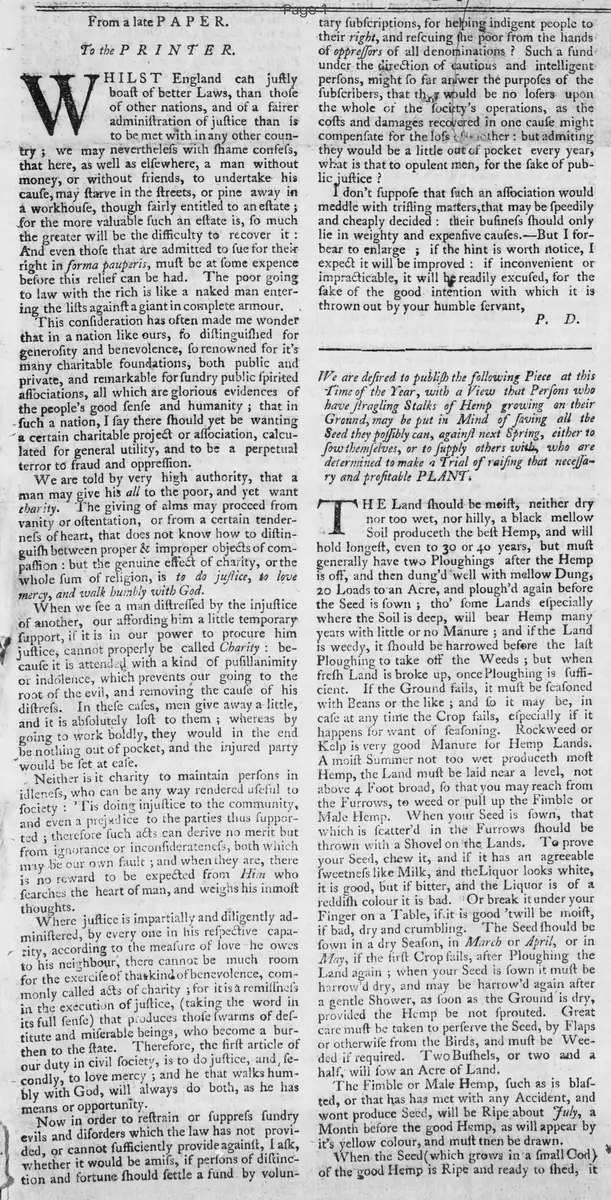
From a late PAPER.
To the PRINTER.
WHILST England can justly boast of better Laws, than those of other nations, and of a fairer administration of justice than is to be met with in any other country; we may nevertheless with shame confess, that here, as well as elsewhere, a man without money, or without friends, to undertake his cause, may starve in the streets, or pine away in a workhouse, though fairly entitled to an estate: for the more valuable such an estate is, so much the greater will be the difficulty to recover it: And even those that are admitted to sue for their right in forma pauperis, must be at some expence before this relief can be had. The poor going to law with the rich is like a naked man entering the lists against a giant in complete armour.
This consideration has often made me wonder that in a nation like ours, so distinguished for generosity and benevolence, so renowned for its many charitable foundations, both public and private, and remarkable for sundry public spirited associations, all which are glorious evidences of the people's good sense and humanity; that in such a nation, I say there should yet be wanting a certain charitable project or association, calculated for general utility, and to be a perpetual terror to fraud and oppression.
We are told by very high authority, that a man may give his all to the poor, and yet want charity. The giving of alms may proceed from vanity or ostentation, or from a certain tenderness of heart, that does not know how to distinguish between proper & improper objects of compassion: but the genuine effect of charity, or the whole sum of religion, is to do justice, to love mercy, and walk humbly with God.
When we see a man distressed by the injustice of another, our affording him a little temporary support, if it is in our power to procure him justice, cannot properly be called Charity: because it is attended with a kind of pusillanimity or indolence, which prevents our going to the root of the evil, and removing the cause of his distress. In these cases, men give away a little, and it is absolutely lost to them; whereas by going to work boldly, they would in the end be nothing out of pocket, and the injured party would be set at ease.
Neither is it charity to maintain persons in idleness, who can be any way rendered useful to society: 'Tis doing injustice to the community, and even a prejudice to the parties thus supported; therefore such acts can derive no merit but from ignorance or inconsiderateness, both which may be our own fault; and when they are, there is no reward to be expected from Him who searches the heart of man, and weighs his inmost thoughts.
Where justice is impartially and diligently administered, by every one in his respective capacity, according to the measure of love he owes to his neighbour, there cannot be much room for the exercise of that kind of benevolence, commonly called acts of charity; for it is a remissness in the execution of justice, (taking the word in its full sense) that produces those swarms of destitute and miserable beings, who become a burden to the state. Therefore, the first article of our duty in civil society, is to do justice, and, secondly, to love mercy; and he that walks humbly with God, will always do both, as he has means or opportunity.
Now in order to restrain or suppress sundry evils and disorders which the law has not provided, or cannot sufficiently provide against, I ask, whether it would be amiss, if persons of distinction and fortune should settle a fund by voluntary subscriptions, for helping indigent people to their right, and rescuing the poor from the hands of oppressors of all denominations? Such a fund under the direction of cautious and intelligent persons, might so far answer the purposes of the subscribers, that they would be no losers upon the whole of the society's operations, as the costs and damages recovered in one cause might compensate for the loss in another: but admitting they would be a little out of pocket every year, what is that to opulent men, for the sake of public justice?
I don't suppose that such an association would meddle with trifling matters, that may be speedily and cheaply decided: their business should only lie in weighty and expensive causes.--But I forbear to enlarge; if the hint is worth notice, I expect it will be improved: if inconvenient or impracticable, it will be readily excused, for the sake of the good intention with which it is thrown out by your humble servant,
P. D.
To the PRINTER.
WHILST England can justly boast of better Laws, than those of other nations, and of a fairer administration of justice than is to be met with in any other country; we may nevertheless with shame confess, that here, as well as elsewhere, a man without money, or without friends, to undertake his cause, may starve in the streets, or pine away in a workhouse, though fairly entitled to an estate: for the more valuable such an estate is, so much the greater will be the difficulty to recover it: And even those that are admitted to sue for their right in forma pauperis, must be at some expence before this relief can be had. The poor going to law with the rich is like a naked man entering the lists against a giant in complete armour.
This consideration has often made me wonder that in a nation like ours, so distinguished for generosity and benevolence, so renowned for its many charitable foundations, both public and private, and remarkable for sundry public spirited associations, all which are glorious evidences of the people's good sense and humanity; that in such a nation, I say there should yet be wanting a certain charitable project or association, calculated for general utility, and to be a perpetual terror to fraud and oppression.
We are told by very high authority, that a man may give his all to the poor, and yet want charity. The giving of alms may proceed from vanity or ostentation, or from a certain tenderness of heart, that does not know how to distinguish between proper & improper objects of compassion: but the genuine effect of charity, or the whole sum of religion, is to do justice, to love mercy, and walk humbly with God.
When we see a man distressed by the injustice of another, our affording him a little temporary support, if it is in our power to procure him justice, cannot properly be called Charity: because it is attended with a kind of pusillanimity or indolence, which prevents our going to the root of the evil, and removing the cause of his distress. In these cases, men give away a little, and it is absolutely lost to them; whereas by going to work boldly, they would in the end be nothing out of pocket, and the injured party would be set at ease.
Neither is it charity to maintain persons in idleness, who can be any way rendered useful to society: 'Tis doing injustice to the community, and even a prejudice to the parties thus supported; therefore such acts can derive no merit but from ignorance or inconsiderateness, both which may be our own fault; and when they are, there is no reward to be expected from Him who searches the heart of man, and weighs his inmost thoughts.
Where justice is impartially and diligently administered, by every one in his respective capacity, according to the measure of love he owes to his neighbour, there cannot be much room for the exercise of that kind of benevolence, commonly called acts of charity; for it is a remissness in the execution of justice, (taking the word in its full sense) that produces those swarms of destitute and miserable beings, who become a burden to the state. Therefore, the first article of our duty in civil society, is to do justice, and, secondly, to love mercy; and he that walks humbly with God, will always do both, as he has means or opportunity.
Now in order to restrain or suppress sundry evils and disorders which the law has not provided, or cannot sufficiently provide against, I ask, whether it would be amiss, if persons of distinction and fortune should settle a fund by voluntary subscriptions, for helping indigent people to their right, and rescuing the poor from the hands of oppressors of all denominations? Such a fund under the direction of cautious and intelligent persons, might so far answer the purposes of the subscribers, that they would be no losers upon the whole of the society's operations, as the costs and damages recovered in one cause might compensate for the loss in another: but admitting they would be a little out of pocket every year, what is that to opulent men, for the sake of public justice?
I don't suppose that such an association would meddle with trifling matters, that may be speedily and cheaply decided: their business should only lie in weighty and expensive causes.--But I forbear to enlarge; if the hint is worth notice, I expect it will be improved: if inconvenient or impracticable, it will be readily excused, for the sake of the good intention with which it is thrown out by your humble servant,
P. D.
What sub-type of article is it?
Ethical Moral
Persuasive
Reflective
What themes does it cover?
Morality
Social Issues
What keywords are associated?
Charity
Justice
Poor
Oppression
Legal Aid
Association
Fund
Benevolence
What entities or persons were involved?
P. D.
To The Printer.
Letter to Editor Details
Author
P. D.
Recipient
To The Printer.
Main Argument
true charity requires ensuring justice for the poor rather than mere alms-giving; proposes a voluntary fund by the wealthy to finance legal aid for indigent people in significant cases against oppressors.
Notable Details
Analogy Of Poor Litigant As 'Naked Man Entering The Lists Against A Giant In Complete Armour'
References 'Very High Authority' On Charity
Quotes Principle: 'Do Justice, To Love Mercy, And Walk Humbly With God'