Thank you for visiting SNEWPapers!
Sign up free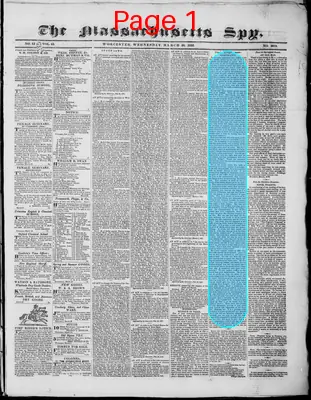
Story
March 28, 1832
The Massachusetts Spy
Worcester, Worcester County, Massachusetts
What is this article about?
An opinion piece from the Springfield Gazette on temperance, arguing that selling ardent spirits is immoral and sinful, as it is useless, harmful to health, and akin to peddling poison, urging sellers to abandon the trade on moral and divine grounds.
Clipping

OCR Quality
95%
Excellent
Full Text
From the Springfield Gazette.
TEMPERANCE
Is not every individual who traffics in ardent spirits, bound by the law of God to abandon the business at once? For myself, I seem to see so clearly that this is a duty, that I could no more sell spirit, as an article of common use, than I could sell a dose of arsenic, which I knew he wanted to put an end to his existence. If there would be guilt attached to the latter act, there would be also to the former; both tend to destroy life, though in the one case its victims might not be hurried so rapidly to the grave, as in the others some of the many reasons, which have presented themselves to my mind, why any person ought to abandon the traffic in ardent spirits, are the following:
In the first place ardent spirits may be said to be useless. They do no man in health any good. Had I made this assertion half a dozen years ago, I might have been thought even by many of the wise and good, as bereft of my reason. But now the assertion can be supported by a host of stubborn facts. Thousands and tens of thousands have declared as the result of their own experience, that strong drink is useless, altogether so for persons in health; and this declaration is made, it should be remembered, not by professional men alone, who it has been said do not so much need the stimulus. but it is made also by individuals in all the laborious and exposed employments of life; men who work in furnaces,—who build mill dams,—who gather the harvests of summer, and who face the winds and the storms of winter. have solemnly declared to us, that from actual experiment they do know that strong drink is useless—that it does no healthy man the least good whatever.
Now then the man who sells spirit, is disposing of that which is of no benefit to mankind. He is making it his business to impose that upon others, and is taking money for it, when in fact those who receive it, receive that which is of no value. But can a man follow such an employment, and be innocent? Can he thus deal with his neighbor and have a clear conscience? Can he continue to do it with the light now shed on this subject, and find acceptance with this righteous Judge? These are questions that concern those who are still carrying on this useless business.
But in the second place, this traffic is something more than useless—it is hurtful. It not only does no good, but it is connected with an untold amount of evil. If the strong drink disposed of was simply useless. the guilt of the traffic would be lessened; but it is to be remembered, that without any figure it may be said strong drink kills men. This assertion is made on the authority of the ablest physicians in our country. They have declared and have published the declaration to the world., that spirits in any quantity for persons in health, are highly injurious; that they are the origin of a multitude of diseases, and that they predispose the system to the influence of most others. Now what should we think of the man, who kept fevers, and pleurisies, and palsies to sell, because forsooth the people were disposed to buy them, and he could thus make a little money. But this the man is doing, who traffics in strong drink. He is sending disease through the community. He communicates to the families around him liver complaints, fevers, the dropsy, the gout, fits, delirium tremens, and the like. But can one thus send out disease, sickness and death in all its horrid shapes, into the community and be without guilt? Let those who are engaged in the traffic of strong drink look at the subject in this light. It is in vain to turn away from the work of death, which they are accomplishing. It exists, and they cannot but know it. Can they then go on in this business, and be without sin? No, surely they cannot. Let them then abandon this work at once. Let them not stop to count up their dollars and cents, that will be lost by it; but if their business is thus destructive to the health and life of their fellow men, give it up, and that it is thus destructive, is certain. Can a man then continue it, and wash his hands in innocence?
But I have another reason to offer why this traffic should be abandoned. And it is this, no man can continue it, and plead a sense of duty. No one will dare say that God requires him to spend his days in selling this poison to his fellow men. He who is thus carrying disease and death into the families around him, will not assert. that it is the will of heaven he should follow a business that is connected with such consequences? No one neither traffics in this article from pure benevolence. He cannot say, he sends out, from his store, or bar room, strong drink for the same reason, that he would visit his neighbor and pray with him if he were sick, or for the same reason that he would give him food, if he were perishing from hunger. It is certain that such men cannot plead a justification of their business on the ground of its benevolence; and it is certain, also, that they can not keep themselves in countenance here, by any command of the merciful God.— And it is not duty but a love of money, it is believed, that is carrying on this dreadful traffic. Let it cease then. Let every individual fly from it, as he would from the curse of heaven. Turn away the contents of your decanters; roll out of your store, your barrels and hogsheads of the liquid fire. Hesitate not; it is a glorious work. Posterity will rise up and call you blessed. But if you will not hereafter abandon this business. you are sure to lose the confidence of the respectable portion of the community,—you will carry in your bosom a guilty conscience,—and at the day of dread decision, it will be found, that if the drunkard cannot enter heaven, neither can he who made him such.
TEMPERANCE
Is not every individual who traffics in ardent spirits, bound by the law of God to abandon the business at once? For myself, I seem to see so clearly that this is a duty, that I could no more sell spirit, as an article of common use, than I could sell a dose of arsenic, which I knew he wanted to put an end to his existence. If there would be guilt attached to the latter act, there would be also to the former; both tend to destroy life, though in the one case its victims might not be hurried so rapidly to the grave, as in the others some of the many reasons, which have presented themselves to my mind, why any person ought to abandon the traffic in ardent spirits, are the following:
In the first place ardent spirits may be said to be useless. They do no man in health any good. Had I made this assertion half a dozen years ago, I might have been thought even by many of the wise and good, as bereft of my reason. But now the assertion can be supported by a host of stubborn facts. Thousands and tens of thousands have declared as the result of their own experience, that strong drink is useless, altogether so for persons in health; and this declaration is made, it should be remembered, not by professional men alone, who it has been said do not so much need the stimulus. but it is made also by individuals in all the laborious and exposed employments of life; men who work in furnaces,—who build mill dams,—who gather the harvests of summer, and who face the winds and the storms of winter. have solemnly declared to us, that from actual experiment they do know that strong drink is useless—that it does no healthy man the least good whatever.
Now then the man who sells spirit, is disposing of that which is of no benefit to mankind. He is making it his business to impose that upon others, and is taking money for it, when in fact those who receive it, receive that which is of no value. But can a man follow such an employment, and be innocent? Can he thus deal with his neighbor and have a clear conscience? Can he continue to do it with the light now shed on this subject, and find acceptance with this righteous Judge? These are questions that concern those who are still carrying on this useless business.
But in the second place, this traffic is something more than useless—it is hurtful. It not only does no good, but it is connected with an untold amount of evil. If the strong drink disposed of was simply useless. the guilt of the traffic would be lessened; but it is to be remembered, that without any figure it may be said strong drink kills men. This assertion is made on the authority of the ablest physicians in our country. They have declared and have published the declaration to the world., that spirits in any quantity for persons in health, are highly injurious; that they are the origin of a multitude of diseases, and that they predispose the system to the influence of most others. Now what should we think of the man, who kept fevers, and pleurisies, and palsies to sell, because forsooth the people were disposed to buy them, and he could thus make a little money. But this the man is doing, who traffics in strong drink. He is sending disease through the community. He communicates to the families around him liver complaints, fevers, the dropsy, the gout, fits, delirium tremens, and the like. But can one thus send out disease, sickness and death in all its horrid shapes, into the community and be without guilt? Let those who are engaged in the traffic of strong drink look at the subject in this light. It is in vain to turn away from the work of death, which they are accomplishing. It exists, and they cannot but know it. Can they then go on in this business, and be without sin? No, surely they cannot. Let them then abandon this work at once. Let them not stop to count up their dollars and cents, that will be lost by it; but if their business is thus destructive to the health and life of their fellow men, give it up, and that it is thus destructive, is certain. Can a man then continue it, and wash his hands in innocence?
But I have another reason to offer why this traffic should be abandoned. And it is this, no man can continue it, and plead a sense of duty. No one will dare say that God requires him to spend his days in selling this poison to his fellow men. He who is thus carrying disease and death into the families around him, will not assert. that it is the will of heaven he should follow a business that is connected with such consequences? No one neither traffics in this article from pure benevolence. He cannot say, he sends out, from his store, or bar room, strong drink for the same reason, that he would visit his neighbor and pray with him if he were sick, or for the same reason that he would give him food, if he were perishing from hunger. It is certain that such men cannot plead a justification of their business on the ground of its benevolence; and it is certain, also, that they can not keep themselves in countenance here, by any command of the merciful God.— And it is not duty but a love of money, it is believed, that is carrying on this dreadful traffic. Let it cease then. Let every individual fly from it, as he would from the curse of heaven. Turn away the contents of your decanters; roll out of your store, your barrels and hogsheads of the liquid fire. Hesitate not; it is a glorious work. Posterity will rise up and call you blessed. But if you will not hereafter abandon this business. you are sure to lose the confidence of the respectable portion of the community,—you will carry in your bosom a guilty conscience,—and at the day of dread decision, it will be found, that if the drunkard cannot enter heaven, neither can he who made him such.
What sub-type of article is it?
Temperance Advocacy
Moral Persuasion
What themes does it cover?
Moral Virtue
Misfortune
Providence Divine
What keywords are associated?
Temperance
Ardent Spirits
Moral Duty
Alcohol Harm
Divine Judgment
Health Risks
Sinful Trade
Where did it happen?
Springfield
Story Details
Location
Springfield
Story Details
The author presents moral arguments against trafficking in ardent spirits, asserting it is useless, harmful to health, and contrary to divine duty, comparing it to selling poison and urging sellers to immediately cease the business to avoid guilt and damnation.