Thank you for visiting SNEWPapers!
Sign up free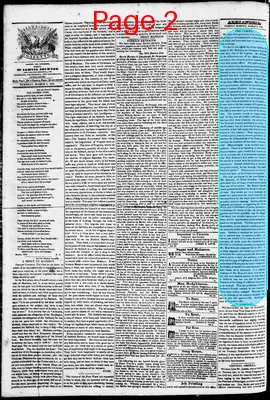
Editorial
March 3, 1829
Phenix Gazette
Alexandria, Virginia
What is this article about?
Editorial critiques President Jackson's cabinet appointments, questioning the unprecedented inclusion of Postmaster General McLean as a cabinet minister and the surprise selection of unqualified North Carolinian John Branch for Secretary of the Navy, seeing it as partisan and ignoring better candidates.
Clipping

OCR Quality
95%
Excellent
Full Text
THE CABINET.
We have been prevented from finishing the observations we commenced on Saturday under this head, and have only time to continue them this morning.
We find in the official list of the Cabinet, the name of Mr. McLean, as Postmaster General; next after that of Mr. Ingham. Mr. McLean, in the administration of the affairs of his department, has certainly proved himself to be a very able public officer. His politics have never interfered with his business, and of course it has mattered nothing with us, whether he was friendly or not to the Administration. We are pleased that Gen. Jackson has retained him in the situation, both on account of himself, and of the Post Office Department. But it certainly is questionable, whether he should have been made a Cabinet Minister. At the organization of the Departments, it was never intended that the Post Master General should rank with the Secretaries, much less that he should have a seat with them as advisers of the President.-- It was only at the last session of Congress that his pay (on account of the increasing duties of his office) was raised up to that of the Secretaries. The present course is unprecedented, and we beg that our readers will take in connection with these remarks, the article from the National Journal, published yesterday. If the President has the authority he here claims contrary to law and usage, why may he not call others to his Cabinet? Why may he not establish a privy council, or even go further, and destroy the independence of the Senate, by admitting the members of that body to his councils? Obsta principiis is an excellent motto in politics. There is no knowing to what extent encroachments upon established custom may not be carried; and it is somewhat remarkable that Gen. Jackson's first public act should be so exactly in unison with the predictions of his opponents. Instead of following in the line of his predecessors, he has already "shot madly from his sphere."
Heaven grant his future aberrations may not be of more consequence!
The next gentleman in the new Cabinet is Mr. Branch, of North Carolina. This appointment has, perhaps, created more surprise than any of the others. Mr. Branch does not stand prominent before the nation in any point of view. His talents are very moderate; his name as a party man not much heard of; and his experience in the department to which he is called, absolutely wanting. Besides, there was palpable ingratitude in neglecting Mr. Woodberry, and recklessness of public opinion in overlooking the claims of men far more distinguished and better qualified than Mr. Branch The South was already represented in the Cabinet, and the appointment could not have been made on that ground. We look upon the Navy Department, in our present condition, as one of the most important connected with the Government. Besides, it requires not only an active, but a talented man to conduct its affairs. Its extent, the variety of its uses, the extent of its interests, all press upon the consideration.-- We feel no hesitation, therefore, in saying, that Mr. Branch is not competent for the office. If, as many suppose, the Cabinet has been formed principally for a party purpose, Mr. Branch may indeed, serve to curb the ambition, or interfere with the intrigue of Ingham, & nullify the obsequiousness of Eaton; but he cannot himself ever be a leader, or benefit in a material manner those with whom he is interested. It is sufficient evidence of Mr. Branch's favor with the people, and their exalted opinion of him, when it is believed that not one half of them ever dreamed of his being of sufficient consequence to be noticed. Was the prediction of General Jackson's friends realised in this instance-- Were their wishes realised? Were the interests or feelings of the country consulted? Impartial men will answer--No. Honest party men will answer--No.
(To be continued.)
We have been prevented from finishing the observations we commenced on Saturday under this head, and have only time to continue them this morning.
We find in the official list of the Cabinet, the name of Mr. McLean, as Postmaster General; next after that of Mr. Ingham. Mr. McLean, in the administration of the affairs of his department, has certainly proved himself to be a very able public officer. His politics have never interfered with his business, and of course it has mattered nothing with us, whether he was friendly or not to the Administration. We are pleased that Gen. Jackson has retained him in the situation, both on account of himself, and of the Post Office Department. But it certainly is questionable, whether he should have been made a Cabinet Minister. At the organization of the Departments, it was never intended that the Post Master General should rank with the Secretaries, much less that he should have a seat with them as advisers of the President.-- It was only at the last session of Congress that his pay (on account of the increasing duties of his office) was raised up to that of the Secretaries. The present course is unprecedented, and we beg that our readers will take in connection with these remarks, the article from the National Journal, published yesterday. If the President has the authority he here claims contrary to law and usage, why may he not call others to his Cabinet? Why may he not establish a privy council, or even go further, and destroy the independence of the Senate, by admitting the members of that body to his councils? Obsta principiis is an excellent motto in politics. There is no knowing to what extent encroachments upon established custom may not be carried; and it is somewhat remarkable that Gen. Jackson's first public act should be so exactly in unison with the predictions of his opponents. Instead of following in the line of his predecessors, he has already "shot madly from his sphere."
Heaven grant his future aberrations may not be of more consequence!
The next gentleman in the new Cabinet is Mr. Branch, of North Carolina. This appointment has, perhaps, created more surprise than any of the others. Mr. Branch does not stand prominent before the nation in any point of view. His talents are very moderate; his name as a party man not much heard of; and his experience in the department to which he is called, absolutely wanting. Besides, there was palpable ingratitude in neglecting Mr. Woodberry, and recklessness of public opinion in overlooking the claims of men far more distinguished and better qualified than Mr. Branch The South was already represented in the Cabinet, and the appointment could not have been made on that ground. We look upon the Navy Department, in our present condition, as one of the most important connected with the Government. Besides, it requires not only an active, but a talented man to conduct its affairs. Its extent, the variety of its uses, the extent of its interests, all press upon the consideration.-- We feel no hesitation, therefore, in saying, that Mr. Branch is not competent for the office. If, as many suppose, the Cabinet has been formed principally for a party purpose, Mr. Branch may indeed, serve to curb the ambition, or interfere with the intrigue of Ingham, & nullify the obsequiousness of Eaton; but he cannot himself ever be a leader, or benefit in a material manner those with whom he is interested. It is sufficient evidence of Mr. Branch's favor with the people, and their exalted opinion of him, when it is believed that not one half of them ever dreamed of his being of sufficient consequence to be noticed. Was the prediction of General Jackson's friends realised in this instance-- Were their wishes realised? Were the interests or feelings of the country consulted? Impartial men will answer--No. Honest party men will answer--No.
(To be continued.)
What sub-type of article is it?
Partisan Politics
Constitutional
What keywords are associated?
Jackson Cabinet
Postmaster General
Navy Department
Political Appointments
Cabinet Precedent
Party Intrigue
What entities or persons were involved?
Gen. Jackson
Mr. Mclean
Mr. Ingham
Mr. Branch
Mr. Woodberry
Eaton
Editorial Details
Primary Topic
Critique Of Jackson's Cabinet Appointments
Stance / Tone
Critical Of Unprecedented And Unqualified Selections
Key Figures
Gen. Jackson
Mr. Mclean
Mr. Ingham
Mr. Branch
Mr. Woodberry
Eaton
Key Arguments
Mclean Is Able But Postmaster General Should Not Rank As Cabinet Minister
Inclusion Of Postmaster General Is Unprecedented And Risks Further Encroachments On Custom
Branch's Appointment Surprises Due To His Moderate Talents And Lack Of Experience
Neglects Better Qualified Candidates Like Woodberry, Shows Ingratitude And Recklessness
Navy Department Requires A Talented Leader, Branch Is Incompetent
Cabinet Formed For Party Purposes, Not National Interest