Thank you for visiting SNEWPapers!
Sign up free
The New Hampshire Gazette And Historical Chronicle
Portsmouth, Greenland, Rockingham County, New Hampshire
What is this article about?
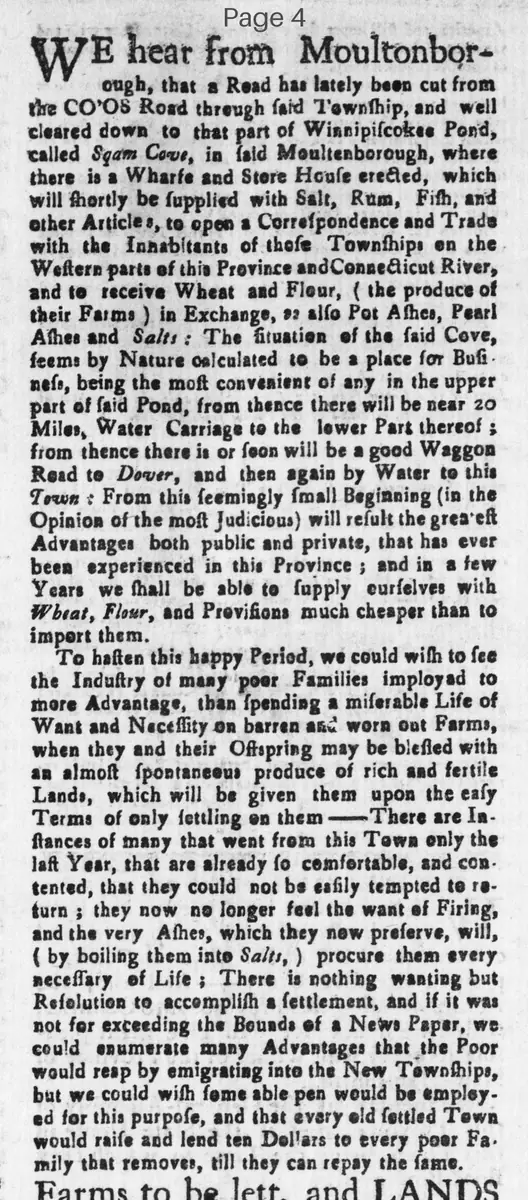
A new road has been cut from the Coos Road through Moultonborough to Squam Cove on Winnipicokee Pond, enabling trade in salt, rum, fish for wheat, flour, pot ashes, and more with western townships and Connecticut River inhabitants. The development promises cheaper local provisions. The article urges poor families to migrate to fertile new townships, noting benefits like easy settlement terms and self-sufficiency from ashes.
Clipping
OCR Quality
Full Text
To hasten this happy Period, we could wish to see the Industry of many poor Families imployed to more Advantage, than spending a miserable Life of Want and Necessity on barren and worn Out Farms, when they and their Offspring may be blessed with an almost spontaneous produce of rich and fertile Lands, which will be given them upon the easy Terms of only settling on them -- There are Instances of many that went from this Town only the last Year, that are already so comfortable, and contented, that they could not be easily tempted to return; they now no longer feel the want of Firing, and the very Ashes, which they now preserve, will, (by boiling them into Salts,) procure them every necessary of Life; There is nothing wanting but Resolution to accomplish a settlement, and if it was not for exceeding the Bounds of a News Paper, we could enumerate many Advantages that the Poor would reap by emigrating into the New Townships, but we could wish some able pen would be employed for this purpose, and that every old settled Town would raise and lend ten Dollars to every poor Family that removes, till they can repay the same.
What sub-type of article is it?
What keywords are associated?
Where did it happen?
Domestic News Details
Primary Location
Moultonborough
Outcome
expected advantages include cheaper wheat, flour, and provisions; comfortable settlements for migrants with self-sufficiency from pot ashes and fertile lands.
Event Details
A road has been cut from the Coos Road through Moultonborough to Squam Cove on Winnipicokee Pond, where a wharf and store house are erected for trade in salt, rum, fish, and other articles exchanged for wheat, flour, pot ashes, pearl ashes, and salts with western townships and Connecticut River inhabitants. The cove's location supports business with water and wagon carriage to Dover and the town. This development is anticipated to bring great public and private advantages. The text encourages poor families to migrate from barren farms to fertile new townships on easy settlement terms, citing examples of recent comfortable settlers who produce necessities from ashes, and suggests towns lend ten dollars to emigrants.