Thank you for visiting SNEWPapers!
Sign up free
Literary
September 5, 1922
Albuquerque Morning Journal
Albuquerque, Bernalillo County, New Mexico
What is this article about?
In chapter 67 of 'Four Dancing Feet,' Gertie tells her former suitor George Murphy about her upcoming marriage to Tom Norris from the west, describing Tom's kindness and reassuring George of their continued friendship despite class differences. George hides his heartbreak and wishes her well.
Clipping
OCR Quality
95%
Excellent
Full Text
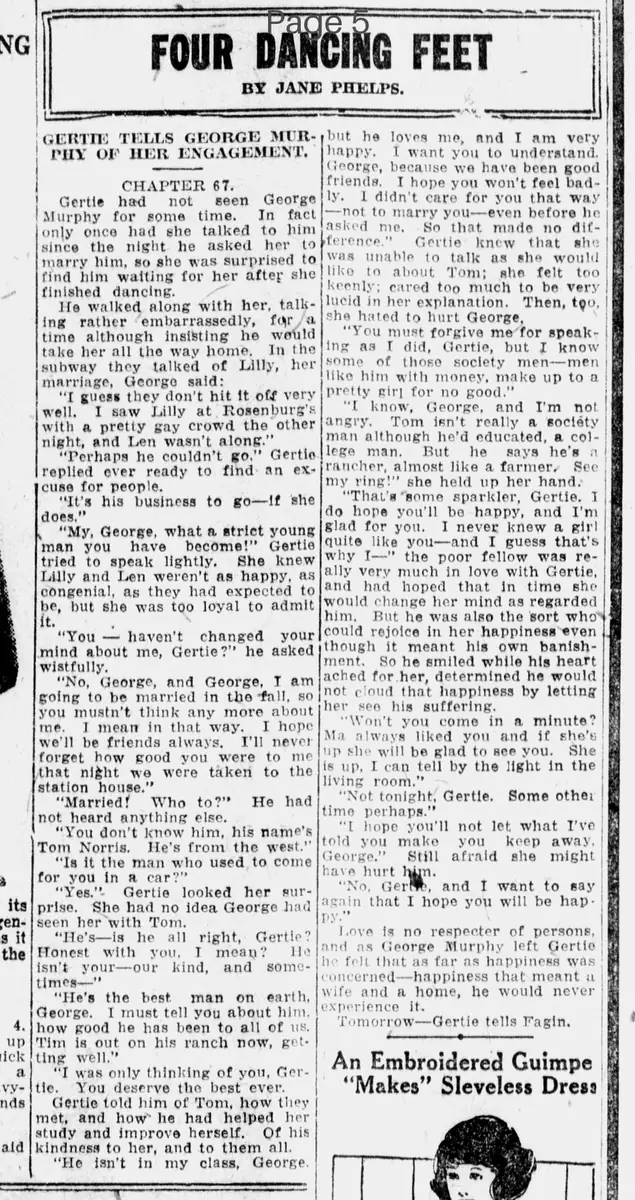
FOUR DANCING FEET
[Possibly 'END OF HER ENGAGEMENT' or similar, but preserved as 'PHY OF HER ENGAGEMENT']
CHAPTER 67,
Gertie had not seen George Murphy for some time. In fact only once had she talked to him since the night he asked her to marry him, so she was surprised to find him waiting for her after she finished dancing.
He walked along with her, talking rather embarrassedly, for a time although insisting he would take her all the way home. In the subway they talked of Lilly, her marriage, George said:
"I guess they don't hit it off very well. I saw Lilly at Rosenburg's with a pretty gay crowd the other night, and Len wasn't along."
"Perhaps he couldn't go," Gertie replied ever ready to find an excuse for people.
"It's his business to go—if she does."
"My, George, what a strict young man you have become!" Gertie tried to speak lightly. She knew Lilly and Len weren't as happy, as congenial, as they had expected to be, but she was too loyal to admit it.
"You—haven't changed your mind about me, Gertie?" he asked wistfully.
"No, George, and George, I am going to be married in the fall, so you mustn't think any more about me. I mean in that way. I hope we'll be friends always. I'll never forget how good you were to me that night we were taken to the station house."
"Married! Who to?"
He had not heard anything else.
"You don't know him. His name's Tom Norris. He's from the west."
"Is it the man who used to come for you in a car?"
"Yes."—Gertie looked her surprise. She had no idea George had seen her with Tom.
"He's—is he all right, Gertie? Honest with you, I mean? He isn't your—our kind, and some—times—"
"He's the best man on earth, George. I must tell you about him, how good he has been to all of us. Tim is out on his ranch now, getting well."
"I was only thinking of you, Gertie. You deserve the best ever."
Gertie told him of Tom, how they met, and how he had helped her study and improve herself. Of his kindness to her, and to them all.
"He isn't in my class, George, but I'm happy. I want you to understand, George, because we have been good friends. I hope you won't feel badly. I didn't care for you that way—not to marry you—even before he asked me. So that made no difference."
Gertie knew that she was unable to talk as she would like to about Tom; she felt too keenly; cared too much to be very lucid in her explanation. Then, too, she hated to hurt George.
"You must forgive me for speaking as I did, Gertie, but I know some of those society men—men like him with money—make up to a pretty girl for no good."
"I know, George, and I'm not angry. Tom isn't really a society man although he's educated, a college man. But he says he's a rancher, almost like a farmer. See my ring!" she held up her hand.
"That's some sparkler, Gertie. I do hope you'll be happy, and I'm glad for you. I never knew a girl quite like you—and I guess that's why I—" the poor fellow was really very much in love with Gertie, and had hoped that in time she would change her mind as regarded him. But he was also the sort who could rejoice in her happiness even though it meant his own banishment. So he smiled while his heart ached for her, determined he would not cloud that happiness by letting her see his suffering.
"Won't you come in a minute? Ma always liked you and if she's up she will be glad to see you. She is up. I can tell by the light in the living room."
"Not tonight, Gertie. Some other time perhaps."
"I hope you'll not let what I've told you make you keep away, George."
Still afraid she might have hurt him.
"No, Gertie, and I want to say again that I hope you will be happy."
Love is no respecter of persons, and as George Murphy left Gertie he felt that as far as happiness was concerned—happiness that meant a wife and a home—he would never experience it.
Tomorrow—Gertie tells Fagin.
[Possibly 'END OF HER ENGAGEMENT' or similar, but preserved as 'PHY OF HER ENGAGEMENT']
CHAPTER 67,
Gertie had not seen George Murphy for some time. In fact only once had she talked to him since the night he asked her to marry him, so she was surprised to find him waiting for her after she finished dancing.
He walked along with her, talking rather embarrassedly, for a time although insisting he would take her all the way home. In the subway they talked of Lilly, her marriage, George said:
"I guess they don't hit it off very well. I saw Lilly at Rosenburg's with a pretty gay crowd the other night, and Len wasn't along."
"Perhaps he couldn't go," Gertie replied ever ready to find an excuse for people.
"It's his business to go—if she does."
"My, George, what a strict young man you have become!" Gertie tried to speak lightly. She knew Lilly and Len weren't as happy, as congenial, as they had expected to be, but she was too loyal to admit it.
"You—haven't changed your mind about me, Gertie?" he asked wistfully.
"No, George, and George, I am going to be married in the fall, so you mustn't think any more about me. I mean in that way. I hope we'll be friends always. I'll never forget how good you were to me that night we were taken to the station house."
"Married! Who to?"
He had not heard anything else.
"You don't know him. His name's Tom Norris. He's from the west."
"Is it the man who used to come for you in a car?"
"Yes."—Gertie looked her surprise. She had no idea George had seen her with Tom.
"He's—is he all right, Gertie? Honest with you, I mean? He isn't your—our kind, and some—times—"
"He's the best man on earth, George. I must tell you about him, how good he has been to all of us. Tim is out on his ranch now, getting well."
"I was only thinking of you, Gertie. You deserve the best ever."
Gertie told him of Tom, how they met, and how he had helped her study and improve herself. Of his kindness to her, and to them all.
"He isn't in my class, George, but I'm happy. I want you to understand, George, because we have been good friends. I hope you won't feel badly. I didn't care for you that way—not to marry you—even before he asked me. So that made no difference."
Gertie knew that she was unable to talk as she would like to about Tom; she felt too keenly; cared too much to be very lucid in her explanation. Then, too, she hated to hurt George.
"You must forgive me for speaking as I did, Gertie, but I know some of those society men—men like him with money—make up to a pretty girl for no good."
"I know, George, and I'm not angry. Tom isn't really a society man although he's educated, a college man. But he says he's a rancher, almost like a farmer. See my ring!" she held up her hand.
"That's some sparkler, Gertie. I do hope you'll be happy, and I'm glad for you. I never knew a girl quite like you—and I guess that's why I—" the poor fellow was really very much in love with Gertie, and had hoped that in time she would change her mind as regarded him. But he was also the sort who could rejoice in her happiness even though it meant his own banishment. So he smiled while his heart ached for her, determined he would not cloud that happiness by letting her see his suffering.
"Won't you come in a minute? Ma always liked you and if she's up she will be glad to see you. She is up. I can tell by the light in the living room."
"Not tonight, Gertie. Some other time perhaps."
"I hope you'll not let what I've told you make you keep away, George."
Still afraid she might have hurt him.
"No, Gertie, and I want to say again that I hope you will be happy."
Love is no respecter of persons, and as George Murphy left Gertie he felt that as far as happiness was concerned—happiness that meant a wife and a home—he would never experience it.
Tomorrow—Gertie tells Fagin.
What sub-type of article is it?
Prose Fiction
What themes does it cover?
Love Romance
Social Manners
What keywords are associated?
Engagement
Marriage
Friendship
Class Difference
Loyalty
Literary Details
Title
Chapter 67
Key Lines
"You—Haven't Changed Your Mind About Me, Gertie?" He Asked Wistfully.
"Married! Who To?"
"He's The Best Man On Earth, George."
"I Hope You'll Be Happy, And I'm Glad For You."
Love Is No Respecter Of Persons, And As George Murphy Left Gertie He Felt That As Far As Happiness Was Concerned—Happiness That Meant A Wife And A Home—He Would Never Experience It.