Thank you for visiting SNEWPapers!
Sign up free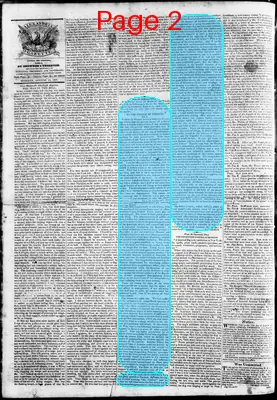
Editorial
August 20, 1827
Phenix Gazette
Alexandria, Virginia
What is this article about?
An anonymous Virginia farmer warns against the partisan obsession with electing Andrew Jackson, viewing it as a threat to republican liberty and institutions. Citing Jefferson's dying admonition and historical parallels to Caesar, Cromwell, and Napoleon, the author decries rising discord, disunion sentiments, and sycophantic editors amid national political turmoil.
Clipping
OCR Quality
98%
Excellent
Full Text
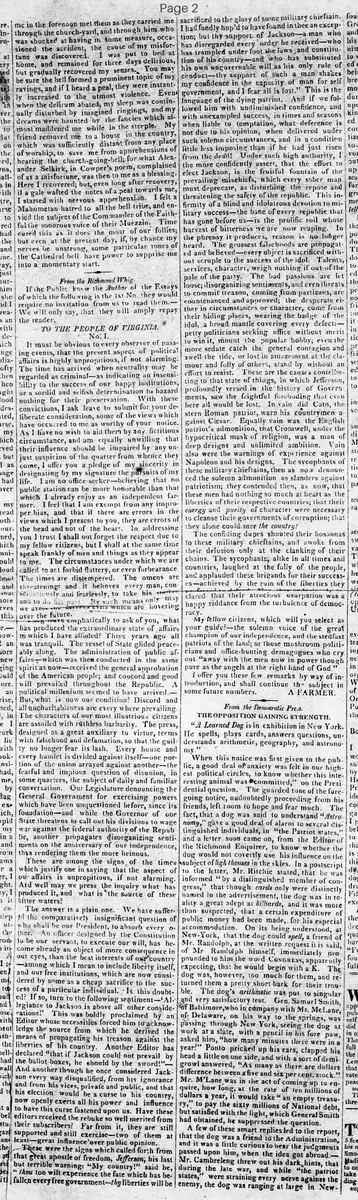
From the Richmond Whig.
If the Public knew the Author of the Essays of which the following is the 1st No. they would require no invitation from us to read them.— We will only say, that they will amply repay the reader.
TO THE PEOPLE OF VIRGINIA.
No. I.
It must be obvious to every observer of passing events, that the present aspect of political affairs is highly unpropitious, if not alarming. The time has arrived when neutrality may be regarded as criminal—as indicating an insensibility to the success of our happy institutions, or a sordid and selfish determination to hazard nothing for their preservation. With these convictions, I ask leave to submit for your deliberate consideration, some of the views which have occurred to me as worthy of your notice. As I have no wish to aid them by any fictitious circumstance, and am equally unwilling that their influence should be impaired by any unjust suspicion of the quarter from whence they come, I offer you a pledge of my sincerity in designating by my signature the pursuits of my life. I am no office seeker—believing that no public station can be more honorable than that which I already enjoy as an independent farmer. I feel that I am exempt from any improper bias, and that if there are errors in the views which I present to you, they are errors of the head and not of the heart. In addressing you I trust I shall not forget the respect due to my fellow citizens, but I shall at the same time speak frankly of men and things as they appear to me. The circumstances under which we are called to act forbid flattery, or even forbearance. The times are distempered. The omens are threatening: and it behoves every man, conscientiously and fearlessly, to take his station and to do his part. By such means only may we avert the clouds which are hovering over the future.
I emphatically ask of you, what has produced the extraordinary state of affairs to which I have alluded? Three years ago all was tranquil. The vessel of State glided peaceably along. The administration of public affairs—which was then conducted in the same spirit as now—received the general approbation of the American people; and concord and good will prevailed throughout the Republic. A political millennium seemed to have arrived.— But, what is now our condition? Discord and all uncharitableness are every where prevailing. The characters of our most illustrious citizens are assailed with ruthless barbarity. The press, designed as a great auxiliary to virtue, teems with falsehood and defamation, so that the guilty no longer fear its lash. Every house and every hamlet is divided against itself—one portion of the union arrayed against another—the fearful and impious question of disunion, in some quarters, the subject of daily and familiar conversation. Our Legislature denouncing the General Government for exercising powers which have been unquestioned before, since its foundation—and while the Governor of one State threatens to call out his militia to wage war against the federal authority of the Republic, another propagates disorganizing sentiments on the anniversary of our independence, thus rendering them the more heinous. These are among the signs, of the times which justify one in saying that the aspect of our affairs is unpropitious, if not alarming. And well may we press the inquiry what has produced it, and what is the source of these bitter waters?
The answer is a plain one.— We have suffered the comparatively insignificant question of "who shall be our President," to absorb every other. —An officer designed by the Constitution to be our servant, to execute our will, has become already an object of more consequence in our eyes, than the best interests of our country —among which I mean to include liberty itself and our free institutions, which are now considered by some as a cheap sacrifice to the success of a particular individual. — Is this doubted? If so, turn to the following sentiment—'Allegiance to Jackson is above all other considerations!' This was boldly proclaimed by an Editor whose necessities forced him to acknowledge the source from which he derived the means of propagating his treason against the liberties of his country. Another Editor has declared "that if Jackson could not prevail by the ballot boxes, he should by the sword!" And another though he once considered Jackson every way disqualified, from his ignorance and from his vices, private and public, and that his election would be a curse to his country, now openly exerts all his power and influence to have this curse fastened upon us. Have these editors received the rebuke so well merited from their subscribers? Far from it, they are still supported and still exercise—two of them at least—great influence over public opinion.
These were the signs which called forth from that great apostle of freedom, Jefferson, his last but terrible warning—"My country!" said he, "thou too wilt experience the fate which has befallen every free government—thy liberties will be sacrificed to the glory of some military chieftain. I had fondly hoped to have found in thee an exception; but thy support of Jackson—a man who has disregarded every order he received—who has trampled under foot the laws and constitution of his country—and who has substituted his own ungovernable will as his only rule of conduct—thy support of such a man shakes my confidence in the capacity of man for self government, and I fear all is lost." This is the language of the dying patriot. And if we followed him with undiminished confidence, and with unexampled success, in times and seasons when liable to temptation, what deference is not due to his opinion, when delivered under such solemn circumstances, and in a condition little less imposing than if he had just risen from the dead! Under such high authority, I the more confidently assert, that the effort to elect Jackson, is the fruitful fountain of the prevailing mischiefs, which every sober man must deprecate, as disturbing the repose and threatening the safety of the republic. This infirmity of a blind and idolatrous devotion to military success—the bane of every republic that has gone before us—is the prolific soil whose harvest of bitterness we are now reaping. In the phrensy it produces, reason is no longer heard. The grossest falsehoods are propagated and believed—every object is sacrificed without scruple to the success of the idol. Talents, services, character, weigh nothing if out of the pale of the party. The bad passions are let loose; disorganizing sentiments, and even threats to commit treason, coming from partizans, are countenanced and approved; the desperate either in circumstances or character, come from their hiding places, wearing the badge of the idol, a broad mantle covering every defect:— petty politicians seeking office without merit to win it, mount the popular hobby; even the more sedate catch the general contagion and swell the tide, or lost in amazement at the clamour and folly of others, stand by without an effort to resist. These are the causes contributing to that state of things, in which Jefferson, profoundly versed in the history of Governments, saw the frightful foreboding that even here all would be lost. In vain did Cato, the stern Roman patriot, warn his countrymen against Cæsar. Equally vain was the English patriot's admonition, that Cromwell, under the hypocritical mask of religion, was a man of deep designs and unlimited ambition. Vain also were the warnings of experience against Napoleon and his designs. The sycophants of these military chieftains, then as now denounced the solemn admonition as slanders against patriotism; they contended then, as now, that these men had nothing so much at heart as the liberties of their respective countries; that their energy and purity of character were necessary to cleanse their governments of corruption; that they alone could save the country! The confiding dupes shouted their hosannas to these military chieftains, and awoke from their delusion only at the clanking of their chains. The sycophants, alike in all times and countries, laughed at the folly of the people, and applauded these brigands for their successes—achieved by the ruin of the liberties they declared that their atrocious usurpation was a happy riddance from the turbulence of democracy.
My fellow citizens, which will you select as your guide?—the solemn voice of the great champion of our independence, and the steadfast patriots of the land; or those mushroom politicians and office-hunting demagogues who cry out "away with the men now in power though pure as the angels at the right hand of God."
I offer you these few remarks by way of introduction, and shall continue the subject in some future numbers.
A FARMER.
If the Public knew the Author of the Essays of which the following is the 1st No. they would require no invitation from us to read them.— We will only say, that they will amply repay the reader.
TO THE PEOPLE OF VIRGINIA.
No. I.
It must be obvious to every observer of passing events, that the present aspect of political affairs is highly unpropitious, if not alarming. The time has arrived when neutrality may be regarded as criminal—as indicating an insensibility to the success of our happy institutions, or a sordid and selfish determination to hazard nothing for their preservation. With these convictions, I ask leave to submit for your deliberate consideration, some of the views which have occurred to me as worthy of your notice. As I have no wish to aid them by any fictitious circumstance, and am equally unwilling that their influence should be impaired by any unjust suspicion of the quarter from whence they come, I offer you a pledge of my sincerity in designating by my signature the pursuits of my life. I am no office seeker—believing that no public station can be more honorable than that which I already enjoy as an independent farmer. I feel that I am exempt from any improper bias, and that if there are errors in the views which I present to you, they are errors of the head and not of the heart. In addressing you I trust I shall not forget the respect due to my fellow citizens, but I shall at the same time speak frankly of men and things as they appear to me. The circumstances under which we are called to act forbid flattery, or even forbearance. The times are distempered. The omens are threatening: and it behoves every man, conscientiously and fearlessly, to take his station and to do his part. By such means only may we avert the clouds which are hovering over the future.
I emphatically ask of you, what has produced the extraordinary state of affairs to which I have alluded? Three years ago all was tranquil. The vessel of State glided peaceably along. The administration of public affairs—which was then conducted in the same spirit as now—received the general approbation of the American people; and concord and good will prevailed throughout the Republic. A political millennium seemed to have arrived.— But, what is now our condition? Discord and all uncharitableness are every where prevailing. The characters of our most illustrious citizens are assailed with ruthless barbarity. The press, designed as a great auxiliary to virtue, teems with falsehood and defamation, so that the guilty no longer fear its lash. Every house and every hamlet is divided against itself—one portion of the union arrayed against another—the fearful and impious question of disunion, in some quarters, the subject of daily and familiar conversation. Our Legislature denouncing the General Government for exercising powers which have been unquestioned before, since its foundation—and while the Governor of one State threatens to call out his militia to wage war against the federal authority of the Republic, another propagates disorganizing sentiments on the anniversary of our independence, thus rendering them the more heinous. These are among the signs, of the times which justify one in saying that the aspect of our affairs is unpropitious, if not alarming. And well may we press the inquiry what has produced it, and what is the source of these bitter waters?
The answer is a plain one.— We have suffered the comparatively insignificant question of "who shall be our President," to absorb every other. —An officer designed by the Constitution to be our servant, to execute our will, has become already an object of more consequence in our eyes, than the best interests of our country —among which I mean to include liberty itself and our free institutions, which are now considered by some as a cheap sacrifice to the success of a particular individual. — Is this doubted? If so, turn to the following sentiment—'Allegiance to Jackson is above all other considerations!' This was boldly proclaimed by an Editor whose necessities forced him to acknowledge the source from which he derived the means of propagating his treason against the liberties of his country. Another Editor has declared "that if Jackson could not prevail by the ballot boxes, he should by the sword!" And another though he once considered Jackson every way disqualified, from his ignorance and from his vices, private and public, and that his election would be a curse to his country, now openly exerts all his power and influence to have this curse fastened upon us. Have these editors received the rebuke so well merited from their subscribers? Far from it, they are still supported and still exercise—two of them at least—great influence over public opinion.
These were the signs which called forth from that great apostle of freedom, Jefferson, his last but terrible warning—"My country!" said he, "thou too wilt experience the fate which has befallen every free government—thy liberties will be sacrificed to the glory of some military chieftain. I had fondly hoped to have found in thee an exception; but thy support of Jackson—a man who has disregarded every order he received—who has trampled under foot the laws and constitution of his country—and who has substituted his own ungovernable will as his only rule of conduct—thy support of such a man shakes my confidence in the capacity of man for self government, and I fear all is lost." This is the language of the dying patriot. And if we followed him with undiminished confidence, and with unexampled success, in times and seasons when liable to temptation, what deference is not due to his opinion, when delivered under such solemn circumstances, and in a condition little less imposing than if he had just risen from the dead! Under such high authority, I the more confidently assert, that the effort to elect Jackson, is the fruitful fountain of the prevailing mischiefs, which every sober man must deprecate, as disturbing the repose and threatening the safety of the republic. This infirmity of a blind and idolatrous devotion to military success—the bane of every republic that has gone before us—is the prolific soil whose harvest of bitterness we are now reaping. In the phrensy it produces, reason is no longer heard. The grossest falsehoods are propagated and believed—every object is sacrificed without scruple to the success of the idol. Talents, services, character, weigh nothing if out of the pale of the party. The bad passions are let loose; disorganizing sentiments, and even threats to commit treason, coming from partizans, are countenanced and approved; the desperate either in circumstances or character, come from their hiding places, wearing the badge of the idol, a broad mantle covering every defect:— petty politicians seeking office without merit to win it, mount the popular hobby; even the more sedate catch the general contagion and swell the tide, or lost in amazement at the clamour and folly of others, stand by without an effort to resist. These are the causes contributing to that state of things, in which Jefferson, profoundly versed in the history of Governments, saw the frightful foreboding that even here all would be lost. In vain did Cato, the stern Roman patriot, warn his countrymen against Cæsar. Equally vain was the English patriot's admonition, that Cromwell, under the hypocritical mask of religion, was a man of deep designs and unlimited ambition. Vain also were the warnings of experience against Napoleon and his designs. The sycophants of these military chieftains, then as now denounced the solemn admonition as slanders against patriotism; they contended then, as now, that these men had nothing so much at heart as the liberties of their respective countries; that their energy and purity of character were necessary to cleanse their governments of corruption; that they alone could save the country! The confiding dupes shouted their hosannas to these military chieftains, and awoke from their delusion only at the clanking of their chains. The sycophants, alike in all times and countries, laughed at the folly of the people, and applauded these brigands for their successes—achieved by the ruin of the liberties they declared that their atrocious usurpation was a happy riddance from the turbulence of democracy.
My fellow citizens, which will you select as your guide?—the solemn voice of the great champion of our independence, and the steadfast patriots of the land; or those mushroom politicians and office-hunting demagogues who cry out "away with the men now in power though pure as the angels at the right hand of God."
I offer you these few remarks by way of introduction, and shall continue the subject in some future numbers.
A FARMER.
What sub-type of article is it?
Partisan Politics
Constitutional
What keywords are associated?
Andrew Jackson
Presidential Election
Republican Liberty
Thomas Jefferson
Partisan Discord
Military Chieftains
Disunion Threats
Political Idolatry
What entities or persons were involved?
Thomas Jefferson
Andrew Jackson
Partisan Editors
Cato
Cæsar
Cromwell
Napoleon
Editorial Details
Primary Topic
Opposition To Andrew Jackson's Election As Threat To Liberty
Stance / Tone
Alarmist Warning Against Jacksonian Idolatry
Key Figures
Thomas Jefferson
Andrew Jackson
Partisan Editors
Cato
Cæsar
Cromwell
Napoleon
Key Arguments
Political Discord Stems From Obsession With Electing Jackson Over National Interests
Jackson Supporters Prioritize Allegiance To Him Above Liberty And Institutions
Editors Promote Treasonous Sentiments, Including Violence If Jackson Loses
Jefferson Warned That Supporting Jackson Endangers Self Government
Historical Parallels Show Military Chieftains Destroy Republics Through Sycophantic Devotion
Partisan Frenzy Unleashes Falsehoods, Disorganizing Sentiments, And Threats Of Disunion
Citizens Must Heed Patriots Like Jefferson Over Demagogues Seeking Office