Thank you for visiting SNEWPapers!
Sign up free
Evening Journal
Wilmington, New Castle County, Delaware
What is this article about?
Jewish New Year Rosh ha-Shanah on September 9 (Hebrew year 5668) features shofar blowing to celebrate and bewilder Satan, rooted in Pentateuchal traditions and temple rituals.
Clipping
OCR Quality
Full Text
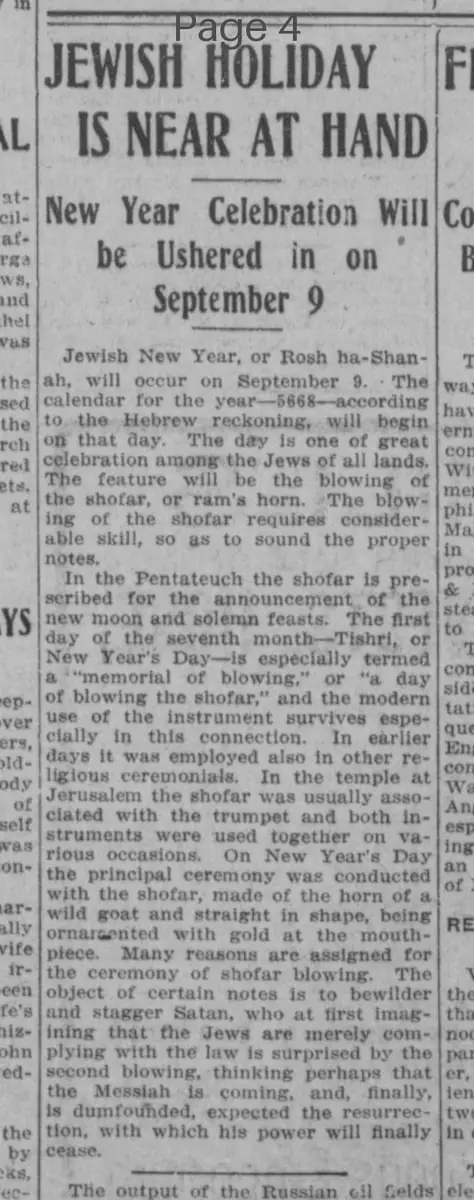
New Year Celebration Will be Ushered in on September 9
Jewish New Year, or Rosh ha-Shanah, will occur on September 9. The calendar for the year—5668—according to the Hebrew reckoning, will begin on that day. The day is one of great celebration among the Jews of all lands.
The feature will be the blowing of the shofar, or ram's horn. The blowing of the shofar requires considerable skill, so as to sound the proper notes.
In the Pentateuch the shofar is prescribed for the announcement of the new moon and solemn feasts. The first day of the seventh month—Tishri, or New Year's Day—is especially termed a "memorial of blowing," or "a day of blowing the shofar," and the modern use of the instrument survives especially in this connection. In earlier days it was employed also in other religious ceremonials. In the temple at Jerusalem the shofar was usually associated with the trumpet and both instruments were used together on various occasions. On New Year's Day the principal ceremony was conducted with the shofar, made of the horn of a wild goat and straight in shape, being ornamented with gold at the mouthpiece. Many reasons are assigned for the ceremony of shofar blowing. The object of certain notes is to bewilder and stagger Satan, who at first imagining that the Jews are merely complying with the law is surprised by the second blowing, thinking perhaps that the Messiah is coming, and, finally, is dumbfounded, expecting the resurrection, with which his power will finally cease.
What sub-type of article is it?
What themes does it cover?
What keywords are associated?
Where did it happen?
Story Details
Location
Among The Jews Of All Lands
Event Date
September 9, Year 5668
Story Details
Jewish New Year, Rosh ha-Shanah, begins on September 9 in the Hebrew year 5668, marked by celebration including skilled blowing of the shofar or ram's horn. The shofar, prescribed in the Pentateuch for new moon and feasts, is central to the first day of Tishri as a memorial of blowing. Historically used in temple ceremonies with trumpets, it was made from wild goat horn and gold-ornamented. The blowing bewilders Satan, simulating compliance with law, arrival of Messiah, and resurrection ending his power.