Thank you for visiting SNEWPapers!
Sign up free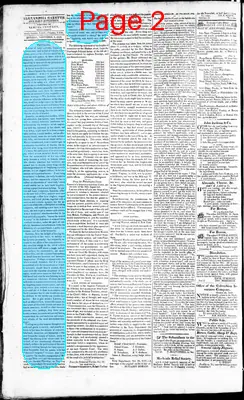
Literary
November 2, 1818
Alexandria Gazette & Daily Advertiser
Alexandria, Virginia
What is this article about?
An essay for the Gazette critiquing tattling as a pervasive social vice more harmful than slander, exemplified by Lucretia, a witty but foolish spinster who distorts anecdotes to entertain, leading to real injuries. It warns of gossip's role in spreading false rumors, especially about engagements. Signed Orlando.
Clipping
OCR Quality
98%
Excellent
Full Text
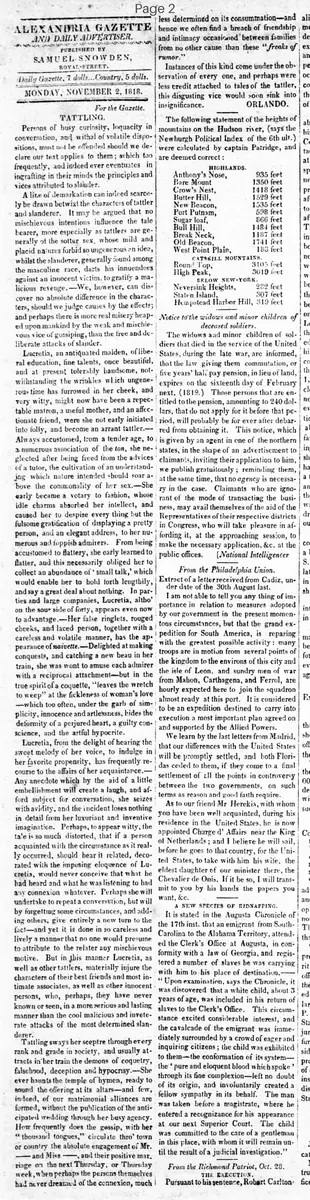
For the Gazette,
TATTLING.
Persons of busy curiosity, loquacity in conversation, and withal of volatile dispositions, must not be offended should we declare our text applies to them; which too frequently, and indeed ever eventuates in ingrafting in their minds the principles and vices attributed to slander.
A line of demarkation can indeed scarcely be drawn betwixt the characters of tattler and slanderer. It may be argued that no mischievous intentions influence the tale bearer, more especially as tattlers are generally of the softer sex, whose mild and placid natures forbid so ungenerous an idea, whilst the slanderer, generally found among the masculine race, darts his innuendoes against an innocent victim, to gratify a malicious revenge. We, however, can discover no absolute difference in the characters, should we judge causes by the effects; and perhaps there is more real misery heaped upon mankind by the weak and mischievous vice of gossiping, than the free and deliberate attacks of slander.
Lucretia, an antiquated maiden, of liberal education, fine talents, once beautiful, and at present tolerably handsome, notwithstanding the wrinkles which ungenerous time has furrowed in her cheek, and very witty, might now have been a respectable matron, a useful mother, and an affectionate friend, were she not early initiated into folly, and become an arrant tattler.
Always accustomed, from a tender age, to a numerous association of the ton, she neglected after being freed from the advices of a tutor, the cultivation of an understanding which nature intended should soar above the commonality of her sex. She early became a votary to fashion, whose idle charms absorbed her intellect, and caused her to despise every thing but the fulsome gratification of displaying a pretty person, and an elegant address, to her numerous and foppish admirers. From being accustomed to flattery, she early learned to flatter, and this necessarily obliged her to collect an abundance of 'small talk,' which would enable her to hold forth lengthily, and say a great deal about nothing. In parties and large companies, Lucretia, altho' on the sour side of forty, appears even now to advantage. Her false ringlets, rouged cheeks, and laced person, together with a careless and volatile manner, has the appearance of naivette. Delighted at making conquests, and catching a new beau in her train, she was wont to amuse each admirer with a reciprocal attachment—but in the true spirit of a coquette. 'leaves the wretch to weep' at the fickleness of woman's love—which too often, under the garb of simplicity, innocence and artlessness, bides the deformity of a perjured heart, a guilty conscience, and the artful hypocrite.
Lucretia, from the delight of hearing the sweet melody of her voice, to indulge in her favorite propensity, has frequently recourse to the affairs of her acquaintance. Any anecdote which by the aid of a little embellishment will create a laugh, and afford subject for conversation, she seizes with avidity, and the incident loses nothing in detail from her luxuriant and inventive imagination. Perhaps, to appear witty, the tale is so much distorted, that if a person acquainted with the circumstance as it really occurred, should hear it related, decorated with the imposing eloquence of Lucretia, would never conceive that what he had heard and what he was listening to had any connexion whatever. Perhaps she will undertake to repeat a conversation, but will by forgetting some circumstances, and adding others, give entirely a new turn to the fact—and yet it is done in so careless and lively a manner that no one would presume to attribute to the relater any mischievous motive. But in this manner Lucretia, as well as other tattlers, materially injure the characters of their best friends and most intimate associates, as well as other innocent persons, who, perhaps, they have never known or seen, in a more serious and lasting manner than the cool malicious and inveterate attacks of the most determined slanderer.
Tattling sways her sceptre through every rank and grade in society, and usually attracts in her train the demons of coquetry, falsehood, deception and hypocrisy. She ever haunts the temple of Hymen, ready to sound the offering at its altars—and few, indeed, of our matrimonial alliances are formed, without the publication of the anticipated wedding through her busy agency.
How frequently does the gossip, with her 'thousand tongues,' circulate thro' town or country the absolute engagement of Mr. and Miss—, and their positive marriage on the next Thursday, or Thursday week, when perhaps the persons themselves had never dreamed of the connexion, much less determined on its consummation—and hence we often find a breach of friendship and intimacy occasioned between families from no other cause than these 'freaks of rumor.'
Instances of this kind come under the observation of every one, and perhaps were less credit attached to tales of the tattler, this disgusting vice would soon sink into insignificance.
ORLANDO.
TATTLING.
Persons of busy curiosity, loquacity in conversation, and withal of volatile dispositions, must not be offended should we declare our text applies to them; which too frequently, and indeed ever eventuates in ingrafting in their minds the principles and vices attributed to slander.
A line of demarkation can indeed scarcely be drawn betwixt the characters of tattler and slanderer. It may be argued that no mischievous intentions influence the tale bearer, more especially as tattlers are generally of the softer sex, whose mild and placid natures forbid so ungenerous an idea, whilst the slanderer, generally found among the masculine race, darts his innuendoes against an innocent victim, to gratify a malicious revenge. We, however, can discover no absolute difference in the characters, should we judge causes by the effects; and perhaps there is more real misery heaped upon mankind by the weak and mischievous vice of gossiping, than the free and deliberate attacks of slander.
Lucretia, an antiquated maiden, of liberal education, fine talents, once beautiful, and at present tolerably handsome, notwithstanding the wrinkles which ungenerous time has furrowed in her cheek, and very witty, might now have been a respectable matron, a useful mother, and an affectionate friend, were she not early initiated into folly, and become an arrant tattler.
Always accustomed, from a tender age, to a numerous association of the ton, she neglected after being freed from the advices of a tutor, the cultivation of an understanding which nature intended should soar above the commonality of her sex. She early became a votary to fashion, whose idle charms absorbed her intellect, and caused her to despise every thing but the fulsome gratification of displaying a pretty person, and an elegant address, to her numerous and foppish admirers. From being accustomed to flattery, she early learned to flatter, and this necessarily obliged her to collect an abundance of 'small talk,' which would enable her to hold forth lengthily, and say a great deal about nothing. In parties and large companies, Lucretia, altho' on the sour side of forty, appears even now to advantage. Her false ringlets, rouged cheeks, and laced person, together with a careless and volatile manner, has the appearance of naivette. Delighted at making conquests, and catching a new beau in her train, she was wont to amuse each admirer with a reciprocal attachment—but in the true spirit of a coquette. 'leaves the wretch to weep' at the fickleness of woman's love—which too often, under the garb of simplicity, innocence and artlessness, bides the deformity of a perjured heart, a guilty conscience, and the artful hypocrite.
Lucretia, from the delight of hearing the sweet melody of her voice, to indulge in her favorite propensity, has frequently recourse to the affairs of her acquaintance. Any anecdote which by the aid of a little embellishment will create a laugh, and afford subject for conversation, she seizes with avidity, and the incident loses nothing in detail from her luxuriant and inventive imagination. Perhaps, to appear witty, the tale is so much distorted, that if a person acquainted with the circumstance as it really occurred, should hear it related, decorated with the imposing eloquence of Lucretia, would never conceive that what he had heard and what he was listening to had any connexion whatever. Perhaps she will undertake to repeat a conversation, but will by forgetting some circumstances, and adding others, give entirely a new turn to the fact—and yet it is done in so careless and lively a manner that no one would presume to attribute to the relater any mischievous motive. But in this manner Lucretia, as well as other tattlers, materially injure the characters of their best friends and most intimate associates, as well as other innocent persons, who, perhaps, they have never known or seen, in a more serious and lasting manner than the cool malicious and inveterate attacks of the most determined slanderer.
Tattling sways her sceptre through every rank and grade in society, and usually attracts in her train the demons of coquetry, falsehood, deception and hypocrisy. She ever haunts the temple of Hymen, ready to sound the offering at its altars—and few, indeed, of our matrimonial alliances are formed, without the publication of the anticipated wedding through her busy agency.
How frequently does the gossip, with her 'thousand tongues,' circulate thro' town or country the absolute engagement of Mr. and Miss—, and their positive marriage on the next Thursday, or Thursday week, when perhaps the persons themselves had never dreamed of the connexion, much less determined on its consummation—and hence we often find a breach of friendship and intimacy occasioned between families from no other cause than these 'freaks of rumor.'
Instances of this kind come under the observation of every one, and perhaps were less credit attached to tales of the tattler, this disgusting vice would soon sink into insignificance.
ORLANDO.
What sub-type of article is it?
Essay
Satire
What themes does it cover?
Moral Virtue
Social Manners
What keywords are associated?
Tattling
Gossip
Slander
Lucretia
Coquetry
Hypocrisy
Social Vice
What entities or persons were involved?
Orlando.
Literary Details
Title
Tattling.
Author
Orlando.
Subject
On The Vice Of Tattling And Gossip
Key Lines
A Line Of Demarkation Can Indeed Scarcely Be Drawn Betwixt The Characters Of Tattler And Slanderer.
Perhaps There Is More Real Misery Heaped Upon Mankind By The Weak And Mischievous Vice Of Gossiping, Than The Free And Deliberate Attacks Of Slander.
Tattling Sways Her Sceptre Through Every Rank And Grade In Society, And Usually Attracts In Her Train The Demons Of Coquetry, Falsehood, Deception And Hypocrisy.
How Frequently Does The Gossip, With Her 'Thousand Tongues,' Circulate Thro' Town Or Country The Absolute Engagement Of Mr. And Miss—, And Their Positive Marriage On The Next Thursday, Or Thursday Week, When Perhaps The Persons Themselves Had Never Dreamed Of The Connexion, Much Less Determined On Its Consummation—And Hence We Often Find A Breach Of Friendship And Intimacy Occasioned Between Families From No Other Cause Than These 'Freaks Of Rumor.'